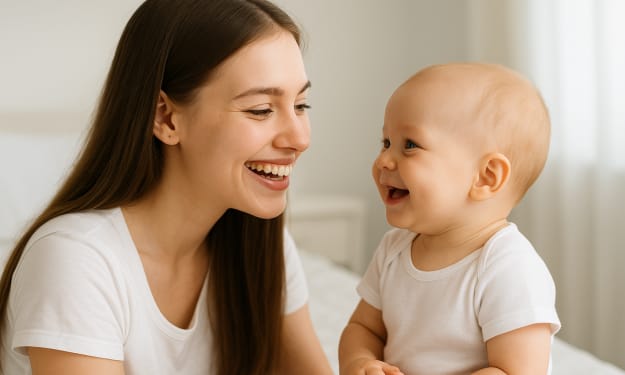
grandparents
Becoming a grandparent makes getting older something to look forward to - all the fun of parenting, without the hassle.
I Blocked My Parents for a Month—And Found Peace I Didn’t Know I Needed
The first time I hovered my finger over the "Block Contact" option on my mother’s name, I felt a tightness in my chest that reminded me of every Sunday lunch I had forced myself to sit through with a fake smile and a churning stomach. My parents weren’t monsters. They didn’t scream or curse. They didn’t hit or throw things. But they did something more invisible—they made me doubt myself, my worth, and the validity of my own feelings.
By Muhammad Sabeelabout a year ago in Families
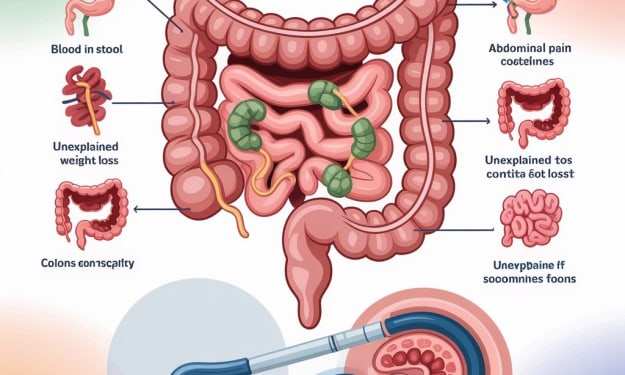
Colon Cancer
Colon cancer, also known as colorectal cancer, affects the large intestine (colon or rectum) and is one of the leading causes of cancer-related deaths worldwide. The most alarming fact about this disease is that it often begins with mild or almost invisible symptoms, which is why early detection is crucial. When caught early, colon cancer is highly treatable. Unfortunately, due to lack of awareness or delayed diagnosis, many cases are detected at later stages, when the disease has already progressed.
By Ahmad shahabout a year ago in Families
Understanding Food Poisoning
Food is an essential part of our lives, but when contaminated, it can become a serious health hazard. Food poisoning, also known as foodborne illness, occurs when people consume food or drinks contaminated with harmful bacteria, viruses, parasites, or chemical substances. While most cases are mild, some can be severe or even life-threatening, especially for young children, elderly individuals, pregnant women, and those with weakened immune systems.
By Ahmad shahabout a year ago in Families
Through Their Eyes
Mira sat quietly on the edge of her bed, acceptance letter in hand. The emblem of the prestigious university gleamed in gold at the top of the page. Full tuition wasn’t covered—only partial. She knew her parents would smile and say “we’ll manage,” but she also knew what manage meant in their world.
By Adil Nawazabout a year ago in Families
How to Create the Perfect Birthday Photo Album for Parents, Children, and Families
Birthdays are some of the most memorable occasions for families. From the joy of celebrating milestones to capturing the little moments that make each year special, a birthday photo album is a wonderful way to preserve these memories. Whether you’re making a baby photobook or a family birthday album, this guide will walk you through the process of creating the perfect birthday photo album to cherish for years to come.
By Photojaanicabout a year ago in Families
“The Apology I’ll Never Get — And Why I Finally Stopped Needing It.”
The Apology I’ll Never Get — And Why I Finally Stopped Needing It I used to rehearse the apology in my head like a movie script. It always started with them crying — remorseful, broken, finally seeing the pain they caused. They’d say things like “I’m so sorry for not protecting you,” or “I didn’t know what I was doing to you back then.” I’d nod, maybe cry a little, and then — for the first time in my life — I’d feel peace. But that scene never came. Instead, I got silence. Denial. Defensiveness. Or worse — the twisted gaslighting that made me question whether any of it was “really that bad.” And for years, I carried that silence like a stone in my chest, thinking I couldn’t fully heal until I heard those magic words: “I’m sorry.” The Damage That Was Never Admitted I grew up in a home that looked normal from the outside. We had dinner at 6, my dad went to work every morning, and my mom kept the house spotless like it was her full-time job. But behind closed doors, the air was thick with tension. Love was conditional. Affection came with strings. And any sign of emotional neediness from me was met with a cold wall or sharp correction. I learned early how to disappear — how to shrink myself into the version of me they could tolerate. Obedient. Quiet. Never too sad, never too loud, never too messy. There weren’t bruises. That’s the part people misunderstand about emotional abuse — it’s harder to point to. It lives in the unsaid. The emotional neglect. The way your tears are met with annoyance instead of comfort. The way your joy is dimmed by a parent’s disapproval. The way you internalize the idea that your worth is tied to performance, perfection, or being easy to love. And for years, I blamed myself. The Ache of the Unspoken In my twenties, I started therapy — at first for anxiety, then for “trouble in relationships,” and finally, for the deep well of shame I couldn’t name. It didn’t take long before we circled back to the house I grew up in. At first, I defended them. “They did their best.” “They had it worse.” “They didn’t mean to hurt me.” But under that rationalizing was a quiet desperation: If I forgive them too easily, does that mean my pain didn’t matter? And if I don’t forgive them, am I a bitter person? That tension ate me alive. I found myself longing for something I knew I’d never get: an acknowledgment of what happened. A real apology. A moment where the people who made me feel small would look me in the eyes and say, “You didn’t imagine it. You were a child. And you deserved better.” But they didn’t — and they won’t. Not because they’re evil, but because they’re too wounded, too proud, or too unwilling to face themselves. The Shift I Didn’t See Coming There wasn’t a single moment I stopped needing the apology — it faded, the way grief does. Slowly. Unevenly. One therapy session, one boundary, one tear-soaked journal page at a time. At some point, I realized: I was waiting for the people who broke me to validate my healing. I wanted the apology because I thought it would make it real. That their words could finally make the pain legible, official, worthy of compassion — maybe even my own. But the truth is: my healing doesn’t need their permission. My hurt is still valid, even if they never say a word. That realization changed everything. Letting Go Without Letting It Go Let me be clear: I didn’t “just get over it.” I didn’t wake up one day filled with forgiveness. And I don’t believe closure always requires contact or confrontation. What I did do was this: I stopped rehearsing the imaginary apology. I wrote letters I never sent. I gave my inner child what she never got — protection, patience, softness. I built relationships with people who see me clearly and love me anyway. I allowed myself to grieve the childhood I should have had, not just the one I got. And maybe most importantly: I stopped trying to turn my pain into someone else’s responsibility. They didn’t own it. So I did. The Quiet Power of Self-Validation These days, when I think about those imagined apologies, I feel something I never expected: Not anger. Not bitterness. Not even sadness. I feel a kind of quiet strength. Because I survived without the apology. I healed without the confession. I gave myself the closure I used to beg others for. And that’s the thing they never taught me — that healing isn’t about the people who hurt you. It’s about reclaiming your voice in a story where you were once silenced. So no, I’ll probably never hear “I’m sorry” from them. But I’ve finally stopped needing it. And that, in itself, is enough. Have you ever had to heal without an apology? Share your story in the comments — or write your own. You never know who needs to hear it.
By Soul Draftsabout a year ago in Families
You don’t owe your parents anything, nothing
Parental relationships are among the most sacred connections in human life, but not every bond is built on love, support, or mutual respect. In cultures across the world, children are raised with the belief that they owe their parents unwavering loyalty, financial support, and emotional sacrifice simply because they were given life. But here’s a radical truth that is gaining momentum in mental health circles and personal development discussions—you don’t owe your parents anything, anything at all.
By Lana Roseeabout a year ago in Families
''Whispers Before Goodbye''
I had never been close to my mother-in-law. Clara was the kind of woman who measured love in chores completed and meals cooked, not hugs or kind words. From the moment I married Daniel, I felt more like someone she tolerated than someone she welcomed. Still, we visited her every Sunday, faithfully, as Daniel had since he was a child. Over the years, our conversations remained surface-level—weather, the state of the garden, and the occasional unsolicited advice on parenting, though we had no children.
By farooq shahabout a year ago in Families
Family Dynamics and Sibling Relationships
Emma still remembers the day her parents brought her baby brother home from the hospital. At four years old, she had been the center of her universe for what felt like forever, basking in the undivided attention of two doting parents. Suddenly, this tiny, wrinkled stranger commanded everyone's focus, leaving Emma feeling displaced and confused. Twenty-five years later, Emma and her brother share an unbreakable bond, but the echoes of that early displacement still influence how they interact—and how Emma approaches relationships in general.
By Muhammad Sabeelabout a year ago in Families
The Empty Swing
Sophie sat by the window, her fingers lightly tracing the edge of her grandmother’s old diary. The worn leather cover had cracks, the gold lettering faded with time. It had been her grandmother’s most prized possession, and now it was hers. She turned the pages carefully, each one filled with memories of a time long passed, each word written in the delicate handwriting of a woman who had lived through joys and sorrows, each chapter a record of a life well-lived.
By Abshar aliabout a year ago in Families
Understanding the Unique Behaviour of an infant
Welcoming a newborn child into the world is a deeply transformative experience for parents and families. From the very first cry to the initial eye contact, each moment is a powerful reminder of the miracle of life. But beyond the tenderness and excitement lies an intricate pattern of behaviors that define the newborn stage. Understanding the behavior of a newborn child is crucial for caregivers and medical professionals, as it lays the foundation for early development, emotional bonding, and psychological health.
By Lana Roseeabout a year ago in Families