foster
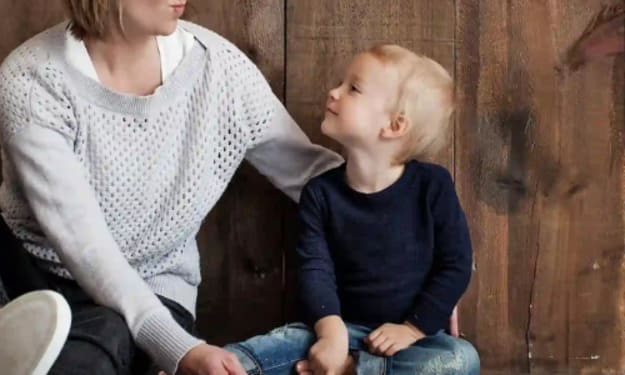
Foster care makes all the difference in the life of a young child that's been neglected or rescued from harm's way.
The Heart of winter
The wind had howled through the trees all day, a relentless reminder that winter had come to claim the world outside. Snow piled up against windowsills, thick and heavy, and the sky, a heavy shade of gray, seemed to press down on the earth like a soft, woolen blanket. The world beyond the walls of the little cabin was a frozen wilderness of white drifts and ice-coated branches, but inside, warmth and light filled every corner.
By Christopher Gomes2 years ago in Families
Sweet Memories
In the core of a clamoring city, in the midst of the transcending high rises and the perpetual murmur of metropolitan life, dwelled a gathering of four uncommon people: Aryan, Areba, Nisha, and Villon. Limited by a rugged obligation of kinship, they shared innumerable giggling filled minutes, genuine discussions, and remarkable undertakings.
By Iftikhar Akram2 years ago in Families
AR Rahman Faces Backlash for Controversial Divorce Hashtag
AR Rahman Faces Backlash Over " #ArrSairaaBreakup" Hashtag in Divorce Post Legendary music composer AR Rahman recently courted online controversy with a post in which he used the hashtag #ArrSairaaBreakup discussing divorce and privacy. He compared the new x-privacy law which was initiated to ensure that people, especially celebrities, were given the right to privacy in sensitive matters. What could have been a healthy reminder of discretion was soon hijacked by negative reactions, accusations of insensitivity, and other personal attacks as people lost sight of what he was saying.
By Abhay kumar chauhan2 years ago in Families
Understanding Domestic Violence: What It Means for Families in India
Patriarchy is a societal framework that promotes and rewards men for benefiting from the exploitation and oppression of women, compelling women to accept their subordinate status. It also pressures men to neglect their emotional well-being and conform to prevailing hypermasculine ideals. Unfortunately, this institution is widespread and influences the behaviours, attitudes, and perceptions of people across various class, religious, caste, and ethnic backgrounds.
By Hridya Sharma2 years ago in Families
Great guilty mums.
We all have our idea of what self-care means to us, however, once we become a little person’s everything this reality can very quickly and very easily turn into self-neglect. Becoming a parent can challenge us both mentally and physically is not something that we are always quite prepared for.
By Diary Of A Modern Mummy 2 years ago in Families
Power of Love
The Power of Love: A Universal Force Love is a profound and complex emotion that has been a subject of fascination for poets, philosophers, and scientists alike throughout history. It is often described as the most powerful force in the universe, capable of inspiring great joy and immense sorrow. From romantic partnerships to familial bonds and friendships, love takes on many forms and plays a crucial role in human connection and personal fulfillment.
By FRANCIS IKEGBUNAM2 years ago in Families
Extraordinary Parenting: Practical Solutions for Today’s Complex Parenting Challenges
Parenting in today’s world is filled with complex challenges. From single parenting to balancing mental health, communication, finances, and even social media, it often feels overwhelming to address all aspects successfully. However, the path to raising well-rounded, healthy, and happy children doesn’t have to be filled with stress. Here’s a look at some of the major issues parents face today and practical tips to overcome them.
By mureed hussain2 years ago in Families
Learn to Recognize the Language of Sight
Learn to Recognize the Language of Sight There is a language spoken not with words, but with a gaze, a gesture, or a mere glimpse. This is the language of sight—a powerful form of communication that bridges gaps and connects people in ways that spoken words cannot always achieve. Learning to recognize this language can enrich our lives, helping us empathize with others, understand unspoken emotions, and respond to the needs of those around us. When we look closely into someone’s eyes, we often see a reflection of their soul, their struggles, and their hopes. Our eyes are storytellers. They reveal our deepest emotions—joy, sorrow, longing, love, and even despair—without uttering a single word. Learning to recognize this language of sight is about developing the sensitivity to perceive what lies beneath a person’s outward expression. Consider, for instance, the glance of a child looking up at their parent. There is often a trust, a dependency that needs no verbal affirmation. Their wide-eyed gaze speaks of innocence, love, and a craving for security. For the parent, understanding this silent message means more than just taking care of the child’s physical needs—it means comforting them, offering emotional warmth, and a feeling of safety. The language of sight can be seen in the elderly as well. In their eyes, we often find stories of resilience, nostalgia, and a lifetime of memories. Sometimes, an elderly person may sit quietly in a room, surrounded by family but feeling unseen or unheard. Yet, with a single look—perhaps a softened gaze directed toward a family photo or a brief, wistful glance—they communicate a lifetime of love and loss. Those who can read this language of sight will know that what the elder person truly seeks is connection, a recognition of the life they have lived and the love they still hold. In our busy lives, we often pass by strangers on the street without truly noticing them. But if we take a moment to look, we might see an entire world within them. Imagine seeing someone sitting alone on a bench, their eyes cast down, shoulders slumped. Their posture and the faint sadness in their eyes tell a story of loneliness. Perhaps they have lost a loved one, or they feel isolated in a city full of people. Recognizing this silent message allows us to respond with compassion. A simple smile or a nod can acknowledge their existence and, in a small way, ease their burden. Even in relationships, the language of sight plays an essential role. In romantic partnerships, a glance exchanged across a crowded room can convey love and understanding more profoundly than words ever could. For instance, when a partner sees their loved one struggling, they might silently communicate their support through a steady, reassuring look. That gaze tells the other person, “I am here with you; you are not alone.” In friendships, too, the language of sight bridges gaps. A friend’s knowing look can be a balm in moments of self-doubt, giving assurance without a single word spoken. The language of sight also extends to understanding ourselves. When we look in the mirror, we sometimes avoid making direct eye contact with our reflection. There may be fears, regrets, or unprocessed emotions staring back at us, and looking away feels easier. But learning to face ourselves and read our own eyes with honesty and compassion can be a transformative experience. By recognizing our own silent language, we cultivate self-acceptance and acknowledge our journey, with all its highs and lows. The ability to recognize the language of sight can be particularly powerful in professions like healthcare. Doctors, nurses, and therapists are often trained to observe their patients beyond mere physical symptoms. A doctor who notices the apprehension in a patient’s eyes may sense fear about an impending diagnosis. This awareness allows the doctor to address the patient’s emotional state, offering reassurance and a comforting presence. Learning to read this language takes practice and patience. It requires an openness to observe without judgment, to allow ourselves to be present with others, and to care genuinely. In our increasingly digital world, where conversations are often reduced to text on a screen, it becomes even more crucial to preserve and cherish this form of human connection. Meeting someone's gaze and truly seeing them is a simple act, yet it can carry an incredible weight. It affirms a shared humanity and reminds us that, beyond our differences, we all seek the same sense of recognition and connection. Ultimately, to learn the language of sight is to embrace the beauty of silence, to find meaning in the space between words. When we listen with our eyes, we open ourselves to a world rich with unspoken emotion, fostering compassion and understanding that transcend verbal communication. In every fleeting glance and every unspoken exchange, there lies a profound opportunity—to understand, to connect, and to care.
By Dipak Pawar2 years ago in Families
3 Essential Car Cleaning Kits for a Showroom Shine
Introduction Keeping your car looking fresh and well-maintained doesn’t have to be a hassle, especially when you have the right tools on hand. A quality car cleaning kit can make all the difference, from quick touch-ups to full-on detailing sessions, ensuring your vehicle shines just like it did in the showroom. Whether you're a casual driver who wants a clean car without the fuss, or a car enthusiast dedicated to achieving a professional-grade finish, there’s a cleaning kit suited for every need.
By Faizullah Liwal2 years ago in Families
Your Autistic Loved One May Not Know You’re Trying to Communicate With Them Non-Verbally
A year ago, I asked the question, “Autistic Folks: When did you first realize that people communicated non-verbally?” on my Instagram page, and it shocked me to learn that quite a few autistic people in their 20s, 30s, 40s, 50s, and beyond had no idea that non-verbal communication exists!
By The Articulate Autistic2 years ago in Families