foster
Foster care makes all the difference in the life of a young child that's been neglected or rescued from harm's way.
Dear Little Bird
The bird landed on a Tuesday. Elena stood there, gazing at it crouched next to her window, feathers rumpled, a smudge of dirt along its tiny beak. Rain pounded against the glass, streaking the world gray and blurry, but the bird did not move. It simply sat there — shivering, but whole.
By MD NAZIM UDDIN about a year ago in Families
When Motherhood Dies.
When Motherhood Dies: The Tragedy of Cruelty and the Loss of Humanity. Have you ever wondered: Can a mother really kill her own child? Not by accident. Not out of desperation. But by a cold, conscious decision. If the question alone moves you, the answer will haunt you. This is not fiction. It is not an exaggerated drama. It is a true story set in a lush, green village in one of Africa's most vibrant and contrasting countries, where the beauty of nature often masks the brutality of the people. A story in which motherhood was not celebrated, but rather suppressed.
By Sayed Zewayedabout a year ago in Families
The Silent Light of a Mother's Love
The Silent Light of a Mother's Love There was once a woman named Ayesha, a mother whose world had been plunged into darkness long before she could even understand the weight of the word. Born with perfect vision, Ayesha had once admired the beauty of the world around her. But life had a different plan, and at the age of 20, she lost her sight to a rare disease. Her world became black, silent, and empty. But Ayesha was strong. Her love for her son, Imran, was the one thing that still lit up her life. Imran was born a year after her blindness, and he became her eyes, her guide, and her reason for living. He was her light in the dark. Every day, Ayesha would hold him close, feel his warmth, and listen to his laughter that echoed through the walls of their humble home. Imran grew up under her care. He was a brilliant child, gifted with intelligence that surpassed that of his peers. Ayesha, though blind, could sense his potential. She would tell him, "Imran, you are destined for greatness. The world will one day know your name." She would encourage him to study, to dream big, and to never let his circumstances define him. Ayesha’s sacrifice for her son was boundless. She never once complained about her blindness, for her focus was always on him—her hope for a brighter future. Imran, in his childhood, adored his mother. He would never leave her side, guiding her through the house, ensuring she had everything she needed. But as he grew older, a shift began to take place. He became more focused on his studies and ambitions, leaving less time for his mother. His friends, his social circle, and the allure of the world outside began to take over his life. Years passed, and Imran succeeded. He got accepted into one of the best universities in the country, something Ayesha had always dreamed of for him. With each step of his academic journey, she stood by, unseen but always there. She would listen to him talk about his achievements, his plans, and his dreams, though she could never see his face light up with joy. It was during his final year in university that Imran began to feel the weight of his success. He had become a respected young man in his field, his name starting to gain recognition. Yet, something inside him grew uncomfortable. Despite all his achievements, a deep sense of shame began to settle within him. His friends had no idea about his mother’s blindness, her sacrifice, or the reality of his humble beginnings. Imran began to distance himself from Ayesha. He would spend hours in his room, making excuses not to visit her as often. He started attending more social gatherings, where the topic of family came up. His mother’s blindness, her sacrifices, felt like a stain on the perfect life he had built for himself. He began to hide the truth about her, feeling that his friends would look down on him if they knew. "What would they think of me?" he would wonder. One evening, after a particularly glamorous event, Imran found himself standing at the threshold of his mother’s room, guilt consuming him. Ayesha was sitting by the window, feeling the cool evening breeze, her sightless eyes closed as if she could sense him approaching. She smiled, sensing his presence. “Imran, how was the event? Did you shine like the star I always knew you would?” Her voice was full of warmth, as it always had been. Imran could barely meet her gaze. His mind was clouded with shame and embarrassment. “It was great, Mom. Really great,” he said, his voice lacking the usual enthusiasm. Ayesha, ever perceptive, noticed the change in his tone. “Is something wrong, my son?” she asked gently, her hand reaching out to touch his. “You seem distant.” Imran stood there, conflicted. He opened his mouth to speak but hesitated. He wanted to tell her everything, to confess the weight of his shame, but the words wouldn’t come out. Instead, he left her room in silence, a tear escaping his eye as he closed the door behind him. That night, something changed within him. As he lay in bed, images of his mother flooded his mind. He remembered how, as a child, she had made every effort to ensure he never felt the absence of sight, how she had devoted every moment of her life to him. She had been his rock, his foundation, while he, in turn, had started to build his own life—one without her. The following morning, Imran couldn’t shake the weight of his actions. He rushed back to his mother’s room. Ayesha was sitting there, her face lit up by the soft morning light, her hands folded in her lap. Imran knelt before her, his heart heavy with regret. “Mom,” he whispered, his voice breaking, “I’ve failed you. I’ve hidden you. I’ve been ashamed of you when I should have been proud of you. I’m so sorry.” Ayesha’s heart swelled with a mixture of sorrow and forgiveness. She gently cupped his face, her fingers trembling. “Imran, my son,” she whispered, “I never wanted you to feel burdened by my blindness. You are the light of my life, and I have always been proud of you. I don’t need the world to see me, as long as you see me.” Tears streamed down Imran’s face as he realized the depth of his mother’s unconditional love. In that moment, he understood that the love she had shown him, despite all her suffering, was the true light of his life.
By Noman Afridiabout a year ago in Families
Practice Self-Care
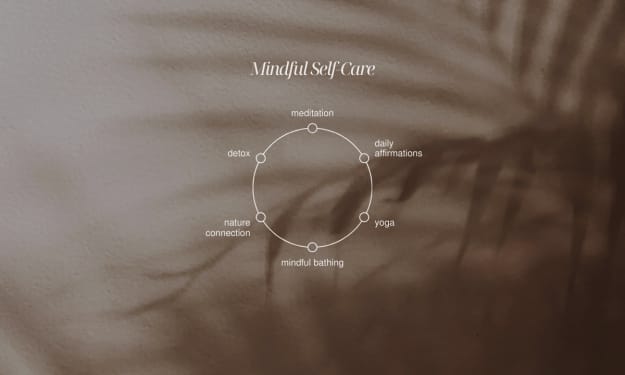
And all these things need to be done on the base of the Foundation of Healing—Caring for oneself. Healing is more than just what takes place when you’re ill or feeling poorly. It’s about creating the conditions that allow for well-being to flourish in all aspects of your life — emotionally, physically, mentally and spiritually. Self-care is the heart of recovery from traumatization because it helps us find our balance, resilience and soul-health. It requires intention, presence, and intention.
By Laila Sadiaabout a year ago in Families
7 Signs Counseling Might Help a Struggling Family Household
Family stress tends to build without much warning. Tension becomes part of the routine, showing up in quiet withdrawals, frequent sighs, or constant irritability. As stress becomes more deeply embedded in everyday moments, it slowly reshapes how family members interact. When harmony feels replaced by survival, counseling often becomes the bridge back to emotional clarity.
By Piper Burchabout a year ago in Families
The Day Silence Screamed
A Village of Quiet Faces In a faraway valley hidden between gray hills and quiet rivers, there was a village called Meerabad a place so silent that even the wind moved softly. The people there lived with zipped lips, cautious hearts, and eyes full of unspoken thoughts. Children played without laughter, weddings had no music, and even tears were wiped away quietly.
By Muhammad Hayatabout a year ago in Families
Freddy the Frog and the Pond of Patience
Once upon a time, in the heart of a green and giggly forest, there lived a tiny frog named Freddy. Freddy wasn't just any frog—he was the smallest in his whole pond. While the other frogs could leap across lily pads like champions, Freddy's jumps barely lifted him off the ground. When the bigger frogs sang loud, croaky songs, Freddy's voice was just a squeak. He didn’t have strong legs or a booming ribbit, but what he had was much more powerful—heart. And dreams. Big dreams for such a small frog.
By The Waiting Treeabout a year ago in Families