divorced
Sometimes a good divorce is better than a bad marriage.
The Silence Between Us
Meher and Faisal had once been madly in love. Everyone said they were the perfect couple—always laughing, always holding hands, always together. Their wedding had been simple but beautiful, and they had built their life slowly, piece by piece, with dreams held in their joined palms.
By ArshNaya Writesabout a year ago in Families
The Last Birthday Card
I didn’t go into Sarah’s room until the morning after the funeral. The house had been so full of voices the past few days—whispers in the kitchen, soft cries in the hallway, the drone of condolences. Now, it was quiet. Just me, the lingering scent of lilac perfume on her pillows, and the silence of a life packed away too soon. Her room looked the same as it did when she was here—neat, curated, warm. Sarah was always better at that sort of thing. She made spaces feel safe. There was no dust on her shelves, no clutter. Just books, carefully arranged by color, and a line of scented candles by the window. It felt wrong, how peaceful it looked. I hadn’t planned to find anything. I just wanted to sit where she sat. Touch something she touched. But when I opened the drawer of her bedside table, I saw it. A birthday card. My name was on the envelope: To Emily. Written in her curly, always-too-big handwriting. There was no stamp. No postmark. Just a date on the back in pencil: April 5—my birthday. Four months ago. She had already started chemo then. I remember that birthday. I remember the cake, the forced laughter. She had said she forgot to get me anything, and I said it didn’t matter. I lied. It had mattered. But only because it wasn’t like her to forget. I held the card for a long time. It felt heavier than paper should. Maybe it was the weight of something unfinished. I didn’t open it right away. --- The next day, I sat in the kitchen with the card in front of me and a mug of chamomile tea I wouldn’t drink. I stared at the envelope until the sun had shifted across the floor tiles and into the window again. Finally, I broke the seal. Inside was a handmade card—cut from thick watercolor paper. There was a painting of a daisy on the front. She used to paint flowers all the time. Inside, the message was short. But her words never needed to be long. > Happy Birthday, Em. I don’t have the energy to write a lot today, but I didn’t want this to go unsaid. I’m so proud of you. You’ve become everything I hoped you’d be—strong, kind, creative, and brave, even when you don’t feel it. I see it. I’ve always seen it. I know things are hard right now. But you’re going to be okay. Better than okay. You’ll shine in places I’ll never get to go. Just remember, I’ll still be watching. Love you always, Sarah. My hand covered my mouth as the tears came. Not the slow, soft kind. The ugly, shaking kind that forces your whole body to curl inward. She had written this when she was dying. She had made time—in pain, in exhaustion—to write me a birthday card. And she never gave it to me. Why? --- That night, I went back to her room, card still in hand. I sat on her bed and tried to remember the last time we had talked about something that mattered. I had spent the last months being useful. Driving her to appointments, managing the medications, answering calls. I thought if I stayed in motion, I wouldn’t have to feel the slow unraveling of her. I didn’t tell her about the new art show I had submitted to. I didn’t tell her about the promotion I’d gotten. I didn’t tell her I was scared. Maybe she knew anyway. Maybe that’s why she wrote what she did. Maybe she didn’t give it to me because she knew I wouldn’t have read it then. Not really. Not the way I needed to. --- I remembered the daisy. It was the same flower she used to paint when we were kids. When I was eight and she was twelve, she taught me how to hold a brush the “right” way. We sat on the porch with watercolor pads and peanut butter sandwiches. I painted suns and crooked rainbows. She painted daisies. Always daisies. “They’re strong flowers,” she had said once. “They grow in cracks. In concrete.” I had forgotten that until now. --- The card became something I returned to in the quiet moments. It didn’t bring me peace at first. It brought more questions, more ache. But slowly, it became something else. A conversation I hadn't known I needed. A final note in the key of love. I carried it in my journal. Took it out when the days got too heavy. Read it before my first gallery show. Read it again the night I couldn’t sleep and ended up crying on the bathroom floor. Read it on what would have been her thirty-fourth birthday. It didn’t fix the hole she left. But it reminded me of the shape of her—her voice, her care, her belief in me, even when I didn’t believe in myself. --- It’s been a year now. I framed the card. It sits on my desk beside a fresh-cut daisy in a jar. Every Monday, I replace it. It’s my ritual now—my way of keeping her alive in the ordinary. Sometimes I wonder what she would say to me now. If she’d like the person I’ve become. If she’d laugh at the fact that I drink chamomile tea every night because “you need something warm before bed,” like she used to say. I think she’d be proud. At least, I hope so. But more than that, I know she was proud. Because she told me. In the last birthday card I ever received from her. And the only one I’ll never throw away.
By 🇲 🇮 🇳 🇩 🇺 🇳 🇫 🇴 🇱 🇩 🇪 🇩 about a year ago in Families
My journey with Faith: From Trials to Healing Through Cooking
I started attending Sunday school at the age of five. I grew up with a loving mother who supported me endlessly, even though life was never easy. I still remember when we moved out of our family home. My mom had just given birth to my baby brother in 1986 - through a C- section and we were renting a back room at our church, a Roman Catholic cathedral.
By MelCreatesabout a year ago in Families
Help… I Think My Partner Is Cheating but I Have No Proof
Suspecting a partner of cheating without concrete evidence can be emotionally devastating. The uncertainty eats away at trust, triggers anxiety, and forces difficult questions about loyalty, love, and the future of the relationship. When the signs are there—but the proof isn’t—what can you do?This guide offers clarity in the fog of doubt. Whether it's about a husband staying up late on dating apps or a wife being overly protective of her phone, navigating suspicions of infidelity requires both emotional intelligence and practical steps. Here’s what to consider when you're torn between confrontation and silence.1. Recognizing the Signs: What Might Cheating Look Like Without Proof?Not all cheating leaves a paper trail. Today, infidelity can happen digitally, emotionally, or physically—and often, a cheating partner is careful enough to hide it well. Still, behavioral patterns often shift when disloyalty enters a relationship.Common (But Not Conclusive) Signs:Sudden protectiveness over devices or passwordsUnusual schedule changes or unexplained absencesEmotional distance or defensiveness during conversationsIncrease in arguments or criticism directed at youExcessive attention to appearance without a clear reasonDecreased interest in intimacy or shared timeIt’s important to note that these signs of cheating are not proof, but they can indicate a problem. Emotional cheating, in particular, leaves few visible traces but can damage trust just as deeply as physical betrayal.According to Psychology Today, emotional affairs are increasingly common in long-term relationships, often beginning through private messages or online connections (source).2. Evaluating the Situation: Is It Cheating or Something Else?Before jumping to conclusions, take a moment to assess the situation objectively. Not every shift in behavior is linked to infidelity. Work stress, mental health struggles, or midlife crises can also explain emotional withdrawal or behavioral change.Questions to Consider:Has communication in the relationship changed recently?Are your suspicions based on facts or feelings?Have you discussed your concerns openly?Is there a pattern of dishonesty in your partner’s history?If you're asking, “Is my bf on dating apps?” or “Why does my wife hide her phone?,” tools like a tinder search or hinge profile lookup may be tempting—but be cautious. Spying without consent can destroy trust beyond repair and even carry legal consequences depending on your location (source).Instead of trying to catch a cheater through trickery or a DIY loyalty test, try open dialogue first. It may not give immediate answers, but it can prevent long-term damage.3. How to Talk to Your Partner About Your SuspicionsConfronting a spouse or partner about cheating is never easy. But if doubts are disrupting your peace, you owe it to yourself—and the relationship—to address them.Tips for a Productive Conversation:Pick the right time and setting—a quiet, private space is best.Use “I” statements to express how you feel without sounding accusatory (e.g., “I feel distant from you lately and it’s been making me anxious.”)Avoid labels like “toxic” or “liar” unless you have solid proof.Stay calm and allow space for their response.If they become hostile, defensive, or dismissive of your concerns, that behavior can itself be a red flag—even if you haven’t caught them cheating outright.4. When There’s Still No Proof: Next Steps for Your Mental and Emotional HealthLiving in limbo can be mentally exhausting. When you think, “My husband might be cheating, but I can’t prove it,” or “My girlfriend could be on dating apps again,” it’s easy to spiral.Here’s what you can do instead of obsessing over the unknown:A. Document PatternsMaintain a neutral log of behaviors that trouble you. This isn’t about becoming a private investigator—it’s about identifying trends over time.B. Seek Outside PerspectiveTrusted friends, therapists, or relationship counselors can offer unbiased insight. They may help you uncover blind spots or affirm your instincts.C. Focus on Your NeedsAsk yourself: even if they're not cheating, do I feel safe, loved, and respected in this relationship? If the answer is no, the situation may already be emotionally damaging—even without proof of betrayal.Case Study: Erica, 32, suspected her boyfriend was active on Tinder but never found definitive proof. After months of anxiety, she realized that his lack of emotional availability and constant secrecy were enough reason to leave. Today, she says, “I never got my evidence—but I got my peace.”5. Healing, Whether You Stay or GoWhether the suspicion turns out to be true or not, there’s healing to do. If your trust was broken—or even just strained—the emotional toll can linger.If You Stay:Consider couples therapy to rebuild communication and transparency.Establish clear boundaries and expectations.Rebuild intimacy gradually with shared activities and open dialogue.If You Leave:Give yourself permission to grieve the relationship, even without closure.Avoid contact until you’ve emotionally detoxed.Focus on personal growth, journaling, and surrounding yourself with supportive people.According to the American Association for Marriage and Family Therapy, over 70% of couples who seek help after infidelity report stronger relationships afterward (source)—but healing takes time, transparency, and effort from both partners.TL;DRSuspecting infidelity without proof is deeply distressing. Subtle signs like emotional distance, secrecy with devices, or unusual behavior may indicate cheating—but they could also be symptoms of stress or communication breakdown. Instead of spying or relying on loyalty tests, try honest communication. Seek support, document patterns, and focus on your emotional well-being. Whether you decide to stay or leave, prioritize your healing and peace of mind. Proof isn’t always needed to validate your feelings or choices.
By Catch Cheaterabout a year ago in Families
A Summer of Silence – When the Heat Took Away Our Nana Jaan
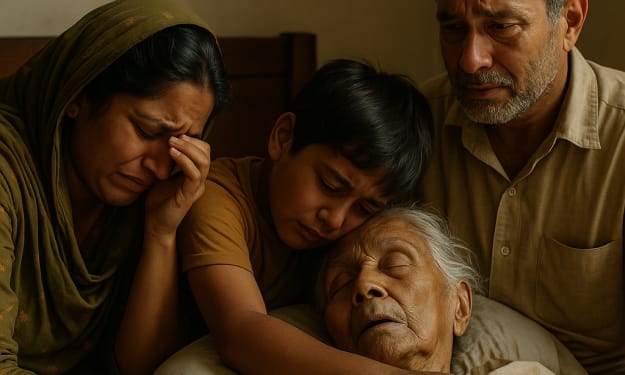
When the intense summer heat gripped the city, a change came into our lives that would stay etched in our hearts forever. It was a season in which we learned a lot, and its intensity taught us lessons that we had never thought we would have to learn. Our Nana Jaan, who had always been a symbol of love for us, appeared completely different during this summer. Her smile, which used to light up our faces, had now faded. Her body, which always felt like a strong pillar, now seemed tired. At first, we didn’t pay much attention to it, as none of us wanted to acknowledge the toll her age might be taking on her body. But soon, it became clear that it wasn’t just old age; the heat had also taken a toll on her health. The change in Nana Jaan’s condition was sudden one day. She began complaining of dehydration and started sleeping throughout the day. Sweat marks appeared on her body, and we never thought that such intense heat could endanger her life. We always assumed that the physical health of the elderly was simply a result of their age, but we didn’t realize that seasonal factors could be just as severe. One day, when we noticed that Nana Jaan’s condition had worsened, we rushed her to the doctor. But by then, it was too late. The doctor told us that her body had become weak due to the heat, and she was suffering from severe dehydration. Hearing this felt like the ground had slipped from under our feet. We had always thought that her staying healthy was a constant reality for us, but that day we learned that life is never predictable. The doctor informed us that had we taken better care of Nana Jaan earlier, she might have been able to recover. But now, it was too late. We asked the doctor if anything could still be done, but his response was simple: “It’s a matter of time, and we must accept the natural course of things.” Nana Jaan’s passing was a deep blow for us. After her departure, the whole house fell silent, as if someone had taken away the light from our world. For the first time after that moment, we thought about how we had neglected the importance of spending time with our elderly. We realized that it wasn’t enough to just spend time with them; we had to take practical steps for their health and well-being. I remember a moment when Nana Jaan’s face was radiant, and we all thought of her as an inseparable part of our lives, imagining she would be with us forever. But now we had to accept the reality that her body had grown tired, and the heat had deeply affected her. After Nana Jaan’s passing, we realized that this season was not just about heat; it was a test. A test that was teaching us how to take better care of our elderly. Everything that happened was a lesson, and we had to learn from it, taking the necessary precautions for our loved ones’ health. From that day on, we made a commitment that whenever there is intense heat, we will pay special attention to our elderly. We decided that we would take all necessary precautions, from keeping them hydrated to ensuring they stay in the shade, and providing them with proper nutrition. We also decided not to let them spend too much time in the sun and to be cautious in their daily activities so as not to put any strain on their bodies. This season taught us that the summer is not just a natural change; it’s an opportunity for us to take care of our elderly family members. Their bodies are more sensitive, and we must adopt precautionary measures to ensure they remain healthy and happy. Nana Jaan’s memories will always live on in our hearts, and her untimely death taught us to appreciate every moment of life. We took this lesson to heart, knowing that it will not only be a reminder for us but for the generations to come. Now, whenever we step outside in the summer or spend time with our elderly loved ones, we are more cautious about their health. This commitment is a tribute to Nana Jaan, who always taught us how to nurture and care for others with love. We vowed never to forget her teachings and to always follow her principles۔
By Noman Afridiabout a year ago in Families
The Window That Cried
In a quiet town wrapped in mist, stood an old wooden house on the corner of Hollow Street. It wasn’t the biggest house, nor the brightest, but something about it made people slow down as they walked by. Maybe it was the strange ivy that grew only on one side. Or perhaps it was the small window on the second floor the one everyone called The Window That Cried.
By Muhammad Hayatabout a year ago in Families