children
Children: Our most valuable natural resource.
Understanding Food Poisoning
Food is an essential part of our lives, but when contaminated, it can become a serious health hazard. Food poisoning, also known as foodborne illness, occurs when people consume food or drinks contaminated with harmful bacteria, viruses, parasites, or chemical substances. While most cases are mild, some can be severe or even life-threatening, especially for young children, elderly individuals, pregnant women, and those with weakened immune systems.
By Ahmad shahabout a year ago in Families
The Ultimate Guide to Planning a Party with the Best Rentals. AI-Generated.
Planning a party can be both exhilarating and nerve-wracking. Whether you're organizing a child’s birthday bash, a community fair, a school carnival, or just a fun backyard get-together, one thing’s for sure: the right party rentals can elevate the entire experience.
By amazingjumpswekickthepartyoffabout a year ago in Families
Children Aren’t Born Rude — So Who’s Teaching Them?
Children Aren’t Born Rude — So Who’s Teaching Them? “He’s just so disrespectful these days.” “She talks back at everyone — even her teacher!” These are common complaints you’ll hear in school meetings, parenting forums, or even casual conversations among concerned adults. But have we paused to ask why children behave this way? We’re witnessing a silent crisis—the rise of rudeness and rebellion among school-aged children. From disruptive classroom behavior to sarcastic tones and an apparent disregard for authority, many kids today seem to be teetering on the edge of defiance. Shows like Adolescence on Netflix, or viral social media content that glorifies disrespectful attitudes, may appear to be just entertainment. But in reality, they reflect a deeper truth—a society that’s unsure how to raise emotionally healthy, respectful children in a chaotic world. So let’s ask the real question: Are children becoming ruder, or are they reacting to a world that misunderstands them? --- 🎯 What Lies Beneath the Surface We often treat bad behavior as the problem itself, when in fact, it's often a symptom of something else. Here are some of the key causes behind why children may be acting out more than ever before. --- 1. Tension Behind the Tantrums: The Need for Attention Many children engage in loud, dramatic, or rude behavior simply to get noticed. Not all children receive emotional availability at home. In homes where parents are busy, distracted, or emotionally distant, a child may find that negative attention is better than no attention at all. This isn’t manipulation. It’s a cry for connection. --- 2. The Echo of Home: Family Environment Shapes Behavior A child raised in a home filled with yelling, criticism, or indifference is more likely to mirror those behaviors outside. If a child constantly hears aggressive language, disrespectful tone, or experiences emotional neglect, how can we expect them to be composed and kind? Children don’t just learn from what we say—they absorb what we are. --- 3. The Digital Playground: Social Media and Meme Culture From TikTok to YouTube, kids are immersed in a world where rudeness is “funny” and sarcasm is celebrated. Characters in popular media roll their eyes, talk back, and mock authority—earning likes, views, and followers. This creates a culture where being disrespectful is seen as clever, cool, or rebellious in a heroic way. Unfortunately, children imitate what they admire—even if it’s toxic. --- 4. Lack of Boundaries: Weak School Discipline and Mixed Signals If a school lacks a consistent and compassionate discipline system, children don’t feel secure or guided. Some teachers may be too strict, others too lenient—leaving children confused about what’s acceptable. When discipline feels like punishment, not support, it builds resistance rather than respect. The absence of structure breeds chaos, not freedom. --- 5. Hidden Hurt: Mental Health and Emotional Strain Not all rudeness is rebellion. Some of it is grief in disguise. Anxiety, depression, bullying, loneliness, low self-esteem—all these factors can make a child act out. When they don’t have the vocabulary to express their inner world, they express it through anger, sarcasm, or withdrawal. --- ✅ So, What Can We Do About It? Children aren’t born rude. They are born with raw emotions and unmet needs, and how we respond to those needs shapes their character. Let’s explore some practical and compassionate steps we can take to guide children back toward empathy, respect, and emotional balance. --- 1. Discipline with Dignity: Set Boundaries with Compassion Discipline doesn’t mean punishment. It means direction. Children need to know what the limits are—but they also need to know why those limits matter. A classroom or home that balances structure with empathy gives children the safety to thrive and the space to grow. Use language like, “I see you’re upset, but let’s talk about it calmly,” rather than “Stop being rude!”. --- 2. Train the Teachers: Emotional Intelligence for Educators Teachers are often the first responders to behavioral issues—but many haven’t received training in child psychology, trauma response, or emotional regulation techniques. Schools must invest in teacher development that goes beyond academics. A teacher who understands why a child is acting out is far better equipped to help than one who simply punishes. --- 3. Parents, Be Present Beyond Grades Many parents only engage with their child’s life when it comes to academic performance. But a report card doesn’t reveal emotional struggles, online influences, or social pressures. Talk to your children about their friends, digital habits, feelings, and fears. Listen without judgment. Respect earns respect. --- 4. Introduce School Counseling Programs Every school should have trained counselors or child psychologists available—not just for crisis intervention, but for regular emotional check-ins. Sometimes, all a child needs is a safe adult who listens. Counseling helps uncover the "why" behind the "what"—why is the child misbehaving? What are they not saying out loud? --- 5. Show Them Better: Positive Role Models Matter Children are natural mimics. If they’re not given real-life heroes, they’ll find them in virtual worlds. Use books, movies, real stories, and personal examples to show children what kindness, bravery, patience, and honesty look like. Talk to them about flawed but growing characters—those who make mistakes and learn. Let them know that empathy is strength, not weakness. --- 💬 Final Thoughts: The Responsibility We Share A rude child is not a failed child. They are not “bad,” “spoiled,” or “ungrateful.” They are learning, hurting, exploring, reacting. And often, they’re simply reflecting what the world has shown them. We can’t afford to dismiss bad behavior as just “kids these days.” We must lean in and ask: What have they seen? What have they been denied? What are they trying to say? Because at the end of the day, children don’t just grow up. They are raised—by homes, schools, screens, and society.
By Muhammad Ilyasabout a year ago in Families
Through Their Eyes
Mira sat quietly on the edge of her bed, acceptance letter in hand. The emblem of the prestigious university gleamed in gold at the top of the page. Full tuition wasn’t covered—only partial. She knew her parents would smile and say “we’ll manage,” but she also knew what manage meant in their world.
By Adil Nawazabout a year ago in Families
Being cared more, Understood less
In every reference to siblings, there is always a preoccupation with the older child — their struggles, sacrifices, and unseen battles. The middle child is also talked about with understanding — the silent one, the sandwiched one, stuck in between. And then there is the baby — usually portrayed as the carefree one, the pampered one, the one who gets it all for nothing.
By Rabina Jaiswalabout a year ago in Families
How to Create the Perfect Birthday Photo Album for Parents, Children, and Families
Birthdays are some of the most memorable occasions for families. From the joy of celebrating milestones to capturing the little moments that make each year special, a birthday photo album is a wonderful way to preserve these memories. Whether you’re making a baby photobook or a family birthday album, this guide will walk you through the process of creating the perfect birthday photo album to cherish for years to come.
By Photojaanicabout a year ago in Families
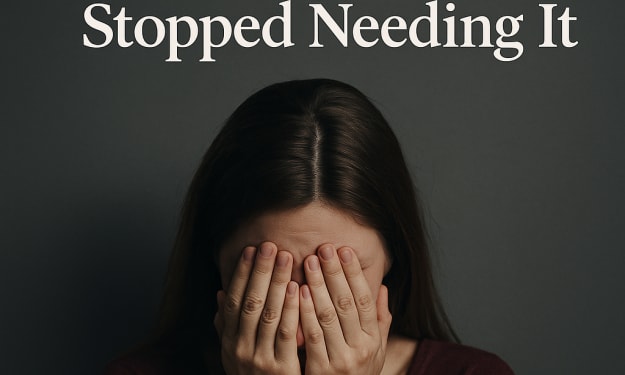
“The Apology I’ll Never Get — And Why I Finally Stopped Needing It.”
The Apology I’ll Never Get — And Why I Finally Stopped Needing It I used to rehearse the apology in my head like a movie script. It always started with them crying — remorseful, broken, finally seeing the pain they caused. They’d say things like “I’m so sorry for not protecting you,” or “I didn’t know what I was doing to you back then.” I’d nod, maybe cry a little, and then — for the first time in my life — I’d feel peace. But that scene never came. Instead, I got silence. Denial. Defensiveness. Or worse — the twisted gaslighting that made me question whether any of it was “really that bad.” And for years, I carried that silence like a stone in my chest, thinking I couldn’t fully heal until I heard those magic words: “I’m sorry.” The Damage That Was Never Admitted I grew up in a home that looked normal from the outside. We had dinner at 6, my dad went to work every morning, and my mom kept the house spotless like it was her full-time job. But behind closed doors, the air was thick with tension. Love was conditional. Affection came with strings. And any sign of emotional neediness from me was met with a cold wall or sharp correction. I learned early how to disappear — how to shrink myself into the version of me they could tolerate. Obedient. Quiet. Never too sad, never too loud, never too messy. There weren’t bruises. That’s the part people misunderstand about emotional abuse — it’s harder to point to. It lives in the unsaid. The emotional neglect. The way your tears are met with annoyance instead of comfort. The way your joy is dimmed by a parent’s disapproval. The way you internalize the idea that your worth is tied to performance, perfection, or being easy to love. And for years, I blamed myself. The Ache of the Unspoken In my twenties, I started therapy — at first for anxiety, then for “trouble in relationships,” and finally, for the deep well of shame I couldn’t name. It didn’t take long before we circled back to the house I grew up in. At first, I defended them. “They did their best.” “They had it worse.” “They didn’t mean to hurt me.” But under that rationalizing was a quiet desperation: If I forgive them too easily, does that mean my pain didn’t matter? And if I don’t forgive them, am I a bitter person? That tension ate me alive. I found myself longing for something I knew I’d never get: an acknowledgment of what happened. A real apology. A moment where the people who made me feel small would look me in the eyes and say, “You didn’t imagine it. You were a child. And you deserved better.” But they didn’t — and they won’t. Not because they’re evil, but because they’re too wounded, too proud, or too unwilling to face themselves. The Shift I Didn’t See Coming There wasn’t a single moment I stopped needing the apology — it faded, the way grief does. Slowly. Unevenly. One therapy session, one boundary, one tear-soaked journal page at a time. At some point, I realized: I was waiting for the people who broke me to validate my healing. I wanted the apology because I thought it would make it real. That their words could finally make the pain legible, official, worthy of compassion — maybe even my own. But the truth is: my healing doesn’t need their permission. My hurt is still valid, even if they never say a word. That realization changed everything. Letting Go Without Letting It Go Let me be clear: I didn’t “just get over it.” I didn’t wake up one day filled with forgiveness. And I don’t believe closure always requires contact or confrontation. What I did do was this: I stopped rehearsing the imaginary apology. I wrote letters I never sent. I gave my inner child what she never got — protection, patience, softness. I built relationships with people who see me clearly and love me anyway. I allowed myself to grieve the childhood I should have had, not just the one I got. And maybe most importantly: I stopped trying to turn my pain into someone else’s responsibility. They didn’t own it. So I did. The Quiet Power of Self-Validation These days, when I think about those imagined apologies, I feel something I never expected: Not anger. Not bitterness. Not even sadness. I feel a kind of quiet strength. Because I survived without the apology. I healed without the confession. I gave myself the closure I used to beg others for. And that’s the thing they never taught me — that healing isn’t about the people who hurt you. It’s about reclaiming your voice in a story where you were once silenced. So no, I’ll probably never hear “I’m sorry” from them. But I’ve finally stopped needing it. And that, in itself, is enough. Have you ever had to heal without an apology? Share your story in the comments — or write your own. You never know who needs to hear it.
By Soul Draftsabout a year ago in Families
You don’t owe your parents anything, nothing
Parental relationships are among the most sacred connections in human life, but not every bond is built on love, support, or mutual respect. In cultures across the world, children are raised with the belief that they owe their parents unwavering loyalty, financial support, and emotional sacrifice simply because they were given life. But here’s a radical truth that is gaining momentum in mental health circles and personal development discussions—you don’t owe your parents anything, anything at all.
By Lana Roseeabout a year ago in Families
Family Dynamics and Sibling Relationships
Emma still remembers the day her parents brought her baby brother home from the hospital. At four years old, she had been the center of her universe for what felt like forever, basking in the undivided attention of two doting parents. Suddenly, this tiny, wrinkled stranger commanded everyone's focus, leaving Emma feeling displaced and confused. Twenty-five years later, Emma and her brother share an unbreakable bond, but the echoes of that early displacement still influence how they interact—and how Emma approaches relationships in general.
By Muhammad Sabeelabout a year ago in Families
Screen Time in Children: What Happened When We Broke the Rules Just a Little
All new parents have heard the guidelines. Some are super strict and don't allow any screen time at all, others have their TV on in the background all day. I like to think we’ve found a healthy balance.
By Sandy Gillmanabout a year ago in Families
When They Steal Your Children
They took your child. Not in the way most people think. There was no dramatic kidnapping, no amber alert, no frantic media coverage. No — your child was taken with a gavel. With the silent nod of a judge. With the signature of a bureaucrat who didn’t care to hear your side. And just like that, you became the ghost of a parent. A name on a piece of paper. An afterthought.
By Michael Phillipsabout a year ago in Families