art
Family-themed art is a look into one's living room; it depicts celebration, crises, and the quiet moments of familial interactions.
The Value of Tradition. Content Warning. AI-Generated.
In the peaceful valley of Noorabad, time seemed to move with the sun—slow and steady. Birds chirped in the early morning mist, oxen plowed the soil while farmers sang old songs, and every evening, the smell of wood fires and spiced lentils filled the air. It was a village wrapped in rhythm, rituals, and stories passed from generation to generation.
By Najeeb Scholerabout a year ago in Families
Custom Calendar Printing in India: A Perfect Gift for Families, Parents, and Businesses
Calendars are more than just tools for keeping track of dates. They are a canvas for creativity, personalization, and memories. Whether you're a parent wanting to cherish your children's special moments, a business looking to enhance your branding, or simply someone looking for a unique gift, customized calendars are a fantastic option. And with bulk calendar printing services now more accessible than ever, it’s easier than ever to bring your ideas to life.
By Photojaanicabout a year ago in Families
Things I Wish I Told My Mom Before I Moved Out
The morning I moved out, my mom made pancakes. She never said, “I’ll miss you.” She just slid the plate toward me with a quiet, practiced grace and asked if I wanted syrup. I nodded, heart thumping, trying not to cry. My car was already packed. The keys were in my pocket. The rest of my life waited in a two-bedroom apartment across town.
By Muhammad Sabeelabout a year ago in Families
Why So Many People Are Quietly Cutting Off Their Families in 2025
The Silent Exodus No One Talks About They don’t make announcements. There are no dramatic goodbye speeches or viral social media posts. Instead, it happens in quiet unfollows, unreturned calls, unanswered texts, and the slow fading out of Sunday visits and holiday traditions. Across the globe, thousands—maybe millions—of adults are quietly, and often painfully, distancing themselves from their families.
By Muhammad Sabeelabout a year ago in Families
Family Dynamics and Sibling Relationships
Emma still remembers the day her parents brought her baby brother home from the hospital. At four years old, she had been the center of her universe for what felt like forever, basking in the undivided attention of two doting parents. Suddenly, this tiny, wrinkled stranger commanded everyone's focus, leaving Emma feeling displaced and confused. Twenty-five years later, Emma and her brother share an unbreakable bond, but the echoes of that early displacement still influence how they interact—and how Emma approaches relationships in general.
By Muhammad Sabeelabout a year ago in Families
Why Lounge Chair Covers Are The Unsung Heroes Of Outdoor Furniture?
When you use lounge chair covers, don’t ever consider them as an optional accessory. Why? These covers are great protectors of your furniture. They not only get the spotlight, but they also play a crucial role in keeping your items safe and long-lasting.
By The Cover Company UKabout a year ago in Families
The Last Letter and a Tiny Promise
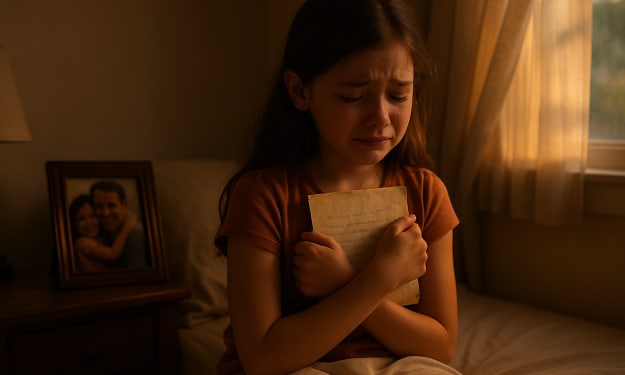
The Last Letter and a Tiny Promise In a modest home nestled amidst the bustling lanes of a small town, lived Ahmed—a man whose entire universe revolved around the sparkling eyes and infectious laughter of his little daughter, Aima. She was not just his child, but the very essence of his being, the reason behind every breath he took. Aima, with her boundless curiosity and uncontainable energy, was pure joy incarnate—a tiny burst of sunshine who saw her father as nothing short of a superhero. Their lives were painted with the hues of simple yet priceless routines. Every morning, Ahmed would gently wake her up, her sleepy smile enough to dissolve his exhaustion. He had mastered the art of braiding her hair with fatherly care, listening intently as she shared her dreams and school adventures. Come evening, the roles reversed as he became dragons, knights, and fairies in her imaginative bedtime stories. Ahmed worked tirelessly—double shifts, long journeys, calloused hands—yet his heart remained light, buoyed by Aima’s dreams. To him, she was his “princess,” a word he’d softly breathe into her hair during their quietest moments. And Aima adored him with the unfiltered love only a child can offer—clinging to him, trusting him, needing only his smile to feel safe. But life is often cruel in its silence. One day, a shadow began to creep into their bright world. Ahmed, once vibrant and strong, began feeling an unrelenting fatigue, an ache he brushed off as overwork. When he finally saw a doctor, the verdict was swift and merciless: advanced cancer. Aggressive. Irreversible. The news shattered him—not for himself, but for Aima. How could he tell her that her invincible hero was crumbling? He chose silence, determined to protect her innocence. Time slowed. Every shared moment became sacred. He watched her play, his heart aching with the knowledge that these seconds were numbered. His laughter became a mask, his strength a crumbling wall. Aima noticed. Papa didn’t play the same. His hugs weren’t as strong. Sometimes he just stared, lost in thought, smiling softly at nothing. She responded in the only way she knew—more drawings, more cookies, more kisses. Small hands trying to light a fading flame. The illness advanced with merciless pace. His body weakened, and smiles grew harder to fake. In those final, painful days, all he could think of was Aima. He wanted to leave behind something more than memories—something she could hold, read, and remember. With trembling hands and a breaking heart, he wrote her a letter. A birthday gift for her tenth year—a piece of his soul wrapped in paper and ink. He poured into it every dream, every ounce of love, and a simple, eternal promise: that he would always be watching. Then the day came. Quietly, in his sleep, Ahmed slipped away. A peaceful departure that left a storm behind. Aima, too young to fully grasp the permanence of death, watched silently as unfamiliar sorrow swept through her home. She saw people cry. She noticed the silence. And she asked, with a whisper that shattered hearts: “Papa will come back, won’t he?” The house that once echoed with laughter now stood heavy with stillness. Years passed. Aima grew. Her laughter returned—but so did a silent void that never truly left. Then came her tenth birthday. Among balloons and quiet celebration, her mother handed her an old, sealed envelope. “Your papa wanted you to have this today,” she whispered, her voice trembling. Aima opened it slowly, her fingers trembling. The familiar handwriting hit her like a warm breeze from the past. As she read, a flood of memories rushed over her—his voice, his warmth, his love. The letter spoke of his pride in her, his hopes for her, his unshakable belief in her dreams. He urged her to be brave, kind, and to never give up—just like he never gave up on her. He promised his love would always be with her, a guiding star from afar. Tears streamed down her cheeks. Every word felt like a hug, every line a whisper of comfort. In that moment, she truly understood the depth of his sacrifice and the eternal reach of his love. From that day on, Aima lived with new strength. She excelled in school, pursued her dreams, and faced life’s challenges with the quiet determination that mirrored her father’s spirit. The letter remained with her always—a sacred promise folded close to her heart. And with every step forward, she felt him—like a gentle wind, a quiet whisper in her soul—reminding her that love like his never fades. It becomes a promise. A legacy. A guiding light. Forever.
By Noman Afridiabout a year ago in Families
The Clock on the Wall
I never liked that clock. It was in our lounge room, a tacky, ticking plastic affair that was never quite right for the decor. The glass was broken from when I'd thrown a cricket ball indoors and blamed the kid next door. The numbers were beginning to wear off. Yet my father never got a new one. It still works," he'd say, rapping the glass with his knuckle. That was Dad — practical to a fault. He never purchased anything twice if the original still worked. His shirts were always neatly patched at the elbows. His shoes shined until they gleamed — even when they were ten years old. He used things, loved people, and wasted nothing. Except perhaps time — the one thing that never returned. --- Growing up, I always thought my father didn’t feel much. He did not hug us for no reason. Never yelled at us unless we really messed up. Never cried — not even at his own father’s funeral. He put in a 10-hour day at the power plant, came home with grease on his hands and weariness on his shoulders, then went out to inspect the generator behind our house because, "if I don't, who will?" He did not read me bedtime stories. He did not attend my school's poetry contest. And when I said I was going to study literature, not engineering, he just nodded and said, "Just make sure you can earn from it." I confused that silence with indifference. --- Years went by. I left for the city. College, career, apartment — the works. Mom would call me every Sunday, giving me updates on Dad's health, or the lack thereof. "He doesn't sleep well," she once remarked. "His knees hurt. He won't see a doctor." "Tell him to rest," I would answer nonchalantly. Yet I wouldn't phone him. I'd always intended to. But never did. Then one morning, the call came. --- It was Mom. Her voice cracking. He fell in the garage. The doctor said… his heart. Silence. "You should come." --- I returned home to see him sitting up in bed, wires all over the place, oxygen tube in his nose. He was smaller, as if someone had deflated the man who used to lift water tanks on his own. "Still wearing that silly watch?" he rasped with a weak grin, gazing at the digital wristwatch he had given me on my 18th birthday. I nodded, abruptly speechless. My throat seared with the guilt of distance. He extended his hand and touched my wrist. "Good. It's waterproof." --- That evening, I sat next to him, watching him as he slept. I saw how the fingers of time had etched lines on his face. How his hands, strong and stained with labor once, now quivered as they rested. I glanced around the house — it was the same. Mom's plastic flowerpots on the window. Dad's bookcase full of aging car manuals. And that blasted clock still ticking away on the wall. For a moment, I hated it even more — the way it just kept going while everything else fell to pieces. --- In the following days, he weakened. But also. softened. He inquired about my job. He inquired whether I had anybody special. He even managed, "I'm proud of you," although his voice broke in the middle. One night, he had me sit with him and sort through some old letters. In them was a picture of me, 7 years old, clutching a toy wrench. On the back, in his handwriting: "My boy will fix anything — even the world." I broke down. "Why did you never say things like that out loud?" I asked. He smiled weakly. "Because I was too busy showing it." --- On his final morning, he requested two things: 1. His tea, with two sugars. 2. For me to wind the old clock. "It slows down if you don't wind it," he replied. While I moved the hands, he shut his eyes. When I turned back, he had stopped breathing. --- We laid him to rest by the garden. The same one he planted each spring by his own hands. I stood by as they put the coffin into the ground. My heart was numb, but my eyes could not remain dry. At home, I sat in his chair. For the first time, I actually heard the clock ticking. Steady. Calm. Untroubled by sorrow. I realized it wasn’t just a clock. It was him — a symbol of time spent, not wasted. Of love shown, not spoken. --- Now, I wind it up every Sunday. I take my tea as he did. I wear his flannel shirts with patches when I write. And sometimes, when I pass the garage, I could swear I still catch a whiff of grease and dust and the silent, obstinate love of a man who never spoke it — but always meant it.
By Muhammad Usamaabout a year ago in Families
The Last Cup of Tea
The house hadn’t changed. The cracked veranda tiles still sighed under his feet, just as they did when he used to chase after the neighborhood kids. The faded wind chime still hung by the front door, though it no longer sang. Dust lay gently on the windows, as if time itself had exhaled and settled in. Aariz turned the key in the rusted lock. The door opened slowly, creaking like an old memory resurfacing. It had been four months since his mother passed away. He hadn’t come back since the funeral. Couldn’t. Everything in this home reeked of her – her scent, her scolding, her soft humming in the kitchen when she made her famous cardamom chai. Coming back felt like walking into a memory he wasn’t ready to relive. But the lawyer had called. The property needed to be emptied. Sold. It was time. He stepped inside, half expecting to hear her call out his name the way she always did: “Aariz beta, chai thandi ho jayegi!” But the only voice that greeted him was silence — heavy, solemn, and absolute. The living room was untouched. Her shawl still hung on the back of the armchair. Her reading glasses were resting on the open pages of a half-finished Urdu novel. A pair of her slippers peeked out from under the coffee table. Aariz sat down on the couch, closed his eyes, and for a brief moment, pretended she was in the kitchen — that at any second, the whistle of the kettle would sound, and she’d come in carrying a tray of tea and biscuits, smiling through her tired eyes. But there was no kettle. No tea. Just silence. He wandered into the kitchen. The same rusted stove. The same spice rack she refused to replace. A little chalkboard still hung by the fridge, with her last written note: “Aariz will come next week. Must buy his favorite cake.” His chest tightened. He remembered the last phone call — two days before she passed. "Are you eating properly?" "Yes, Ammi." "When are you visiting again?" "Soon, just finishing up work." "Don’t wait too long, beta. Mothers don’t live forever." She had laughed when she said that. He didn’t. She died of a silent heart attack two mornings later. Alone. In this house. With no one to hold her hand. He had arrived too late. The tears came uninvited, hot and bitter, as Aariz stood by the stove and imagined her standing there in her worn-out apron, stirring tea, tasting it with her pinky, then insisting it needed "just one more elaichi." He wiped his face and opened the cabinet. There, neatly arranged, were the teacups they always used. One of them had a tiny chip on the rim — his favorite. He pulled it out, along with her special tea tin. He made the tea slowly, deliberately. He boiled the milk, added sugar the way she did — not too much, just enough. Crushed the cardamom pods the way she taught him. Let it steep just a little longer for the stronger flavor. He poured it into both cups — hers and his. Then he sat across from her empty chair. For a while, he didn’t speak. He just sat there, the cup warming his hands, the steam rising slowly between them like an unfinished goodbye. Then softly, almost brokenly, he whispered: "I’m sorry, Ammi." "I should have come back sooner." "I thought there would be more time." The chair didn’t respond. But the house listened. And somehow, he felt she heard him. When he left later that evening, he didn’t take much — just her shawl, the tea tin, and the chipped teacup. He locked the house gently, like tucking a child into bed. As he walked away, he looked back one last time. The wind chime moved — just slightly — and this time, it rang. Epilogue: Grief doesn’t ask for permission. It arrives when you’re unready, and stays longer than you want. It isn’t loud or dramatic. Sometimes, grief is just a cold cup of tea on the table — untouched, but filled with memories.
By Ikram Ullahabout a year ago in Families