
SSDI Appeal: What to Do After a Disability Denial
SSDI appeal process explained: how to appeal a denied disability claim
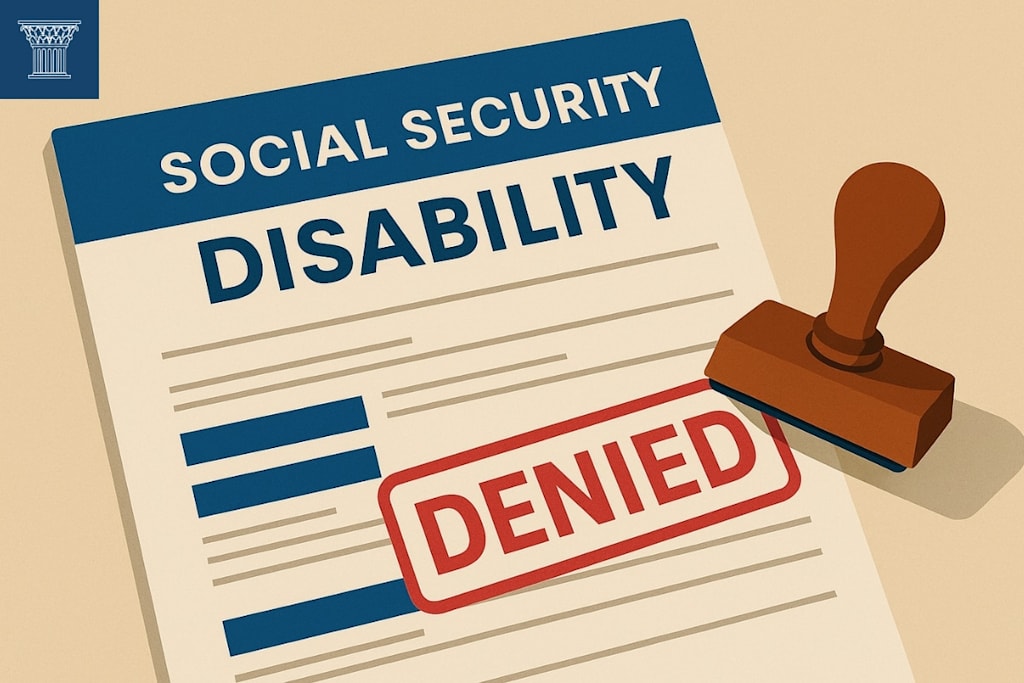
Getting denied for Social Security Disability Insurance (SSDI) can feel discouraging, especially when your health already makes daily life harder. The good news is that an SSDI appeal gives you another chance to show Social Security why your condition keeps you from working.
What an SSDI Denial Really Means
An SSDI denial means Social Security did not approve your claim at that stage. It does not always mean your disability is not real, and it does not always mean your case is over. Many people are denied at first and continue through the appeal process.
What should you do if your SSDI application was denied?
First, read your denial letter. It should explain why your claim was denied and how to appeal the decision. The reason for denial matters because your next move must address the problem Social Security pointed out in your file.
For example, if the denial says there was not enough medical evidence to prove your disability, your focus should be to gather up-to-date medical records, test results, doctor notes, and other documents that clearly reveal your limitations.
The Main Steps in an SSDI Appeal
There are four appeal levels or stages.
1. Request Reconsideration
If your application for SSDI is denied, you start the appeal process with a request for reconsideration.
Gather the materials and evidence you need to counter the reason for denial, and then file either:
- A request for disability reconsideration, if the denial has to do with proving the disability exists and to the extent claimed; or
- A request for non-medical reconsideration to appeal a denial based on non-medical considerations.
The Social Security Administration (SSA) gives you up to 60 days from the date you receive your denial letter. Do not miss this deadline.
At this stage, a Disability Determination Services examiner will review your requests for a disability reconsideration, or an SSA employee will review your non-medical reconsideration request. Otherwise, an SA request and original application again.
2. Request a Hearing
If your appeal for reconsideration is denied, the next step is to request an SSDI hearing with an administrative law judge. This is the stage where you get the opportunity to present your case and evidence, in real time during a live proceeding with a judge who can decide your case.
As with the earlier step, you have two options:
- A request for a disability hearing, if you’re appealing a disability reconsideration denial; or
- A request for a non-medical hearing, if you’re appealing a non-medical reconsideration denial.
During your hearing, you get the opportunity to explain, in person, via video teleconferencing, or via phone, why your reconsideration decision should have been approved.
The judge reviews the evidence, listens to you, asks you questions, and may hear from medical experts or other witnesses.
The Social Security Administration (SSA) gives you up to 60 days from the date you receive your reconsideration denial decision to request a hearing.
3. Request a Hearing Decision Review
If the judge denies your claim, your recourse is to request a hearing decision review by the Appeals Council.
The Appeals Council can decide to:
- Agree to your request for a hearing decision review; or
- Deny your request for a hearing decision review.
If they agree to review the hearing decision, they may decide to:
- Confirm the judge’s decision;
- Return your case to another judge for further review; or
- Directly decide to approve your SSDI application.
Note that the last possibility happens rarely, because the Appeals Council’s task is to review the technicalities of hearing decisions rather than to review your application itself.
If the Appeals Council returns your decision to another judge for review, you get another opportunity to be heard and maybe overturn the initial hearing decision.
The Social Security Administration (SSA) gives you up to 60 days from the date you receive your hearing decision to request an Appeals Council review.
4. File a Federal District Court Action
If you do not agree with the Appeals Council's decision, you have one final recourse: file a civil suit at the closest U.S. district court within 60 days of receiving the decision.
Deadlines, Forms, and Filing Options
Deadlines are very important to SSDI appeals. Sixty days upon the receipt of a decision is the standard timeframe for any appeal. The date of receipt is usually assumed to be five days after the actual decision date to allow for standard mailing windows.
Note that the disability appeals can be filed online. Even the last stage, i.e., filing a civil suit at a U.S. district court, can be done by your attorney electronically. Of course, this appeals stage requires written complaints and court summons to be sent to your area’s Social Security General Council through registered mail.
Frequently Asked Questions
What is the deadline to file an SSDI appeal?
You generally have 60 days to file an SSDI appeal after you receive the decision. The Social Security Administration usually assumes you received the notice 5 days after the date printed on it, unless you can show you received it later.
Can I appeal an SSDI denial online?
Yes, many SSDI disability appeals can be filed online. The Social Security Administration also allows appeals by mail or through a local Social Security office, depending on the appeal type and your situation.
What happens during SSDI reconsideration?
Reconsideration means the Social Security Administration reviews your claim again after an initial denial. For disability reconsideration requests, a Disability Determination Services examiner reviews the request and the original application.
Can I submit new medical evidence during an SSDI appeal?
Yes, you can submit new medical evidence during an appeal. New treatment notes, test results, medication updates, and medical opinions may help explain your condition more clearly. The Social Security Administration says evidence includes treatment notes and medical opinions about what you can still do despite your impairment.
What happens if the Appeals Council denies review?
If the Appeals Council denies review, the judge’s decision usually becomes the final agency decision. If you still disagree, the Social Security Administration says you may file a civil action in a U.S. district court within 60 days after receiving notice of the Appeals Council’s decision.
The SSDI Appeal Process
The SSDI appeal process is pretty straightforward. It has four levels, which start with a request for reconsideration and, if the denial is not overturned in any of the intermediate stages, may culminate with a civil suit in a federal court.
About the Creator
Enjoyed the story? Support the Creator.
Subscribe for free to receive all their stories in your feed.
Comments
There are no comments for this story
Be the first to respond and start the conversation.