
She Never Said Goodbye
A year after losing her mother, a daughter discovers three simple objects that reveal a love stronger than regret.
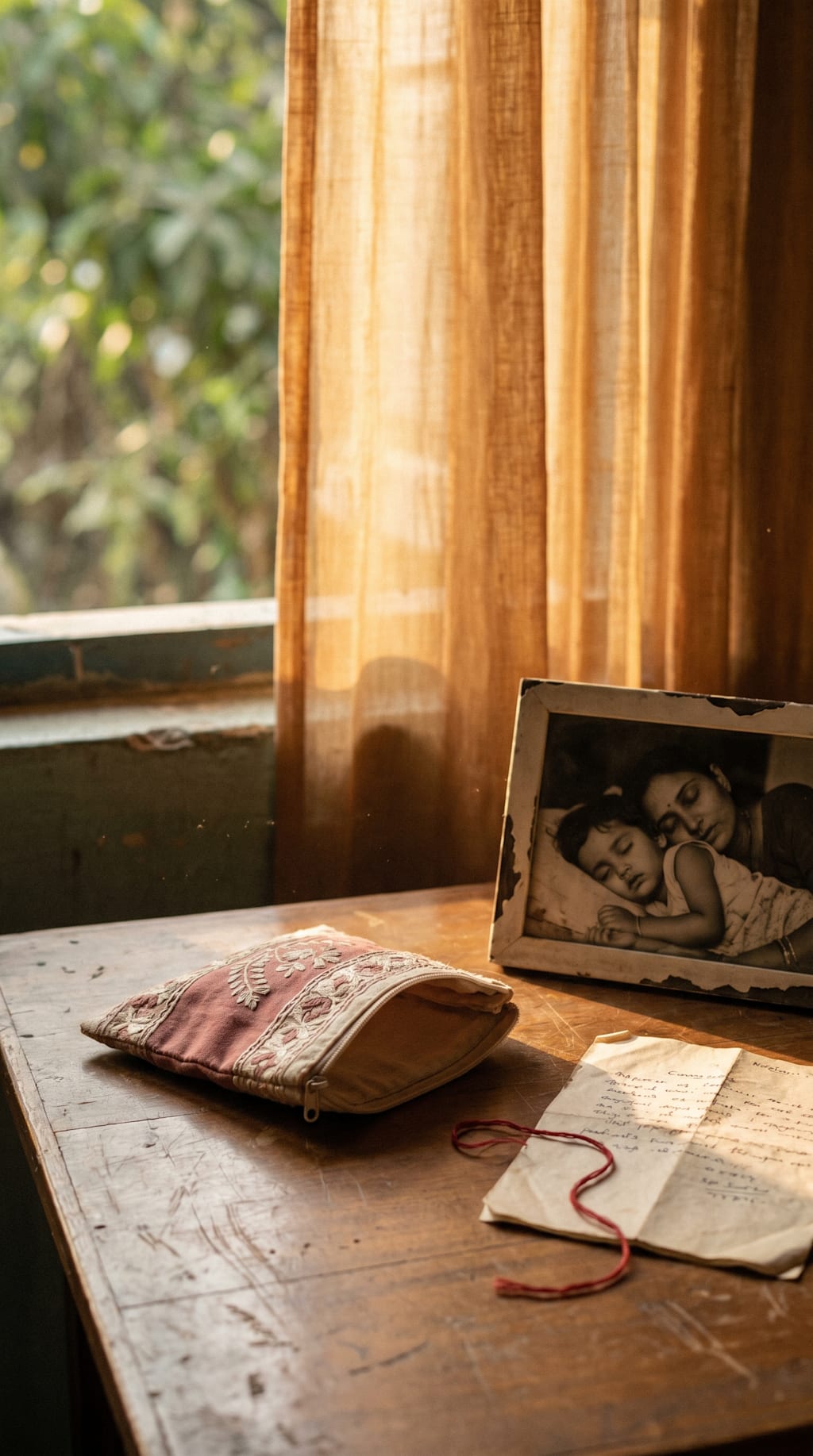
The last thing I said to my mother was something I can't even remember clearly anymore. Not because it wasn't important. Because it wasn't. At least, it shouldn't have been. It was one of those ordinary arguments that grow from nothing. A careless comment. A tired mood. Two people who loved each other too much and listened too little. I remember standing near the front door. I remember my mother's face. Not angry. Just quiet. That somehow makes it worse. I left before she could say anything else. I wanted her to call me back. To stop me. To tell me I was being unreasonable. But she didn't. The door closed behind me, and I drove away carrying all the certainty that only anger can create. I thought there would be time. There is always time, until there isn't. The next morning, my phone rang before sunrise. A sound that still lives somewhere inside my bones. By noon, my mother was gone. No warning. No long illness. No final conversation. No chance to take back the sharp edges of my words. Just gone. People say grief arrives like a storm. For me, it arrived like fog. Silent. Heavy. Everywhere. For months, I moved through life as if someone had lowered the volume on the world. Birthdays came and went. Holidays passed. The seasons changed outside my window. Inside me, nothing moved. I carried guilt the way some people carry keys—in a pocket they touch a hundred times a day. Every memory led back to that door. That argument. Those unfinished words. Sometimes I imagined different endings. I would stay. I would apologize. I would hug her before leaving. I would tell her I loved her. The mind becomes a skilled architect when building impossible versions of the past. Nearly a year passed. Three hundred and something days of carrying a weight that never seemed lighter. Then, one rainy afternoon, there was a knock on my door. An elderly neighbor stood outside. She had known my mother for years. In her hands was a small cloth pouch. Faded blue. The kind that looked as though it had spent decades inside a drawer. "I think this belongs to you," she said. She explained that my mother had given it to her weeks before she died. Not for any reason. Just in case. My hands trembled as I took it. After she left, I sat alone at the kitchen table. The pouch felt surprisingly light. For several minutes, I only stared at it. Part of me was afraid. Not of what was inside. Of what it might make me feel. Eventually, I untied the string. Three things slipped onto the table. Nothing more. Nothing less. The first was an old photograph. The edges were worn and curled. In it, I couldn't have been older than five. I was asleep with my head resting in my mother's lap. She was looking down at me. Not at the camera. At me. The expression on her face was so ordinary that it hurt. The quiet look of someone who had spent years loving another person without expecting applause for it. The second item was a folded piece of paper. Inside was a handwritten prayer. Not a letter. Not a message. A prayer. My name appeared several times between the lines. She had written blessings for my health. My future. My happiness. For protection during difficult days. For peace when life became heavy. The ink had faded slightly. The words had not. The third item was the smallest. A short piece of red thread. The kind mothers keep in sewing boxes. The kind used to fix loose buttons before school mornings. I held it between my fingers. Simple. Ordinary. Almost meaningless. And yet it made me cry more than anything else. Because I understood. The photograph was love remembered. The prayer was love spoken. The thread was love practiced. The countless invisible repairs mothers make throughout a lifetime. The buttons they sew back on. The tears they mend. The pieces they hold together while no one is watching. There was no note explaining any of it. No final lesson. No goodbye. No dramatic declaration. Just those three things. A memory. A prayer. A thread. And somehow that was enough. For months, I had been carrying the belief that our last argument had become the final chapter of our relationship. Sitting there at the kitchen table, I realized something else. That argument mattered far less to my mother than it did to me. She had prepared this pouch before it happened. Before the raised voices. Before the slammed door. Before the words I regretted. The love inside it existed untouched by all of that. She had already forgiven what she didn't even know would need forgiving. That evening, I placed the photograph back inside the pouch. Then the prayer. Then the thread. I tied the string carefully. Not because the objects were fragile. Because what they carried was. Now the pouch rests in a drawer beside my bed. I don't open it often. I don't need to. Some things only need to be seen once to stay with you forever. And when guilt returns—as it sometimes still does—I remember those three small objects and the woman who chose them. Not to explain love. To prove it. Sometimes the strongest stitches are the ones we never notice until something threatens to come apart. :::
About the Creator
Enjoyed the story? Support the Creator.
Subscribe for free to receive all their stories in your feed.
Comments
There are no comments for this story
Be the first to respond and start the conversation.