
Real Estate in Pakistan: How to Buy Property With Confidence
A practical guide to buying and investing in real estate in Pakistan, including location checks, legal verification, developer credibility and safer decision-making.

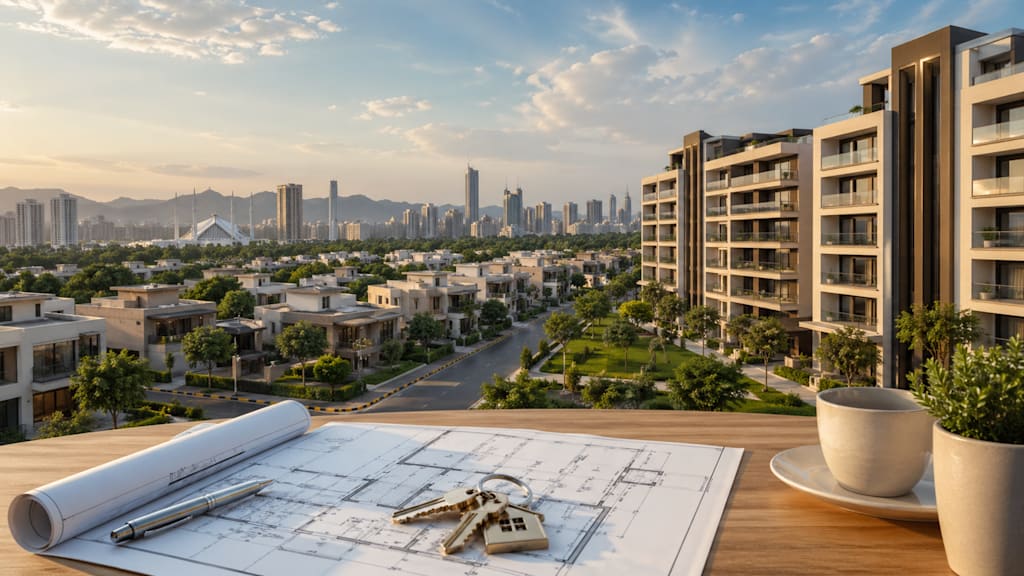
Buying real estate in Pakistan is rarely a small decision. For one family, it may be the result of years of saving. For another, it may be the first serious step toward rental income or long-term wealth. Either way, property has a way of feeling emotional and practical at the same time: people want security, but they also want value.
That is why a good real estate decision should not begin with a sales pitch, a discounted file, or a friend telling you to book before prices rise. It should begin with a clear question: what problem is this property supposed to solve? A home, a rental unit, a plot for future construction and a short-term resale opportunity all demand different checks.
Why Real Estate Still Matters in Pakistan
The long-term demand story is easy to understand. Pakistan's population is large, young and still urbanizing. The Pakistan Bureau of Statistics' 2023 Population and Housing Census dashboard reports a national population of about 241.5 million and more than 38 million households. Those numbers do not make every property a good investment, but they do explain why housing, infrastructure and planned communities remain central to the market.
Real estate also connects with the wider economy. The State Bank of Pakistan's Housing and Construction Finance material describes construction as a sector linked with many allied industries and a significant share of labor activity. In practical terms, a housing project is not only land and maps; it can affect roads, materials, utilities, jobs, shops and services around it.
But broad demand should never be mistaken for guaranteed returns. Real estate is local. A well-planned project near usable infrastructure may perform very differently from a similar-looking project with unclear approvals, weak access or slow development. The safest mindset is to judge each opportunity on its own evidence.
Start With Purpose: Home, Investment or Both?
Before comparing payment plans, decide whether the property is mainly for living or investing. A family buying a home may care most about schools, hospitals, security, parks, nearby grocery options, road access and everyday convenience. An investor may care more about market liquidity, expected possession date, rental demand, resale activity and the credibility of future development.
Many buyers get stuck because they mix these goals. A quiet residential street may be excellent for living, but slow for short-term flipping. A plot in a developing area may offer upside, but it may not suit a family that needs services immediately. Being honest about the purpose makes the rest of the research more focused.
Location Is More Than a Famous Area Name
In Pakistan's major cities, buyers often pay more for areas connected to ring roads, business corridors and established neighborhoods. That premium can be justified when infrastructure is visible and functional. It becomes risky when the price depends only on future announcements. A sensible buyer should visit at different times of day, check traffic flow, notice surrounding land use and ask whether daily life would actually be convenient there.
Legal Verification Is the Step You Should Never Skip
Legal due diligence is where a buyer reduces the biggest avoidable risks. Check whether the project is approved by the relevant authority and whether the specific block, phase or parcel being sold is covered by that approval. Lahore-area buyers, for example, can use the Lahore Development Authority-approved schemes resource as one part of their verification process.
For land records in Punjab, the Punjab Land Records Authority is another useful starting point. Buyers should also ask for ownership documents, layout approvals, transfer procedure, development charges, possession timeline and written terms. A brochure can be attractive, but paperwork is what protects the buyer.
This is also where professional help matters. A qualified lawyer or trusted property documentation expert can spot issues that a first-time buyer may miss, especially in high-value purchases or unfamiliar cities.
Developer Credibility Matters as Much as the Plot
A developer does more than sell land. The developer is responsible for planning, infrastructure, communication, customer records, possession timelines and the overall direction of a community. That is why developer credibility deserves the same attention as price and location.
Look for visible site progress, a public office, transparent payment channels, customer support, documented approvals and a track record that can be checked. Buyers shortlisting Lahore-based communities, for instance, may come across Union Developers while researching Trusted Real estate Developers in Pakistan. The useful exercise is not to rely on a brand name alone; it is to compare listed communities, approval claims, digital tools, buyer support and actual development against official records and independent advice.
Union Developers' official website lists its communities, virtual-tour options and property-management tools, while its About Us page states that the company was established in 2004. Those are helpful starting points for research, but a careful buyer should still verify project-specific details before paying a booking amount.
What Makes a Housing Community Valuable?
Modern buyers are not only buying boundary lines on a map. They are looking for a livable environment. Roads, drainage, electricity planning, parks, commercial access, mosque areas, security arrangements, maintenance systems and nearby services all influence long-term value.
The important word is execution. Wide roads in a layout plan matter only when they are built. A park adds value when it is developed and maintained. Security matters when systems, staff and access control are actually operating. The closer a community is to delivered infrastructure, the easier it becomes for buyers to judge value with confidence.
Read the Payment Plan Like a Contract
Installments can make property ownership more accessible, but a payment plan should be studied, not celebrated too quickly. Ask about the booking amount, monthly or quarterly installments, confirmation charges, development charges, possession charges, transfer fees, late-payment penalties and cancellation terms.
A plan that looks affordable in the first month may become difficult once extra charges appear. Buyers should calculate the full cost, keep emergency liquidity and avoid putting every available rupee into a single plot or file. Real estate can be a strong asset, but it should not leave the buyer financially trapped.
Rental Yield, Resale and Holding Period
Investors should be realistic about timing. Property is not always liquid. A buyer may need months to resell at the expected price, especially during slower market cycles. Developing areas may require patience, while apartments or commercial units in populated areas may offer quicker rental potential but also higher maintenance and management needs.
Rental yield should be calculated after maintenance, taxes, vacancy periods and service charges. Resale value should be compared with actual nearby transactions where possible, not only asking prices on listings. Asking prices can show sentiment; completed deals tell a clearer story.
A Practical Checklist Before Buying
- Confirm the project's approval status with the relevant authority.
- Verify ownership and transfer procedure through official channels where possible.
- Visit the site personally or send a trusted representative.
- Compare real development progress with the promised timeline.
- Ask for a written payment schedule, including all extra charges.
- Review cancellation, refund, transfer and possession terms.
- Check the developer's past work, public reputation and support channels.
- Speak with existing buyers or residents if the community is partially delivered.
- Be careful with pressure-based claims such as 'last day price' or 'limited file'.
- Use professional legal advice for high-value or unfamiliar transactions.
The Better Buyer Is the Better Investor
Pakistan's real estate market will continue to attract attention because the need for housing, urban services and better planned communities is real. At the same time, buyers are becoming more selective. They want clearer documentation, better communication, usable infrastructure and communities that make everyday life easier.
The best real estate decisions are usually not rushed. They are researched, verified and matched to a real purpose. When buyers combine market awareness with legal checks and developer evaluation, property can become what it should be: a stable, useful and confidence-building asset.
About the Creator
Jessica Wade
I work with SaaS, Tech, established E-commerce and Real Estate companies to help create and execute a content marketing strategy built around your goals and ROI.
Enjoyed the story? Support the Creator.
Subscribe for free to receive all their stories in your feed.
Comments
There are no comments for this story
Be the first to respond and start the conversation.