
Protecting Our Children: Facing the Hard Truth About Holiday Risks
Factors That Heighten Risks During the Holidays


The holidays are a time for joy, family, and memories, but they can also carry risks we don’t often want to face. Amidst the laughter and gatherings, there’s an uncomfortable truth: children are at a higher risk of sexual abuse during this time of year.
It’s not easy to talk about, but ignoring it won’t make it go away. The first step in protecting our children is acknowledging the dangers and taking action to safeguard them. In this post, we’ll explore why these risks increase during the holidays and share practical, actionable strategies to keep your kids safe.
Why the Holidays Are a High-Risk Time

The holiday season creates unique circumstances that can increase the risk of abuse. Understanding these factors can help us remain vigilant.
1. Increased Social Interaction
With family gatherings, holiday parties, and visits from distant relatives, children are often exposed to people they don’t interact with regularly. This increased exposure, combined with a relaxed atmosphere, can blur boundaries and create opportunities for potential predators.
Example: A relative offering to watch the kids while parents are distracted with hosting may seem harmless but could put a child at risk if proper precautions aren’t taken.
2. Stress and Distractions
The holidays bring their fair share of stress—planning meals, buying gifts, and balancing schedules can leave parents preoccupied. This stress can lead to lapses in attention, leaving children unsupervised for longer periods.
Did you know? Studies show that predators often take advantage of chaotic environments where parents are too distracted to notice warning signs.
3. Family Dynamics
Holiday reunions often mean spending time with extended family, including people you may not fully trust. Many cases of abuse are perpetrated by someone the child knows, such as a relative or family friend.
Key Insight: The expectation of familial closeness during the holidays can pressure children to engage in physical affection they’re uncomfortable with, like hugs or kisses from relatives.
How to Protect Your Children During the Holidays
While these risks are alarming, there are proactive steps you can take to protect your children. Here’s how:

1. Foster Open Communication
Make it clear to your child that they can talk to you about anything, no matter how uncomfortable or unusual it seems. Creating a safe space for conversations is critical.
Tip: Establish a “safe word” or signal your child can use if they ever feel unsafe or need your help discreetly.
Example Conversation Starter:
“Sometimes people can do things that make us feel uneasy. If that happens, you can always tell me, and we’ll figure it out together.”
2. Teach Body Autonomy
Children need to understand that their bodies belong to them and that they have the right to say "no" to unwanted touch—even from adults.
Age-Appropriate Explanation: For younger kids, say, “No one should touch parts of your body covered by a swimsuit.” For older children, discuss more nuanced topics like consent and boundaries.
3. Set Boundaries with Family Members
It’s okay to establish and enforce boundaries with family, even if it feels awkward. Your child’s safety should always come first.
Example Rule: Let relatives know that physical affection, like hugging or sitting on laps, should always be the child’s choice.
Key Tip: Be firm but polite when addressing these boundaries. If someone makes your child uncomfortable, intervene immediately.
4. Monitor Alone Time
Predators often seek moments when they can isolate a child. Be cautious about who you allow to be alone with your kids, even trusted family members.
Practical Advice:
Don’t let children stay overnight at a relative’s house without discussing safety expectations first.
Keep communal spaces open and ensure children know they can come to you if something feels wrong.
Barriers to Disclosure: Why Kids Don’t Speak Up
Children who experience abuse often stay silent due to fear, guilt, or manipulation. Understanding these barriers can help you create an environment where they feel safe speaking up

1. Fear of Not Being Believed
Children may worry that adults won’t take them seriously, especially if the abuser is someone the family trusts.
Your Role: Reassure your child that you will always believe and support them, no matter what.
2. Manipulation by the Abuser
Abusers often use threats or guilt to keep children quiet, saying things like, “If you tell, I’ll get in trouble,” or, “This is our secret.”
Response: Teach your child that no one should ask them to keep secrets about their body or touch.
3. Shame and Guilt
Kids may feel they did something wrong or that the abuse is their fault.
What to Say:
“It’s never your fault if someone makes you feel uncomfortable. No one has the right to hurt you, and I will always protect you.”
Actionable Steps for Parents
Here’s a quick reference table to help you proactively protect your children:
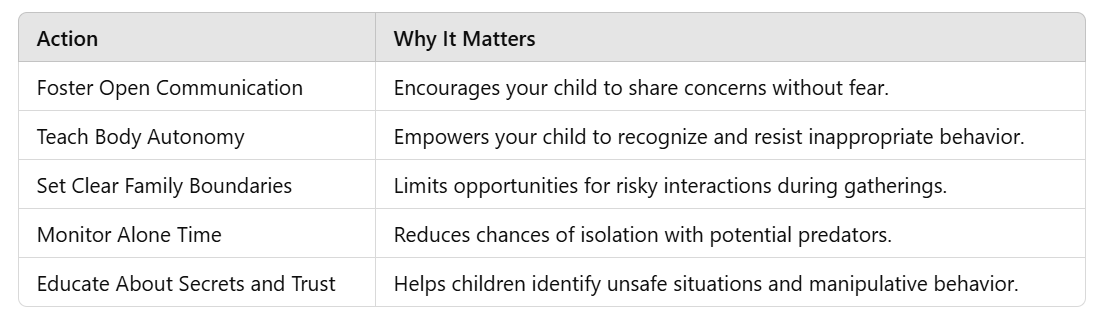
The Bigger Picture: Prevention is Key
It’s not easy to confront these topics, but it’s necessary. As a survivor of childhood sexual assault, I know firsthand how important it is to address these issues early. Prevention and awareness can make all the difference in protecting children from harm.
The holidays should be a time of joy and celebration, not fear or regret. By staying vigilant, fostering open communication, and setting firm boundaries, you can ensure your children remain safe.
Final Thoughts
No parent wants to think about their child being at risk, especially during the holidays. But by taking proactive steps, you can turn this season into a safe and joyous time for everyone.
What strategies do you use to protect your children during the holidays? How do you talk to them about safety and body autonomy? Share your thoughts—I’d love to hear from you.
About the Creator
Nawashiz
Hello there! I'm Nawashiz
Enjoyed the story? Support the Creator.
Subscribe for free to receive all their stories in your feed.
Comments
There are no comments for this story
Be the first to respond and start the conversation.