

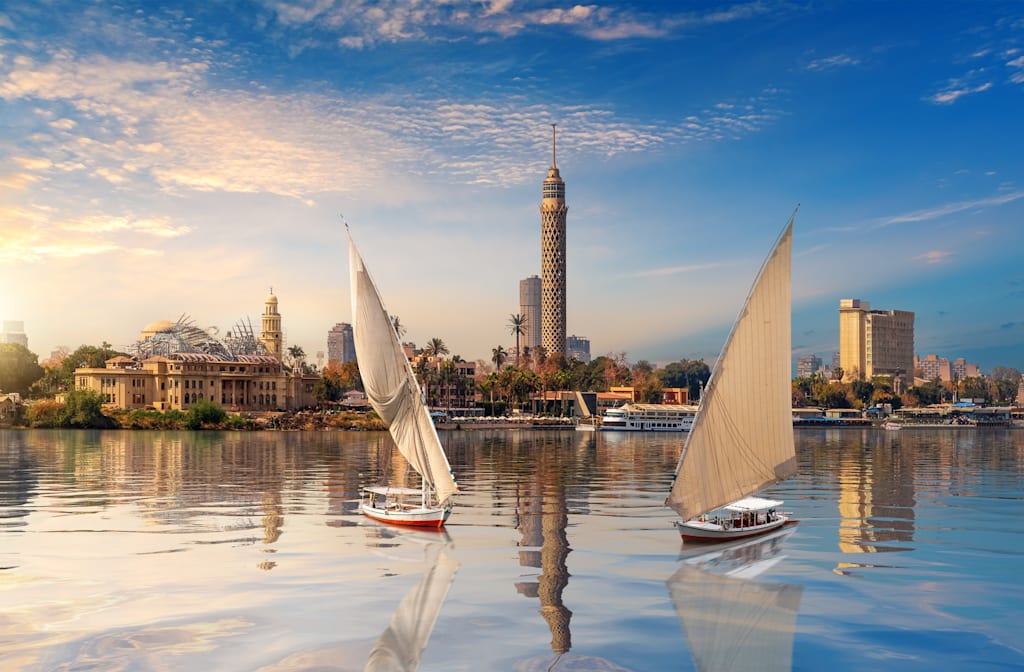
The Nile River is one of the most famous and historically important rivers in the world. Flowing through northeastern Africa, the Nile has played a central role in the development of ancient Egyptian civilization for thousands of years. Often called the “lifeline of Egypt,” the river provided water, fertile soil, transportation, food, and trade routes that allowed one of history’s greatest civilizations to flourish in the middle of the desert.
Stretching for more than 6,600 kilometers, the Nile is considered one of the longest rivers on Earth. It flows northward through several African countries before reaching Egypt and emptying into the Mediterranean Sea. In Egypt, nearly all major cities and historical sites are located along the riverbanks, highlighting the Nile’s importance to the country’s culture, economy, and daily life.
In ancient times, the Nile was essential for agriculture. Every year, seasonal floods deposited rich black silt onto the surrounding land, creating fertile soil ideal for farming. Ancient Egyptians relied on these floods to grow crops such as wheat, barley, vegetables, and flax. Because of the Nile’s reliable water supply, Egypt became one of the most prosperous civilizations in the ancient world despite being surrounded by vast deserts.
The river was also a major transportation route. Boats traveled along the Nile carrying people, goods, building materials, and trade products between cities and temples. Massive stones used to construct monuments such as the pyramids and temples were transported by river. The Nile connected Upper and Lower Egypt and helped unify the kingdom politically and economically.
Today, the Nile remains deeply connected to Egyptian life. Modern cities such as Cairo, Luxor, and Aswan continue to thrive along its banks. The river provides water for millions of people and supports agriculture throughout the country. It also plays a major role in tourism, with visitors from around the world coming to experience its beauty and historical significance.
One of the most popular tourist experiences in Egypt is taking a Nile cruise. Cruises between Luxor and Aswan allow travelers to explore some of the country’s most famous ancient sites while enjoying scenic views of the river. Along the journey, visitors can see temples, villages, palm trees, and traditional feluccas sailing across the water. Popular landmarks visited during Nile cruises include Karnak Temple, Luxor Temple, Kom Ombo Temple, and Philae Temple.
The Nile is especially beautiful at sunrise and sunset, when the golden light reflects on the water and creates breathtaking scenery. In cities like Cairo, visitors can enjoy dinner cruises, traditional music performances, and boat rides along the river in the evening. In Luxor and Aswan, the Nile offers a quieter and more peaceful atmosphere surrounded by ancient temples and desert landscapes.
The river is also home to diverse wildlife and ecosystems. Birds, fish, and plant species thrive along its banks, and the fertile land surrounding the river supports farming communities across Egypt. In southern Egypt, near Aswan, visitors can also explore Nubian villages and learn about the unique culture and traditions of the Nubian people who have lived near the Nile for centuries.
Throughout history, the Nile has inspired myths, religious beliefs, literature, and art. Ancient Egyptians considered the river sacred and associated it with gods and divine blessings. Many temples and monuments were built close to the Nile because of its spiritual and practical importance. Even today, the river continues to symbolize life, continuity, and the enduring connection between Egypt’s past and present.
The construction of the Aswan High Dam in the 20th century changed the natural flooding cycle of the Nile and helped control water resources, generate electricity, and support modern agriculture. While the dam brought economic benefits, it also transformed parts of the river’s natural environment and required the relocation of important archaeological sites, including the temples of Abu Simbel.
For travelers, the Nile offers more than just beautiful scenery. It provides a deeper understanding of how ancient Egyptian civilization developed and why Egypt became one of the world’s most influential cultures. Standing beside the river allows visitors to imagine the countless generations that depended on its waters for survival and prosperity.
In conclusion, the Nile River is far more than a river—it is the heart of Egypt’s history, culture, and civilization. From the ancient pharaohs to modern cities, the Nile has shaped every aspect of Egyptian life for thousands of years. Whether explored through a peaceful cruise, a riverside walk, or visits to historic temples along its banks, the Nile remains one of the world’s greatest natural and cultural wonders.
About the Creator
Enjoyed the story? Support the Creator.
Subscribe for free to receive all their stories in your feed.
Comments
There are no comments for this story
Be the first to respond and start the conversation.