

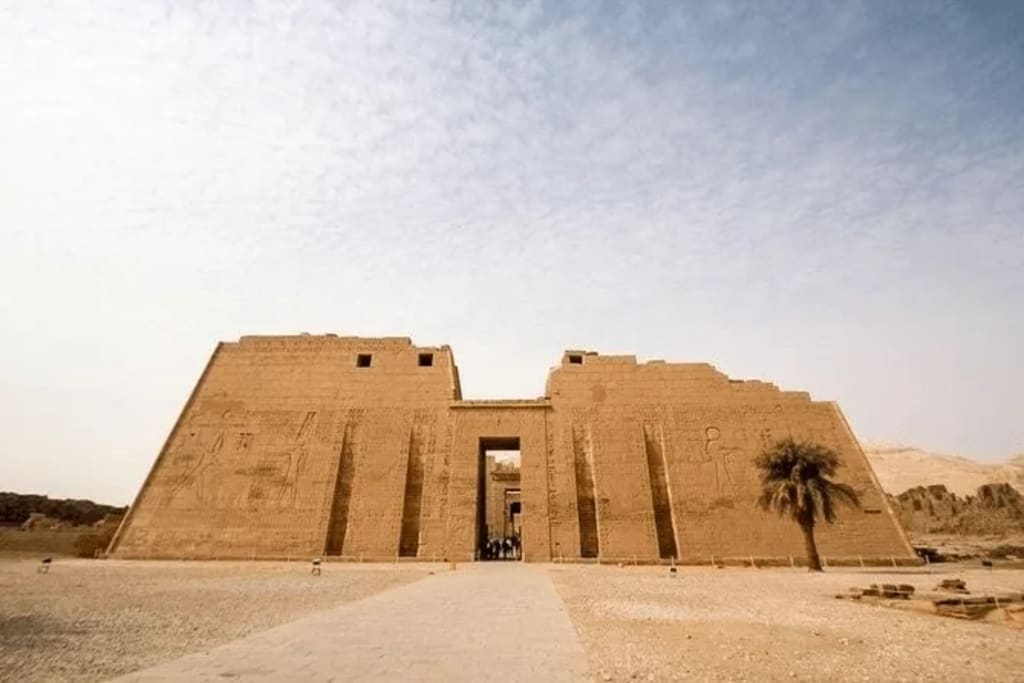
One of the most impressive yet often overlooked attractions in Luxor is the magnificent Medinet Habu, the mortuary temple of Ramesses III. Located on the west bank of the Nile River, this vast temple complex is considered one of the best-preserved monuments from ancient Egypt. While many visitors focus on the Valley of the Kings and Karnak Temple, Medinet Habu offers an equally fascinating experience, combining grand architecture, detailed carvings, and a rich historical legacy.
Built during the 20th Dynasty around the 12th century BCE, the temple was constructed to honor Ramesses III, one of the last great pharaohs of the New Kingdom. The complex served as both a place of worship and a mortuary temple where rituals were performed to ensure the pharaoh’s eternal life in the afterworld. It also functioned as an important administrative and economic center, employing priests, craftsmen, and workers who maintained the temple and its surrounding estates.
As visitors approach Medinet Habu, they are immediately struck by its massive fortified entrance. The unique gateway, known as a migdol, resembles the defensive structures found in ancient Near Eastern fortresses and reflects Egypt’s interactions with neighboring civilizations. This imposing entrance creates a dramatic first impression and distinguishes the temple from many other monuments in Luxor.
Inside the complex, visitors discover a series of courtyards, halls, chapels, and sanctuaries decorated with some of the finest relief carvings in Egypt. The walls vividly depict the military victories of Ramesses III, including his famous battles against the Sea Peoples, a confederation of groups that threatened many civilizations across the eastern Mediterranean. These scenes provide valuable historical information and showcase the artistic skill of ancient Egyptian craftsmen. Detailed carvings portray warriors, ships, weapons, and royal ceremonies with remarkable precision and realism.
One of the most fascinating aspects of Medinet Habu is the exceptional preservation of its artwork. Many reliefs still retain traces of their original colors, allowing visitors to imagine how vibrant the temple would have appeared thousands of years ago. The combination of colorful carvings, hieroglyphic inscriptions, and monumental architecture creates an immersive experience that brings ancient history to life.
The temple’s first courtyard is particularly impressive, lined with massive columns and decorated with scenes celebrating the achievements of Ramesses III. As visitors continue through the complex, they encounter additional courtyards and ceremonial spaces that reveal the temple’s religious significance. These areas were used for rituals dedicated to the gods, especially Amun-Ra, one of the most important deities in ancient Egyptian religion.
Beyond its religious role, Medinet Habu also played an important part in the daily life of ancient Thebes. During times of political instability, the temple complex served as a refuge for local residents because of its strong walls and secure location. Archaeological evidence suggests that entire communities lived and worked around the temple, making it an important center of activity long after the reign of Ramesses III.
The surrounding landscape adds to the temple’s appeal. Situated against the backdrop of the Theban Hills, Medinet Habu offers beautiful views of the desert cliffs and nearby archaeological sites. The peaceful atmosphere is often appreciated by visitors who prefer a quieter experience compared to some of Luxor’s more crowded attractions. Many travelers find that the temple allows them to explore ancient Egyptian history at a slower pace while enjoying the remarkable details preserved throughout the complex.
For photography enthusiasts, Medinet Habu is a dream destination. The massive columns, detailed reliefs, and dramatic lighting conditions create endless opportunities for capturing stunning images. Early morning and late afternoon visits are especially rewarding, as the sunlight highlights the carvings and enhances the beauty of the temple’s architecture.
Today, Medinet Habu remains one of the most important archaeological sites in Luxor. It provides valuable insight into the religious practices, military achievements, and artistic accomplishments of ancient Egypt during the New Kingdom period. Despite being less famous than some neighboring monuments, many historians and travelers consider it one of the most rewarding sites to visit because of its authenticity, preservation, and historical significance.
In conclusion, a visit to Medinet Habu offers an unforgettable journey into the world of ancient Egypt. From its imposing entrance and beautifully preserved reliefs to its fascinating history and peaceful atmosphere, the temple stands as a remarkable testament to the legacy of Ramesses III and the enduring achievements of Egyptian civilization. Whether you are a history enthusiast, an archaeology lover, or simply a curious traveler, Medinet Habu is one of Luxor’s hidden gems and a destination well worth exploring.
About the Creator
Enjoyed the story? Support the Creator.
Subscribe for free to receive all their stories in your feed.
Comments
There are no comments for this story
Be the first to respond and start the conversation.