
Living in a World Where Cities Think for Themselves
What happens when traffic systems, buildings, healthcare networks, and public services start making intelligent decisions without human intervention?

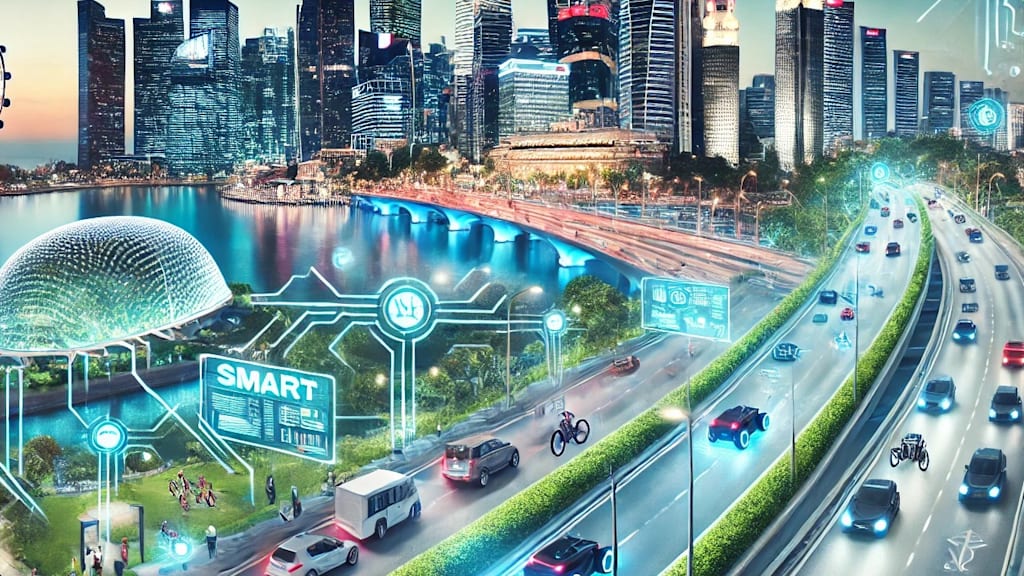
*Imagine waking up in a city that already knows traffic patterns before the first car leaves a driveway, adjusts energy usage before demand spikes, and coordinates public services without waiting for human intervention. This is not science fiction anymore. It is the emerging reality of intelligent cities that can analyze, learn, and respond in real time.*
## Introduction: The Rise of Thinking Cities
For centuries, cities have been designed and managed by people making decisions based on available information. However, the rapid advancement of artificial intelligence, machine learning, sensors, and interconnected digital networks is transforming urban environments into living systems capable of making autonomous decisions.
Today, smart infrastructure can monitor everything from traffic flow and air quality to energy consumption and waste management. As these technologies become more sophisticated, cities are beginning to operate almost like intelligent organisms, processing vast amounts of information and responding to changing conditions instantly.
The concept of cities thinking for themselves raises fascinating possibilities. Could autonomous urban systems create safer, cleaner, and more efficient communities? Or might they introduce new risks involving privacy, security, and human control?
As the world moves toward increasingly intelligent urban environments, understanding what it means to live in a self-thinking city becomes more important than ever.
## What Does It Mean for a City to Think?
When we talk about a city thinking for itself, we are not suggesting that skyscrapers suddenly develop consciousness or that roads become sentient. Instead, the phrase refers to urban systems powered by artificial intelligence that can collect data, analyze situations, predict outcomes, and make decisions with minimal human intervention.
A thinking city typically relies on several interconnected technologies:
* Artificial intelligence algorithms
* Internet of Things (IoT) devices
* Real-time data analytics
* Cloud computing
* Advanced communication networks
* Autonomous infrastructure systems
Together, these technologies create a digital nervous system that continuously monitors the city's condition.
For example, thousands of sensors embedded in roads, buildings, utilities, and transportation networks provide constant streams of information. AI systems analyze that data and initiate actions automatically when necessary.
Instead of waiting for officials to identify problems, the city can recognize and address issues on its own.
## Transportation That Adapts Instantly
One of the most visible examples of urban intelligence is transportation management.
Traffic congestion costs billions of dollars annually in lost productivity, fuel consumption, and environmental damage. Traditional traffic systems often rely on fixed schedules and human oversight, making them slow to adapt to changing conditions.
In a self-thinking city, AI continuously evaluates traffic patterns across the entire transportation network.
Traffic signals can adjust their timing dynamically based on vehicle volume. Public transportation routes can change according to passenger demand. Autonomous vehicles can coordinate movements with city infrastructure to reduce delays and prevent accidents.
Imagine a major sporting event ending suddenly due to severe weather. Instead of causing chaos, intelligent transportation systems could immediately reroute buses, adjust traffic signals, and direct autonomous vehicles toward efficient evacuation routes.
The result would be smoother traffic flow, shorter travel times, and improved public safety.
## Buildings That Manage Themselves
Modern buildings are becoming increasingly intelligent.
In self-thinking cities, buildings can monitor occupancy levels, weather conditions, energy usage, and environmental factors to optimize operations automatically.
Heating and cooling systems can adjust room temperatures based on real-time occupancy. Lighting systems can reduce electricity consumption when areas are unoccupied. Smart elevators can predict demand and minimize waiting times.
These capabilities offer significant benefits:
* Reduced energy consumption
* Lower operational costs
* Improved occupant comfort
* Smaller carbon footprints
* Enhanced maintenance efficiency
Rather than relying on fixed schedules, intelligent buildings continuously adapt to changing circumstances.
As cities become more populated, this level of automation could play a critical role in sustainability efforts worldwide.
## Energy Systems That Predict Demand
Traditional electrical grids often struggle to balance supply and demand effectively.
Self-thinking cities are introducing smart energy systems capable of forecasting consumption patterns and adjusting resource distribution proactively.
Artificial intelligence can analyze historical usage data, weather forecasts, and population activity to predict energy demand hours or even days in advance.
When demand increases, the system can:
* Activate stored energy reserves
* Redistribute power resources
* Integrate renewable energy sources
* Reduce strain on infrastructure
Conversely, during periods of low demand, energy can be stored efficiently for future use.
This predictive capability improves reliability while supporting the transition toward cleaner energy systems.
In many ways, intelligent energy networks function like a city's circulatory system, ensuring resources reach where they are needed most.
## Waste Management Without Human Scheduling
Garbage collection might seem like a mundane aspect of city life, but it illustrates the power of autonomous urban systems remarkably well.
Traditional waste collection follows predetermined schedules regardless of whether containers are full or nearly empty.
Smart waste systems use sensors to monitor fill levels in real time.
When bins approach capacity, AI generates optimized collection routes automatically. Trucks travel only where needed, reducing fuel consumption and operational costs.
Benefits include:
* Cleaner streets
* Reduced emissions
* Lower municipal expenses
* Improved sanitation
* Better resource allocation
Although residents may never notice these behind-the-scenes improvements, they contribute significantly to urban efficiency.
## Public Safety in Intelligent Cities
Safety remains one of the most compelling applications of urban intelligence.
Advanced monitoring systems can detect unusual activities, infrastructure failures, environmental hazards, and emergency situations faster than traditional methods.
For instance, AI-powered surveillance systems may identify accidents moments after they occur and immediately notify emergency responders.
Smart sensors can detect:
* Gas leaks
* Structural weaknesses
* Flood risks
* Fires
* Hazardous air conditions
By responding faster than human-operated systems, thinking cities have the potential to save lives and reduce damage during emergencies.
However, these capabilities also raise important questions regarding surveillance, civil liberties, and personal privacy.
Balancing safety with individual rights will remain a critical challenge as intelligent cities evolve.
## Healthcare Integrated Into Urban Infrastructure
Healthcare could be transformed dramatically in cities capable of analyzing public health trends continuously.
Environmental sensors can monitor air quality and identify pollution hotspots. Data systems can detect disease outbreaks through unusual patterns in healthcare visits and public reports.
AI may help city officials allocate medical resources more efficiently by predicting future healthcare needs.
During public health emergencies, intelligent systems could:
* Track outbreak patterns
* Optimize hospital capacity
* Coordinate emergency responses
* Improve communication with residents
The integration of healthcare data into urban management could lead to healthier populations and more resilient communities.
## Environmental Monitoring and Sustainability
Climate change and environmental degradation present enormous challenges for modern cities.
Thinking cities offer powerful tools for addressing these issues.
Networks of sensors can monitor:
* Air quality
* Water quality
* Noise pollution
* Temperature variations
* Carbon emissions
Artificial intelligence can analyze environmental data continuously and recommend actions to improve sustainability.
For example, irrigation systems in public parks may adjust automatically based on weather forecasts and soil moisture levels.
Energy usage can be optimized citywide to reduce emissions without sacrificing comfort or productivity.
The ability to respond dynamically to environmental conditions may help cities become more resilient in an era of increasing climate uncertainty.
## The Human Experience in Autonomous Cities
Living in a city that thinks for itself would likely feel different from life in traditional urban environments.
Many routine frustrations could disappear.
Traffic delays might become less frequent. Public services could respond faster. Infrastructure problems might be fixed before residents even notice them.
Citizens may interact with digital systems that provide personalized recommendations regarding transportation, healthcare, recreation, and community services.
The city itself could become a proactive partner in daily life rather than simply a physical environment.
Yet there is also a psychological dimension to consider.
Would people feel comfortable knowing algorithms influence many aspects of urban living?
Would residents trust automated decisions affecting transportation, utilities, or public safety?
The success of thinking cities will depend not only on technological performance but also on public confidence.
## Risks and Ethical Concerns
While intelligent cities offer impressive advantages, they also introduce significant challenges.
### Privacy Issues
A city powered by data requires extensive information collection.
Sensors, cameras, connected devices, and digital services generate enormous amounts of personal data.
Without strong protections, residents could face unprecedented levels of surveillance.
### Cybersecurity Threats
The more connected a city becomes, the more vulnerable it may be to cyberattacks.
Hackers targeting transportation systems, power grids, or communication networks could cause widespread disruption.
Protecting intelligent infrastructure will require constant vigilance and advanced security measures.
### Algorithmic Bias
Artificial intelligence systems are only as fair as the data used to train them.
Biased algorithms could unintentionally create unequal outcomes in areas such as law enforcement, resource distribution, or public services.
Ensuring fairness and transparency will be essential.
### Loss of Human Oversight
Excessive reliance on automation may reduce human involvement in critical decisions.
Maintaining meaningful human oversight can help prevent errors and preserve accountability.
## Could Cities Become Truly Autonomous?
The idea of fully autonomous cities remains largely theoretical.
Even the most advanced urban environments today still rely heavily on human leadership and governance.
However, the trajectory is clear.
As artificial intelligence becomes more capable, cities will likely assume greater responsibility for managing infrastructure, services, and resources.
Future systems may handle many operational decisions independently while humans focus on broader policy goals and ethical considerations.
Rather than replacing human governance, intelligent cities may function as highly capable partners that enhance decision-making and improve efficiency.
## The Future of Urban Life
Urban populations continue to grow rapidly around the world.
According to global projections, billions more people will live in cities over the coming decades, placing immense pressure on transportation, housing, healthcare, energy, and environmental systems.
Traditional management approaches may struggle to keep pace with this complexity.
Self-thinking cities offer a compelling solution.
By leveraging artificial intelligence and real-time data, cities can become more adaptive, efficient, sustainable, and resilient.
The transition will not happen overnight. It will require careful planning, ethical safeguards, transparent governance, and robust cybersecurity protections.
Yet the foundations are already being built.
Around the world, intelligent infrastructure is quietly transforming how cities operate and how people experience urban life.
## Conclusion
Living in a world where cities think for themselves represents one of the most significant transformations in human civilization. Intelligent urban systems promise to reduce congestion, improve public services, enhance sustainability, strengthen public safety, and optimize resource management on an unprecedented scale.
At the same time, these innovations raise profound questions about privacy, security, accountability, and the relationship between humans and technology.
The cities of the future may not possess consciousness, but they will increasingly possess the ability to observe, learn, predict, and act. As artificial intelligence becomes woven into the fabric of urban life, residents will find themselves living in environments that continuously adapt to their needs and changing circumstances.
Whether this future becomes a technological utopia or a cautionary tale will depend on the choices societies make today. One thing is certain: the age of thinking cities has already begun, and its influence on daily life will only continue to grow in the years ahead.
**Keywords:** smart cities, AI cities, intelligent cities, future cities, autonomous urban systems, artificial intelligence in cities, urban technology, smart infrastructure, sustainable cities, future of urban living, intelligent transportation, smart energy systems, city automation, urban innovation, digital cities.
Recommended Free AI Tools
ChatGPT
Claude
Perplexity AI
NotebookLM
Hugging Face
Research Sources
OpenAI Academy
Anthropic Learn
DeepLearning.AI
Stanford AI Index
MIT Technology Revi
About the Creator
Sam Siamak Callimi
Writer focused on AI, online income, digital tools, and real-world solutions. Publishing helpful, practical content weekly.
Enjoyed the story? Support the Creator.
Subscribe for free to receive all their stories in your feed.
Comments
There are no comments for this story
Be the first to respond and start the conversation.