
How to Choose the Best 10x10ft Canopy Tents That Fits Your Events, Weather, and Setup Style
A practical guide to frame strength, canopy fabric, sidewalls, portability, and anchoring before you buy
Disclosure: This article was drafted with AI assistance using ChatGPT and then reviewed, revised, and edited by a human author.
A 10x10 canopy tent is one of the most useful outdoor purchases you can make, but it is also one of the easiest categories to underestimate. On product pages, most models seem to promise the same thing: portable shade, quick setup, and enough room for a few people, a table, or a vendor display. In real use, the differences show up very quickly. Some tents are easy to carry but feel underbuilt once wind picks up. Others are much sturdier, but heavy enough that setup becomes a two-person job every time. Some are great as occasional backyard shelters, while others are much better suited to market booths, sports sidelines, or repeated event use.
That is why the best 10x10 canopy tents are not simply the cheapest, the lightest, or the ones with the most accessories in the box. The better choices tend to balance five things well: frame strength, canopy fabric, setup style, portability, and anchoring. Whether the canopy is being tested for backyard use, categorized as “commercial grade,” or compared for solo setup, rain protection, or sidewall flexibility.
A 10x10 footprint remains popular because it still feels manageable. TentCraft notes that 10x10 is the most commonly purchased canopy size, and that its 100 square feet can fit roughly 12 to 15 people standing or 8 to 12 seated, though real comfort drops once you add tables, chairs, coolers, display fixtures, or walls. That is why the same size works for many different situations—tailgates, vendors, sports sidelines, patios, community events—but not always in the same way.
Why 10x10 works so well—and where it starts to fall short
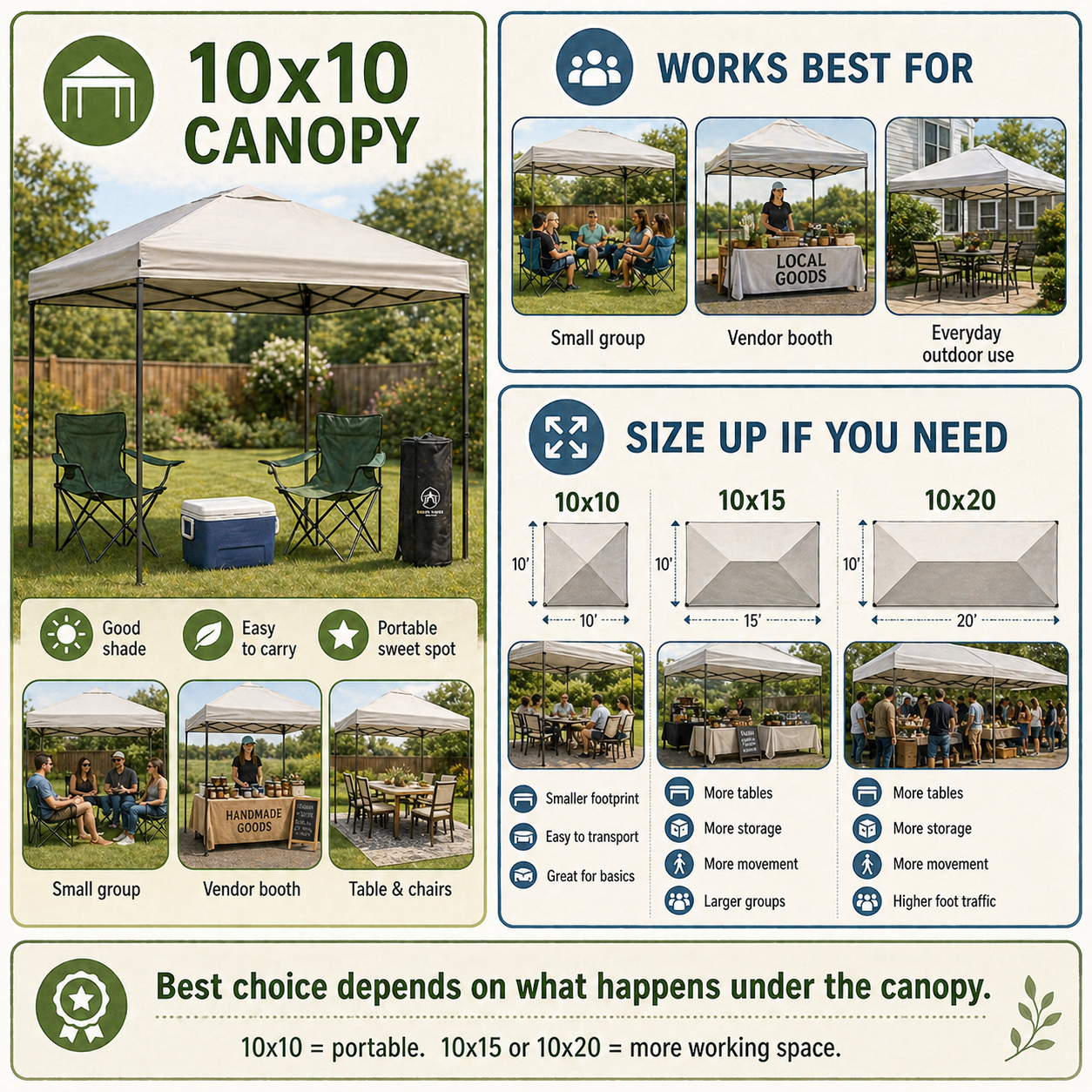
A 10x10 canopy is often the sweet spot between usefulness and portability. It is large enough to shade a small group, cover a standard vendor footprint, or shelter a table-and-chair setup without feeling too limited for everyday outdoor use. At the same time, it is usually still practical to fold, load, and transport in a wheeled bag or trunk-friendly case. Southern Living’s testing also points to 10x10 as one of the most common sizes because it gives meaningful shade without becoming too cumbersome for typical personal use.
But 10x10 ft is not automatically the right answer for everyone. If you expect to seat a larger group, run a booth with several display tables, or cycle a lot of people in and out under the shelter, 10x10 can start to feel small. TentCraft’s size guide notes that once you add counters, inventory, coolers, or more active foot traffic, many users are better served by a 10x15 or 10x20 footprint instead. This is one of the most overlooked buying mistakes: people assume 10x10 will be enough because it sounds spacious, but the usable space shrinks quickly once the tent is actually doing more than providing open standing shade.
That matters because a canopy that feels “fine” in an empty yard can feel cramped in real use. A casual backyard setup may only need room for a few folding chairs and a cooler. A market booth may need room for storage bins, checkout space, display tables, and customer movement. A sports setup may need repeated access in and out rather than everyone sitting still. The best choice depends as much on what happens under the canopy as on the structure itself.
The first thing to compare is the frame
The frame is the part buyers should take most seriously, because it shapes nearly everything else: stability, durability, setup difficulty, and how comfortable the tent feels in wind.
Lighter models often prioritize quick setup and easier transport. Heavier ones usually use stronger steel or alloy/aluminum frames, reinforced joints, and more substantial truss designs. If you are shopping for frequent use, windy locations, or event work, frame quality matters more than almost any other spec.
A useful way to think about it:
- Steel frames usually feel sturdier and more planted, but they are heavier to carry.
- Aluminum frames are easier to transport and naturally resist rust better, but stronger versions usually cost more.
- Full-truss designs tend to feel more serious than basic recreational frames because they distribute stress better.
- Reinforced joints and corner brackets matter more than marketing adjectives like “heavy duty.”
Southern Living’s canopy testing also notes that sturdiness is not just about the metal itself. Experts interviewed there pointed to reinforced truss bars, cross-bracing, support beams, locking mechanisms, and proper wind setup as major contributors to overall stability. A tent that is easy to set up properly is often more reliable in practice than one that looks rugged but is awkward to tension and anchor correctly.
Fabric matters more than most casual buyers expect
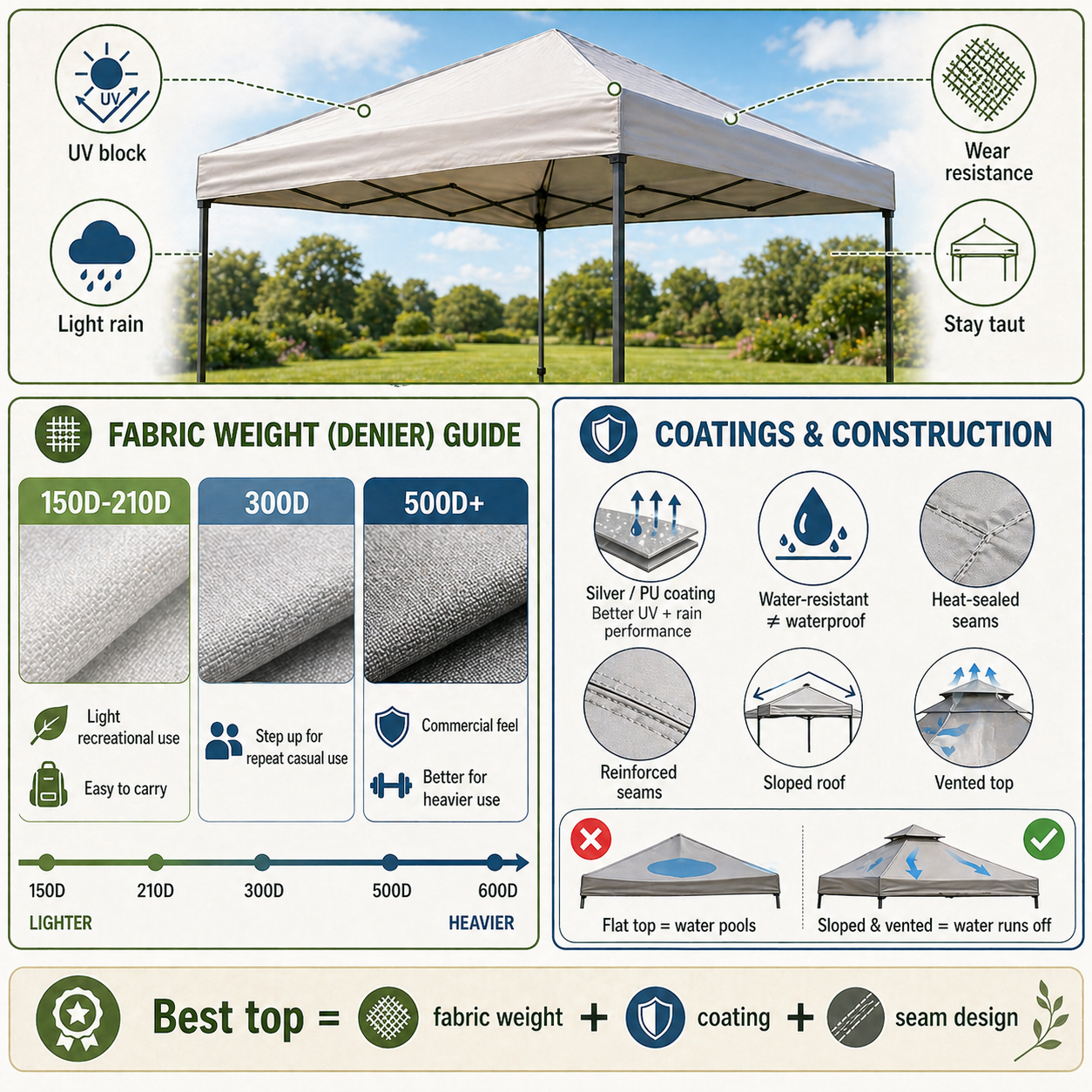
A lot of listings treat the canopy top as a simple fabric roof, but it is doing several jobs at once: blocking UV, handling light rain, resisting wear, and staying taut enough to avoid sagging or water pooling.
When comparing canopy tops by 150D, 210D, 300D, 500D, and 600D fabric ranges, usually noting that lighter fabrics are more travel-friendly while heavier ones are more commercial and weather-oriented. Southern Living’s testing also specifically calls out 150D, 210D, 300D, and 500D materials across different models, showing that not all “water-resistant” tops live in the same performance category.
A practical way to read those specs:
- 150D–210D usually fits lighter recreational use.
- 300D can feel like a step up for repeat casual use.
- 500D and above appears much more often in commercial-style canopies and sidewall kits.
Coatings matter too. Silver-coated or PU-coated fabrics can improve UV resistance and rain performance, but “water-resistant” and “waterproof” are not always interchangeable. Seam construction also matters. Heat-sealed seams, reinforced seams, sloped roof design, and venting are regarded as factors that separate better rain performance from the kind of setup that starts pooling water overhead.
Straight-leg vs. slant-leg: the choice people rush through too quickly
This is one of the easiest decisions to dismiss, but it changes both coverage and stability.
Straight-leg canopies give you the full 100 square feet of coverage in a 10x10 footprint. Slant-leg canopies can be lighter and sometimes feel more wind-friendly in certain conditions, but the usable shaded area is usually smaller. Southern Living’s testing notes that straight-leg designs are usually the default and often the more practical choice for general use, while slant-leg models can trade some coverage for different portability or wind behavior.
If you are choosing a 10x10 specifically because you need the full vendor or seating footprint, straight-leg is usually the more reassuring choice. If you care more about lightweight setup than full square-foot coverage, then the tradeoff may be worth it—but it should be a conscious tradeoff, not an afterthought.
Sidewalls, mesh, and vents: useful additions, but not always for everyone
Buyers are often drawn to sidewalls because they sound like an obvious upgrade. Sometimes they are. Sometimes they add bulk, heat, and wind pressure that the user did not really need.
Sidewalls are most useful when you want:
- directional sun blocking,
- visual privacy,
- better rain shielding,
- vendor-booth enclosure,
- wind protection in cooler weather.
But they also come with tradeoffs. Southern Living’s testing on wall-equipped models and screen tents points out that enclosed sides can reduce airflow and make the inside feel warmer in summer conditions. TentCraft also notes that adding walls reduces wind ratings because they increase the surface area that catches wind. That makes walls a strategic feature, not a universal one. They are helpful, but they raise the need for better anchoring and better judgment.
Roof vents, on the other hand, tend to be helpful more often than not. Vented designs can reduce heat buildup, help manage wind pressure, and lower the chance of water pooling on top. Southern Living specifically called out roof vents as a useful feature on well-performing 10x10 models.
Screened or mesh walls are their own category. They are especially useful when mosquitoes or bugs are part of the equation, but they can also change heat and airflow dynamics. So if your main use case is summer camping or cookouts in buggy areas, mesh can be genuinely valuable; if your main use case is quick open-air shade, it may be extra complexity you do not need.
Portability is not just about weight
A canopy can be fairly light and still be annoying to move. This is one area where buyers often focus too much on the total weight and not enough on the carrying system.
Note the importance of:
- wheeled roller bags,
- integrated wheels,
- bag durability,
- setup style,
- how compactly the tent repacks.
Southern Living’s testing is especially useful here because it shows how weight feels different depending on context. A 36-pound model can still feel awkward if the wheels do not work well on grass or sand. A 60-plus-pound canopy may still be manageable if the roller bag is strong and the user expects a more event-grade shelter. In other words, “portable” depends on the whole system, not just the number on the spec sheet.
A good rule of thumb:
- for park days, sideline use, and casual gatherings, easier solo setup and a better bag often matter more than top-tier frame heft;
- for vendors, repeated event use, or all-day outdoor setups, heavier transport may be acceptable if the frame and fabric are meaningfully better.
Anchoring is where good canopies still fail
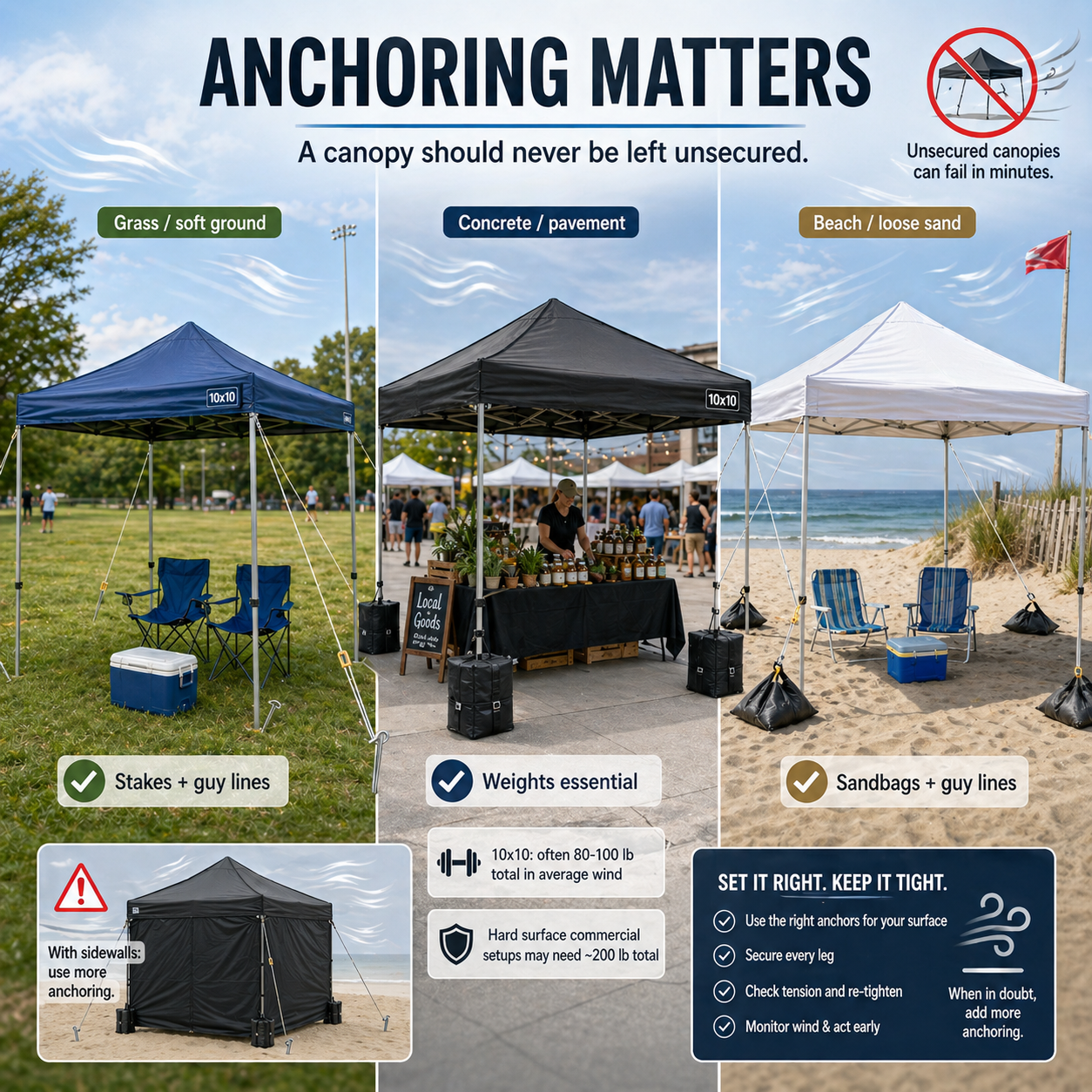
Because canopy failures are often caused by setup, not by the product itself.
Weights, stakes, ropes, and guy lines are not optional extras in wind—they are part of the shelter system. ABCCANOPY’s current wind-resistance guidance says the canopy’s wind performance depends on frame design, size, anchoring method, and weather conditions, and explicitly says that weights are essential rather than optional. TentCraft makes a similar point and notes that their 10x10 heavy-duty model needs at least 200 pounds total to anchor properly on hard surfaces like concrete if staking is not possible.
For practical use, anchoring depends a lot on the surface:
- Grass or soft ground: stakes + guy lines are usually the first choice.
- Concrete or pavement: weight bags or weighted footplates become essential.
- Beach or loose sand: sandbags, sand pockets, and guy lines matter far more than light stakes alone.
- With sidewalls installed: increase your anchoring expectations, because the tent catches more wind.
Older canopy-weight guidance from ABCCANOPY suggests a broad baseline of roughly 80 to 100 pounds total for a 10x10 in average wind, with more required as conditions worsen. TentCraft’s guidance for hard surfaces is heavier at around 200 pounds total for a commercial-grade 10x10. The takeaway is not that one number fits every situation; it is that a 10x10 should never be treated like something that can just be unfolded and left unsecured.
When a 10x10 is enough—and when you should size up
A lot of buyers ask “Which 10x10 is best?” when the better question is “Is 10x10 actually enough for what I’m doing?”
A 10x10 is usually enough when:
- you want shade for 4 to 6 people with chairs,
- you are running a simple vendor booth,
- you need a sports sideline shelter,
- you want a portable backyard canopy that does not dominate the space.
You should consider sizing up when:
- you expect 8+ seated guests under the shelter,
- you need multiple tables,
- you have inventory, coolers, or display fixtures,
- your booth needs to feel less cramped during repeated or all-day use.
This is one of the places where a smaller, lighter canopy can actually be a worse value than a slightly bigger or sturdier one. Not because the canopy itself is bad, but because it is mismatched to the way you use it.
4 product examples worth comparing
These are not presented as a “buy now” list. They are more useful as reference points for four common buyer priorities: convenience, flexibility, heavier-duty use, and more frequent event use.
1. For a practical all-around starting point
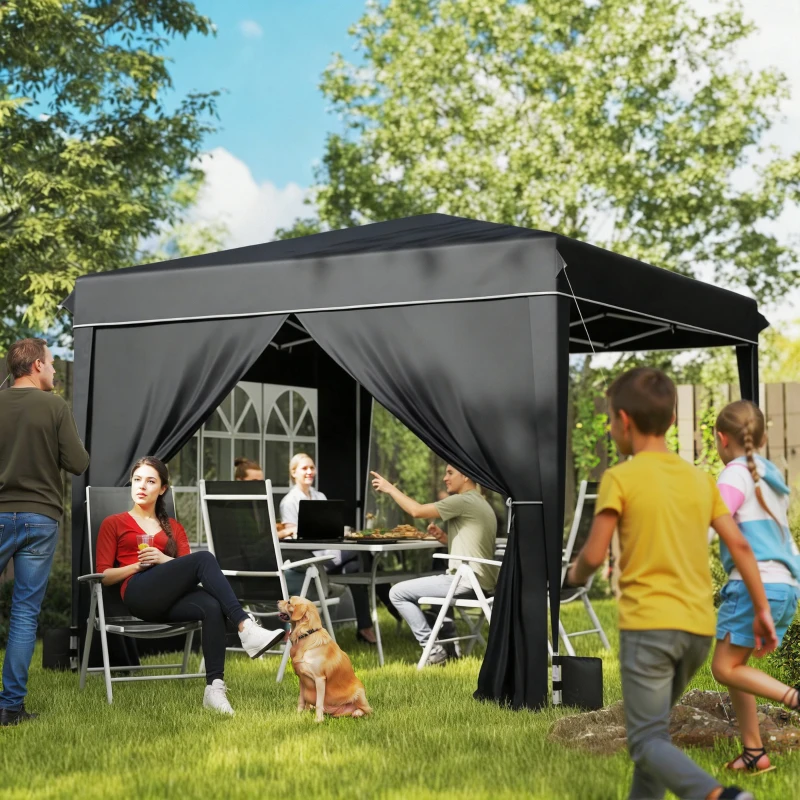
Outsunny 10x10 ft Pop-Up Canopy Tent with Sidewalls
This Outsunny model is a useful example for buyers who want a familiar 10x10 pop-up format with sidewalls included from the start rather than added later. The current 10x10 assortment leans heavily toward pop-up tents with sidewalls, one-push systems, and roller-bag portability, which makes it a reasonable benchmark for casual multi-use setups.
2. For easy one-person setup
CROWN SHADES 10′ x 10′ Straight Leg Canopy
CROWN SHADES is a helpful comparison point when convenience is the main goal. Southern Living’s testing praised it for fast setup, wind resistance, built-in venting, and included sandbag pockets, while Crown’s own product page emphasizes straight-leg coverage, a central hub system, three height options, and UPF 50+ protection. This is the kind of canopy that makes sense when setup speed and ease are more important than maximum-duty construction.
3. For a sturdier steel-frame event setup
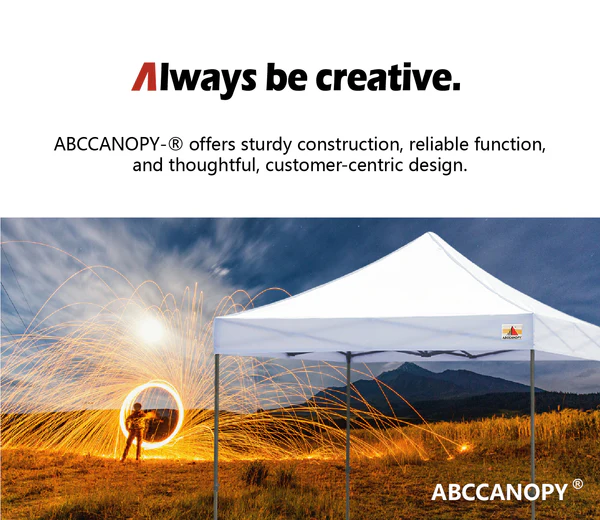
ABCCANOPY S1 Commercial Pop Up Canopy Tent 10x10
ABCCANOPY remains one of the most common reference points because it sits closer to the commercial side of the category. The current official page for the S1 Commercial 10x10 lists a steel frame, 300D silver-coated top, wheeled bag, and included sandbags. ABCCANOPY is a good fit for repeat event use, sidewall setups, and more weather-aware buyers.
4. For higher-use and more professional shelter needs
Eurmax Beyond 10X10 Aluminum Instant Canopy
Eurmax is useful to compare when you want to understand what separates a more premium event canopy from a casual recreational one. The current Eurmax product pages highlight 500D polyester, CPAI-84 and NFPA 701 fire certifications on some models, octagonal-leg aluminum frames, diamond truss construction, and rough-ground roller bags. That makes it relevant for buyers who care about repeated setup, vendor requirements, and more serious structural expectations.
Common mistakes people make with 10x10 canopies
The biggest mistake is assuming all 10x10 tents are basically interchangeable. They are not.
Other common mistakes include:
- buying by price alone,
- ignoring the difference between recreational and commercial use,
- underweighting the tent,
- choosing sidewalls without considering airflow,
- assuming “water-resistant” means storm-ready,
- focusing on total weight without checking the bag and wheel design,
- forgetting to ask whether the 10x10 footprint is enough in the first place.
The best 10x10 ft canopy tent is the one that matches the way you actually spend time outside. For occasional backyard use, that may mean a lighter pop-up with quick setup and a decent carry system. For sideline use or park days, it may mean a straight-leg tent with venting and reliable anchoring points. For markets, frequent events, or more exposed conditions, it often means accepting more frame weight in exchange for better stability, stronger fabric, and a better accessory system.
A 10x10 canopy is a small structure, but it asks you to make several tradeoffs: convenience versus strength, lightness versus durability, open shade versus enclosed shelter. Once you decide which of those tradeoffs matters most to you, the category becomes much easier to navigate.
FAQs
1. What is the strongest 10x10 canopy?
In general, the strongest 10x10 canopies are usually commercial-grade straight-leg models with reinforced full-truss frames, heavier fabric, and proper anchoring systems. Southern Living’s expert guidance points to strong frame material, reinforced truss bars, support beams, and wind-oriented features like vents and weights as the main markers of sturdiness. TentCraft’s heavy-duty 10x10 pop-up is one example of a model with an engineering-backed 35 mph wind rating when properly anchored and used without walls, which helps illustrate what the upper end of the category looks like.
2. How many people can fit under a 10x10 canopy tent?
A 10x10 canopy gives you 100 square feet of coverage. TentCraft says that can mean 12 to 15 people standing or 8 to 12 seated, but real-world comfort changes fast once you add furniture, coolers, or walls. For many casual uses, 4 to 6 people seated comfortably is a more realistic expectation. Crown’s product page also describes the size as a practical fit for about 4 to 6 people sitting under it.
3. How much weight is needed to hold down a 10x10 canopy?
There is no single number for every setting, because surface and wind matter. TentCraft recommends at least 200 pounds total to properly anchor a heavy-duty 10x10 on hard surfaces like concrete when staking is not possible. Older ABCCANOPY guidance gives a lighter general baseline of roughly 80 to 100 pounds total for a 10x10 in average wind, with more needed in stronger conditions. In practice, a safer rule is to think in terms of surface + weather + walls: harder surfaces and enclosed sidewalls usually demand more ballast, not less.
About the Creator
Enjoyed the story? Support the Creator.
Subscribe for free to receive all their stories in your feed.
Comments
There are no comments for this story
Be the first to respond and start the conversation.