
Family First: When Home Becomes the Greatest Classroom
How family-centered stories reveal the unseen sacrifices, shared responsibilities, and life lessons hidden within everyday relationships.

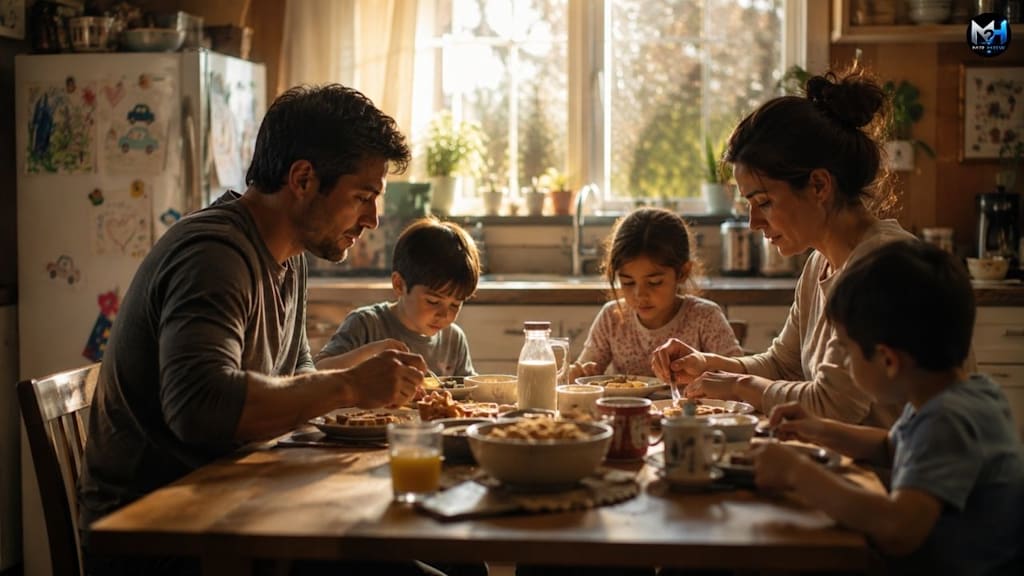
Family-centered stories have a unique way of reaching audiences. They rarely rely on world-ending stakes, epic battles, or grand adventures. Instead, they focus on something far more familiar: the everyday relationships that shape who we are.
At first glance, stories about parenting, marriage, and household responsibilities may seem simple. Yet beneath their ordinary settings often lie powerful lessons about empathy, communication, sacrifice, and personal growth. These are the narratives that remind us that some of life's most important challenges happen not in distant places, but around the dinner table.
One of the most compelling aspects of family-centered storytelling is its ability to reveal invisible work.
Every household operates through countless acts of care that often go unnoticed. Meals are prepared, schedules are managed, children are supported, and problems are solved long before they become visible to everyone else. Because these tasks happen consistently, family members can easily overlook the effort required to keep everything running smoothly.
Stories that place these responsibilities at the center of the narrative encourage viewers to look more closely at their own lives.
The most effective family films are not necessarily about perfect families. In fact, they often focus on flawed individuals learning difficult lessons. A parent may discover they have taken their partner's contributions for granted. A child may begin to understand the sacrifices made on their behalf. A spouse may realize that love involves more than simply fulfilling expected roles.
Growth emerges when characters are forced outside their comfort zones.
This is where family-centered narratives frequently shine. By disrupting routines, they reveal strengths and weaknesses that might otherwise remain hidden. A change in circumstances can transform confidence into humility and assumptions into understanding. Characters who once believed they understood family life suddenly discover how much they still have to learn.
These moments resonate because they reflect reality.
Many people only recognize the complexity of another person's responsibilities after experiencing them firsthand. Whether it is parenting, caregiving, financial support, or emotional labor, understanding often follows experience. Family stories capture this truth with remarkable effectiveness.
Another reason these narratives remain popular is their universal appeal.
Regardless of culture, age, or background, most people understand the dynamics of family. While specific traditions may differ, the emotions remain familiar. Love, frustration, responsibility, pride, disappointment, forgiveness, and gratitude exist in nearly every household.
Because of this shared experience, family-centered stories can connect with audiences on a deeply personal level.
The strongest examples avoid simple stereotypes and instead explore relationships with honesty. They acknowledge that family members can misunderstand one another while still caring deeply. They recognize that good intentions do not always lead to good decisions. Most importantly, they show that growth is possible when people choose empathy over ego.
Many modern family narratives also challenge traditional assumptions about household roles.
Rather than presenting responsibility as belonging to one person alone, these stories highlight the importance of partnership. Success within a family often depends on cooperation, communication, and mutual respect. When responsibilities are shared and appreciated, relationships become stronger.
This message feels increasingly relevant today.
Modern families come in many forms, but the need for understanding remains constant. Whether both parents work, one stays home, or responsibilities are divided differently, every family benefits when contributions are recognized rather than assumed.
Perhaps the greatest strength of family-centered storytelling is its ability to inspire reflection.
After watching a thoughtful family narrative, audiences often leave with questions about their own relationships. Are they appreciating the people who support them? Are they sharing responsibilities fairly? Have they overlooked sacrifices being made on their behalf?
These questions give such stories lasting value.
Long after the jokes are forgotten or the plot details fade, the emotional lessons remain. Viewers remember the realization that every family depends on unseen efforts. They remember the importance of gratitude. They remember that respect is earned not through titles or roles, but through consistent acts of care.
In the end, family-centered narratives succeed because they focus on what matters most.
They remind us that home is more than a place. It is a network of relationships built through patience, understanding, and commitment. It is where people learn responsibility, practice forgiveness, and discover the true meaning of support.
And sometimes, the greatest lesson a family story can teach is that the people who seem to do the least visible work may actually be carrying the heaviest load.
That realization alone can change the way we see those we love.
About the Creator
Enjoyed the story? Support the Creator.
Subscribe for free to receive all their stories in your feed.
Comments
There are no comments for this story
Be the first to respond and start the conversation.