
Do We Really Know What Today’s Youth Are Going Through?
What if today’s youth aren’t the problem — but the mirror?
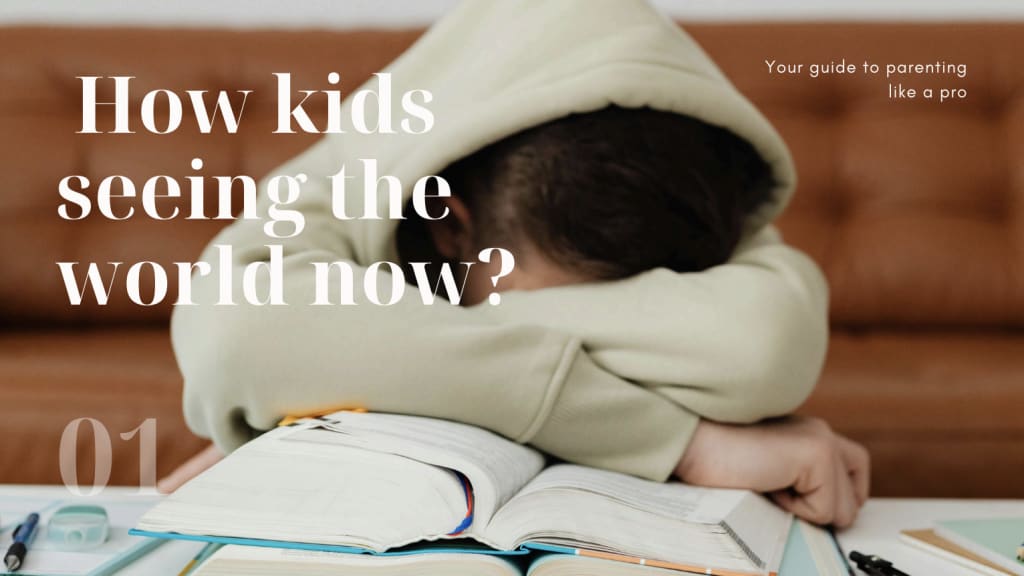
Hello, I’m a young writer from a small, beautiful Southeast Asian country – Vietnam. I grew up in a family shaped by both traditional values and modern thinking. My mind is a blend: part liberal like the West, part deeply rooted in the customs passed down from my grandparents. Maybe that’s why I tend to see things from a slightly different perspective. And I know I’m not alone. Many people my age are looking at the world through a lens that’s fragmented, complex, and evolving.
From what I observe, those born around 2006 and onward fall into roughly four categories — each shaped by their family environment, social background, and internal worldview.
1. The Free Spirits – Searching for Freedom in Chaos
These are the teens who chase freedom and self-expression with little regard for social norms. You’ll often find them speeding down the streets on flashy motorbikes, honking loudly, yelling at friends, maybe even getting into fights. They use profanity without hesitation and live loudly, sometimes recklessly.
But behind that rebellion lies something deeper: a chaotic environment, broken homes, disengaged schools, or a lack of direction. It’s tempting to label them as "lost causes,” but perhaps they’re just lost – temporarily – and looking for themselves in a world that hasn’t shown them where to go.
2. The Role Models – Academic Superstars Under Pressure
1600 SAT. 8.0 IELTS. GPA over 3.8. These are the numbers that define the academic elite – students who seem to be built for excellence. They are celebrated in schools, highlighted in media, and praised at family dinner tables. Some are quiet achievers, others shine publicly. Some excel in sports or the arts. But all have one thing in common: they are constantly under pressure.
Many of them have dreams, passions, or long-term goals – which is encouraging. But many also carry invisible weights placed on them by their families or society. According to the National Library of Medicine, about 85% of high school students report feeling pressure from their peers – a phenomenon that exists not just in Vietnam, but worldwide.
3. The Misfits – Living Life on a Different Frequency
Unlike the two groups above, this third type doesn’t fit into neat boxes. They may love things that society sees as trivial or even harmful — playing pool at billiard halls (often seen as shady hangouts), obsessing over video games, or diving deep into subcultures like cosplay or anime.
These hobbies may not look valuable on the surface, but they provide an emotional outlet — a way to escape, to connect, or to belong. These young people aren’t "abnormal" in a psychological sense. They’re simply navigating life in a way that doesn’t conform to traditional paths. And sometimes, that deviation is a quiet form of resistance.
4. The Hidden Strugglers – Strong on the Outside, Fragile Within
Some young people don’t fit just one group — or they fit all. These are the quiet ones who carry pain beneath a composed surface. You might see them in sports clubs, theater classes, cram schools — seemingly normal settings. They smile, show up, participate. But inside, they’re building walls.
They understand their emotions but choose to hide them, afraid of being misunderstood or judged. They don’t want to be a burden. And yet, they long for connection. Society teaches us that the world is beautiful — but reality often smears that picture with uncertainty and confusion.
How Do Young People See Each Other – and What Should Adults Do?
Young people often observe each other with subtle judgment. We sort, compare, and classify one another — by grades, by fashion, by social groups. The top students hang out together. The odd ones out get labeled. The emotionally burdened fade into the background.The problem isn't the differences — it’s the lack of guidance in how to respect those differences. We’re taught to compete, not to understand. In that sense, we’re already mimicking the biases of the adult world. It’s a cycle.
So what can adults — especially parents — do?
First, observe with honesty. Pay attention to the smallest changes: Has your child withdrawn socially? Are they more aggressive than usual? Are they drowning in schoolwork or disappearing into online games? These shifts are often subtle signs of deeper stress.
Second, don’t rush to judge. Labeling a child as lazy, rebellious, or “not trying hard enough” only pushes them further away. High expectations without understanding create pressure, not motivation.Third, engage in dialogue, not interrogation. Sometimes a simple question like “How are you really feeling?” or “What’s worrying you these days?” can be enough to open the door. The key is to listen — not lecture.
Lastly, accept that your child is not your replica. They are their own person. They have the right to stumble, explore, and evolve in their own way — even if that way looks nothing like the one you imagined.
The more advanced a society becomes, the more complex its side effects. Every gain casts a shadow. But the antidote to that imbalance is empathy — especially between generations. nstead of asking, “Why don’t young people care about the world?”, maybe it’s time we ask, “Have we ever truly tried to understand how they see it?”
About the Creator
Enjoyed the story? Support the Creator.
Subscribe for free to receive all their stories in your feed.
Comments
There are no comments for this story
Be the first to respond and start the conversation.