
You Got a Raise. So Why Do You Still Feel Broke?
The strange psychology of making more money and somehow having less of it.
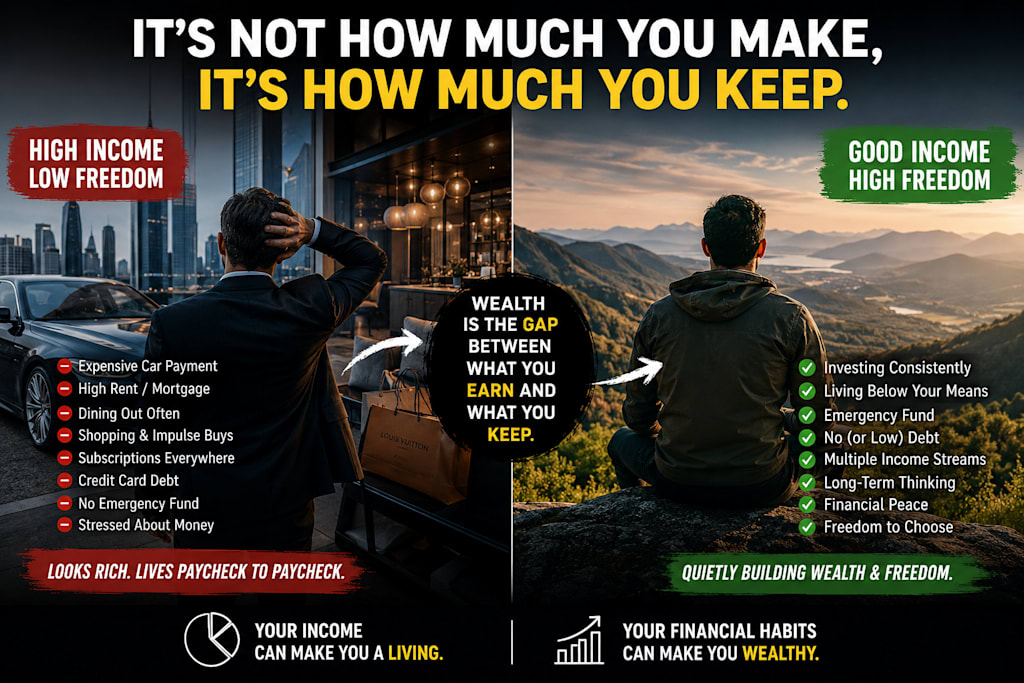
A few years ago, I thought making more money would make me feel rich.
It seemed obvious.
Make $50,000 → life gets easier.
Make $75,000 → life gets comfortable.
Make $100,000 → financial problems disappear.
Make $150,000 → you're set.
Except that's not how it works.
Because somewhere along the way, something strange happens.
Your income goes up.
And somehow...
your money still disappears.
Your $100,000 Salary Isn't Really $100,000
Let's say you finally reach the salary you've been chasing.
$100,000 a year.
Sounds incredible.
Then reality arrives.
Federal taxes.
State taxes.
Social Security.
Medicare.
Health insurance.
401(k) contributions.
Rent or mortgage.
Car payment.
Car insurance.
Groceries.
Student loans.
Subscriptions.
Restaurants.
And the occasional $37 purchase you completely forgot about.
Suddenly, that six-figure salary doesn't feel like six figures anymore.
And that's when you realize something important:
A high income and financial security are not the same thing.
You can earn $100,000 and feel broke.
You can earn $200,000 and still live paycheck to paycheck.
And you can earn considerably less while quietly building wealth.
The difference isn't always income.
Sometimes it's lifestyle.
The Lifestyle Creep Nobody Warned You About
You get a raise.
Your brain says:
"I can finally afford a nicer apartment."
So you move.
Then:
"I should probably get a better car."
So you upgrade.
Then:
"I've been working hard. I deserve a vacation."
So you book one.
Then another.
Then you start ordering delivery because you're too tired to cook.
Then you upgrade your phone.
Then your subscriptions.
Then your furniture.
Then suddenly your lifestyle has quietly consumed your raise.
You didn't become irresponsible.
You simply became accustomed to spending more.
That's lifestyle creep.
And it's one of the easiest ways to become a high-income person who never becomes wealthy.
The Most Dangerous Sentence in Personal Finance
It's four words:
"I can afford it."
Can you?
Maybe.
But there's a better question:
"Do I want this enough to keep paying for it?"
Those are different questions.
You can afford a $700 monthly car payment.
But do you want to give up $700 of your future every month for the next several years?
You can afford a $3,000 apartment.
But do you want to work an extra week every month just to maintain your housing?
You can afford the vacation.
But do you want to pay for it for six months after you've already returned home?
Affordability isn't just about whether your bank account can survive the purchase.
It's about what the purchase costs your future self.
Your Emergency Fund Is More Valuable Than It Looks
People don't get excited about emergency funds.
Nobody posts:
"Just hit $15,000 in my emergency savings!"
It's not glamorous.
But imagine getting laid off tomorrow.
Your paycheck disappears.
The bills don't.
Rent still arrives.
The credit card statement still arrives.
The car payment still arrives.
Your subscriptions definitely don't care that you're unemployed.
This is why an emergency fund isn't just savings.
It's buying yourself time.
Three months of expenses can give you breathing room.
Six months can give you choices.
And choices are one of the most underrated forms of wealth.
Your 401(k) Is Boring. That's the Point.
Americans are constantly looking for the next big investment.
The next stock.
The next cryptocurrency.
The next AI company.
The next "10x opportunity."
Meanwhile, millions of dollars of wealth are quietly being built through something incredibly boring:
consistent investing over decades.
Put money into your 401(k).
Take the employer match if you have one.
Automate your investments.
Increase your contribution when your salary increases.
Then leave it alone.
It's not exciting.
You won't become a millionaire next Tuesday.
But that's the point.
Building wealth isn't supposed to feel like gambling.
Your Biggest Asset Might Not Be Your Portfolio
This is something people often overlook.
When you're young, your biggest financial asset may not be your $20,000 investment account.
It may be your ability to earn money for the next 30–40 years.
Learning a valuable skill can potentially increase your income by thousands of dollars every year.
Getting a better job can do the same.
Negotiating your salary can do the same.
Changing careers can sometimes do the same.
That's why investing in yourself can produce a return that no stock can guarantee.
Your portfolio compounds.
But so can your career.
Stop Trying to Look Rich
This might be the hardest lesson.
We live in a culture where looking successful can sometimes become more important than actually becoming financially secure.
The $80,000 car is visible.
The $80,000 investment account isn't.
The designer clothes are visible.
The paid-off credit card isn't.
The luxury vacation is visible.
The six months of emergency savings isn't.
But here's the funny thing:
The invisible things are often what actually make your life better.
Nobody needs to know how much you have saved.
Nobody needs to know how much you make.
Nobody needs to know how much is in your brokerage account.
You don't have to look wealthy.
You have to become financially difficult to break.
Maybe Financial Freedom Isn't What You Think
Financial freedom doesn't necessarily mean retiring at 35.
It might simply mean:
You can survive a layoff.
You don't panic when your car needs repairs.
You can leave a job you hate.
You can help your family when they need you.
You can take a vacation without putting it on a credit card.
You can say no to something you don't want to do because you aren't financially trapped.
That's freedom too.
Maybe that's the real goal.
Not having a Lamborghini in the driveway.
Not having a million followers.
Not being able to tell strangers on the internet that you make six figures.
Just having enough money, skills, and discipline that your life isn't controlled by your next paycheck.
The Wealthiest Person in the Room Might Not Look Wealthy
That's the part nobody wants to hear.
The person wearing the $10,000 watch might be drowning in debt.
The person driving the 10-year-old Toyota might have $500,000 invested.
The person living in the modest apartment might have a seven-figure retirement account.
You can't see someone's net worth by looking at them.
And trying to look wealthy can become incredibly expensive.
So maybe the next time you get a raise, don't immediately upgrade your life.
Keep your old car.
Keep your reasonable apartment.
Keep investing.
Keep saving.
And let the difference between your old lifestyle and your new income quietly accumulate.
Because eventually something amazing happens.
You stop wondering:
"How much money do I need to make to feel rich?"
And start realizing:
"I don't need to spend everything I make anymore."
That's when the game changes.
That's when your money starts working for you.
And that's when a bigger paycheck finally starts feeling like what you thought it would feel like all along:
freedom.
About the Creator
Enjoyed the story? Support the Creator.
Subscribe for free to receive all their stories in your feed.
Comments
There are no comments for this story
Be the first to respond and start the conversation.