
Why Simple Educational Activities Matter During Early Childhood
The Role of Visual Learning and Interactive Reading in Building Early Skills

The early years of childhood are often considered the foundation for future learning and personal development. During this stage, children begin exploring language, recognizing patterns, developing communication abilities, and learning how to interact with the world around them. Because young learners are naturally curious, educational activities that combine images, colors, and simple words can become highly effective tools for supporting development in a positive and enjoyable way.
Many parents and teachers today look for educational methods that are both practical and engaging. Young children usually respond better to activities that feel playful rather than overly structured. For this reason, visual learning materials such as illustrated books, flash cards, and picture-based activities continue to be widely used in homes, classrooms, and early learning environments.
One of the main advantages of visual learning is that children often understand and remember information more easily when images are involved. Bright illustrations can help maintain attention, while short and simple words make learning less overwhelming. This approach encourages gradual learning and allows children to absorb information at a comfortable pace.
Educational flash cards are among the most commonly used resources for preschool and kindergarten learners because they present information in small and clear sections. Instead of introducing large amounts of text at once, flash cards focus on individual images and words that children can recognize through repetition and observation.
Nature-themed learning materials are especially popular among young children because they connect education with real-life experiences. Children are naturally interested in animals, insects, plants, and outdoor environments. They often notice butterflies flying in gardens, ants moving along the ground, or bees around flowers. Educational activities that include these familiar subjects can make learning feel more meaningful and interactive.
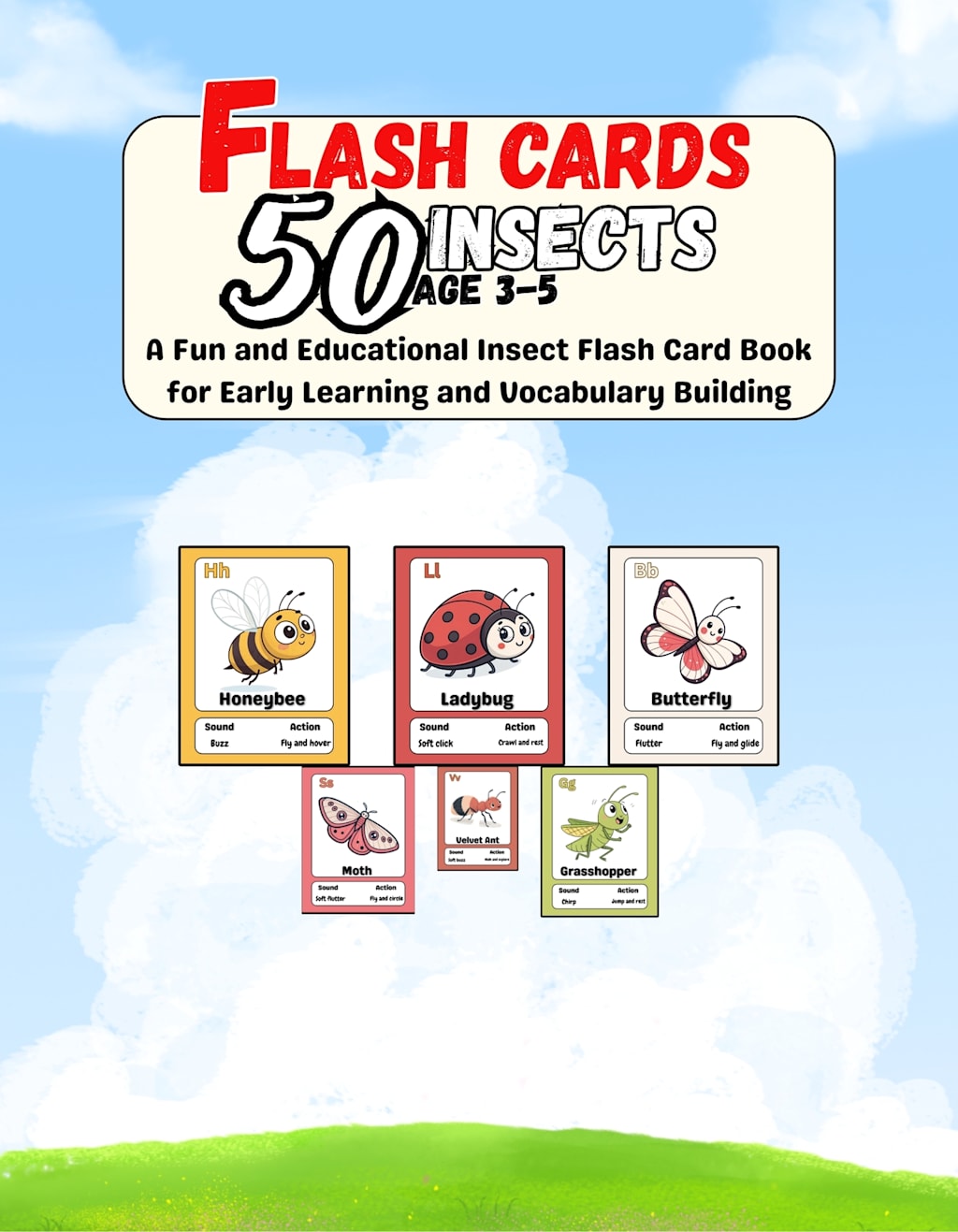
Books and learning resources that introduce insects through illustrations and beginner vocabulary can help children improve recognition skills while encouraging curiosity about nature. Educational flash card books such as Flash Cards 50 Insects are examples of resources designed to combine visual learning with simple language practice suitable for early learners.
Using visual materials regularly may support several important developmental skills during childhood. These include:
Vocabulary recognition
Early reading preparation
Observation skills
Listening and speaking practice
Memory development
Focus and concentration
Interactive learning activities can also create positive educational experiences between children and adults. Parents often use educational cards during reading sessions at home, while teachers may include them in group discussions or classroom games. Because the activities are flexible, they can be adapted to different learning styles and age groups.
Another important factor in early learning is repetition. Young children usually learn through repeated exposure to words, images, and sounds. Flash cards naturally encourage repetition without making learning feel stressful. When children repeatedly see the same image connected to a word, they gradually begin recognizing it independently.
Educational activities that involve participation may also help increase confidence. When a child successfully identifies a picture or remembers a new word, the experience creates a sense of achievement. Positive learning experiences during childhood can encourage motivation and help children become more comfortable with reading and communication over time.
In recent years, many families have also become interested in reducing unnecessary screen exposure for younger children. Printed educational materials provide an alternative that encourages direct interaction and active participation. Reading together, discussing pictures, and practicing words can create opportunities for communication and shared learning moments.
Simple educational resources do not need to contain complex lessons to be effective. In fact, younger children often benefit more from clear and organized content that avoids overwhelming details. A clean layout, colorful illustrations, and beginner-friendly vocabulary can make educational activities easier to follow and more enjoyable for children who are still developing attention and language skills.
Nature-related learning materials may additionally encourage observation and exploration outside the classroom. After learning about insects or animals through books and flash cards, children may become more interested in observing their surroundings and asking questions about the environment. This kind of curiosity is an important part of early childhood learning because it encourages exploration and independent thinking.
Educational resources that combine creativity with simple learning methods continue to remain valuable tools for parents and educators. Whether used at home, during homeschool activities, or inside classrooms, visual learning materials can support early childhood development in a calm and engaging way.
Helping children build positive learning habits during their first years does not always require advanced technology or complicated teaching methods. Sometimes simple illustrations, familiar subjects, and interactive activities are enough to create meaningful learning experiences that encourage curiosity, confidence, and enjoyment.
As children continue growing and discovering new ideas, early educational experiences often play an important role in shaping their attitude toward reading, communication, and learning in general. Providing children with enjoyable opportunities to explore language and the world around them can therefore have lasting value during their educational journey.
About the Creator
Meshal Sprout
Author of fun & educational kids books | Inspiring creativity & imagination
Enjoyed the story? Support the Creator.
Subscribe for free to receive all their stories in your feed.
Comments
There are no comments for this story
Be the first to respond and start the conversation.