
Why School Is Failing Creative Kids
How Standardized Classrooms Are Crushing Imagination—and What We Can Do About It
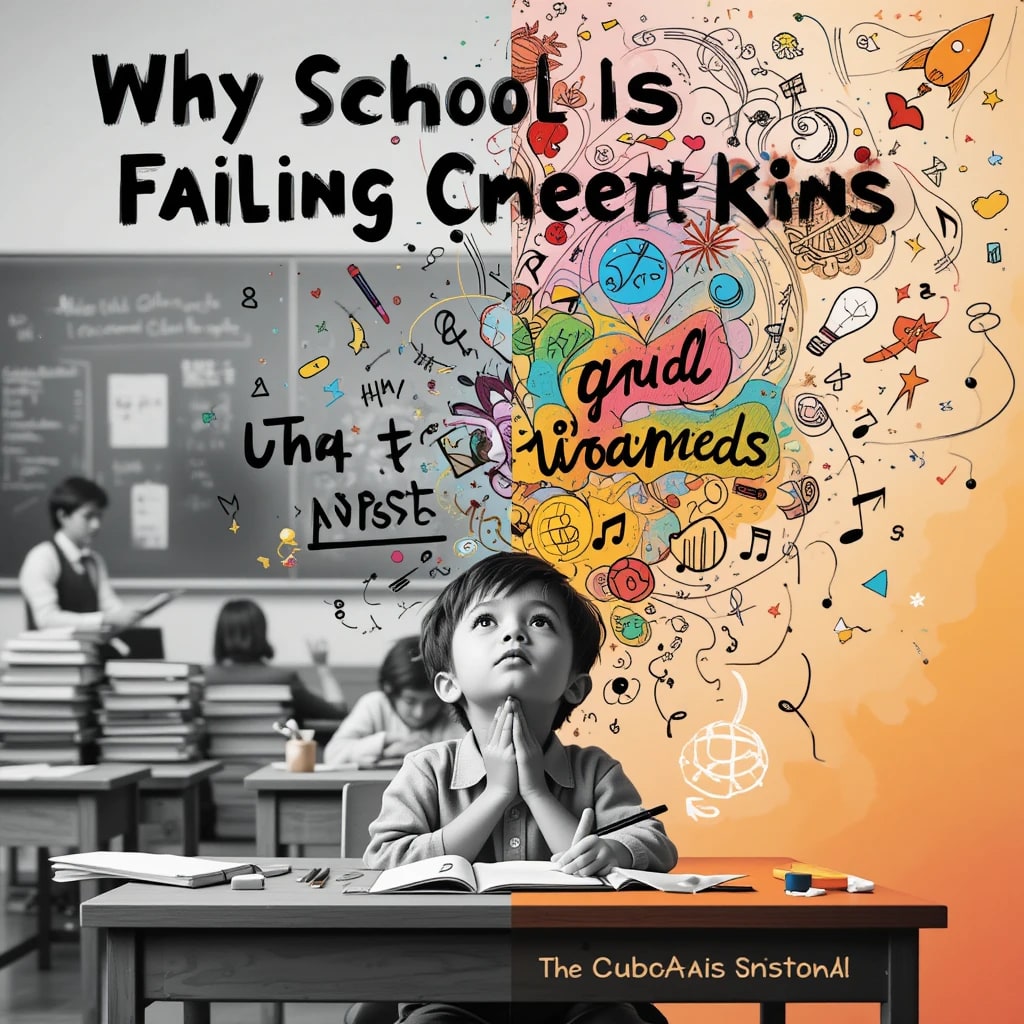
🎨 The Hidden Cost of Standardization
In a world that celebrates innovation, creativity, and individuality, it’s ironic that our education system continues to push one-size-fits-all learning. Creative kids—the artists, dreamers, inventors, and storytellers—are getting left behind in a system designed to prioritize conformity over curiosity.
From rigid curriculums to standardized testing, schools often fail to nurture the unique talents of creative children, instead labeling them as distracted, unfocused, or even problematic. But the issue isn’t the kids. The issue is the system.
📚 Standardized Tests Don’t Measure Creativity
In most schools, success is measured by grades, test scores, and how well a student can memorize and regurgitate information. But creativity can’t be quantified by multiple choice. It’s messy. It’s abstract. It’s intuitive.
Many creative kids:
Struggle with time limits
Excel in visual or hands-on learning
Think in non-linear ways
Ask “why” more than they’re told to
Instead of celebrating these traits, schools often penalize them. A student who doodles in class isn’t "off-task"—they might be processing thoughts visually. A kid who daydreams isn’t lazy—they could be imagining an entire world no one else can see.
🧠 Creativity Is Not a Distraction—It’s a Superpower
Let’s get this straight: Creativity is not the opposite of intelligence. In fact, some of the world’s most brilliant minds—like Einstein, Da Vinci, and Steve Jobs—were also some of the most creative.
But here’s the problem: The modern classroom isn’t built for thinkers like them.
It’s built for:
Quiet compliance
Memorization
Following instructions
Creative students are natural problem-solvers. They ask hard questions, come up with unexpected solutions, and think outside the box. But when their ideas don’t fit within the curriculum, they’re often told to “stay on task.”
🎭 The Arts Are Always the First to Go
When budgets get cut, what’s the first to go?
🟥 Art
🟥 Music
🟥 Theater
🟥 Creative writing
The subjects that foster imagination and emotional expression are treated as "extras" instead of essentials. Yet, countless studies show that the arts improve overall academic performance, mental health, and social skills.
By minimizing creative subjects, we send a message that artistic expression is less valuable than STEM or standardized success. And creative kids hear that message loud and clear.
⚖️ The Pressure to Conform
Creativity often comes with neurodivergence—think ADHD, dyslexia, autism, or high sensitivity. Many creative children don’t just think differently, they experience the world differently.
But instead of adapting the system to fit diverse minds, we try to mold the minds to fit the system.
This results in:
Misdiagnosis or over-medication
Damaged self-esteem
Burnout and school avoidance
A lifelong belief that “I’m just not smart”
When schools fail to embrace neurodiverse creativity, they rob kids of their confidence and potential.
🌱 What Creative Kids Really Need
We don’t need to burn down the whole education system—but we desperately need reform. Here’s what can help support creative children in schools:
Project-Based Learning
Let kids show what they know through art, design, or hands-on projects instead of only tests.
Flexible Classrooms
Create learning environments that allow movement, creativity breaks, and sensory tools.
Creative Mentors
Teachers trained in arts-based education and emotional intelligence can change lives.
Value Emotional Expression
Let students write poetry, tell stories, draw their thoughts, and explore abstract concepts freely.
Embrace Tech for Creativity
Kids can create music, short films, games, and digital art. These aren’t distractions—they're future careers.
💬 Real Voices from Creative Adults
“I was always in trouble for not finishing my worksheets, but I was writing stories under the desk. I became a published author.” — Sarah, 29
“I failed math but could design entire websites at 13. No one noticed.” — Ahmed, 24
These are not rare stories—they're everywhere. We just need to listen.
🌟 Imagine a Better Future
What if schools became places where kids could discover their purpose, not just pass exams?
What if creativity was seen as just as essential as math or science?
What if a kid who loved to paint wasn’t told to “focus on real subjects,” but was encouraged to pursue that gift with pride?
Creative kids aren’t broken. They are future visionaries, innovators, and culture shapers. And right now, the system is failing them.
It’s time we stop asking creative kids to change—and start changing the system for them.
About the Creator
Enjoyed the story? Support the Creator.
Subscribe for free to receive all their stories in your feed.
Comments
There are no comments for this story
Be the first to respond and start the conversation.