
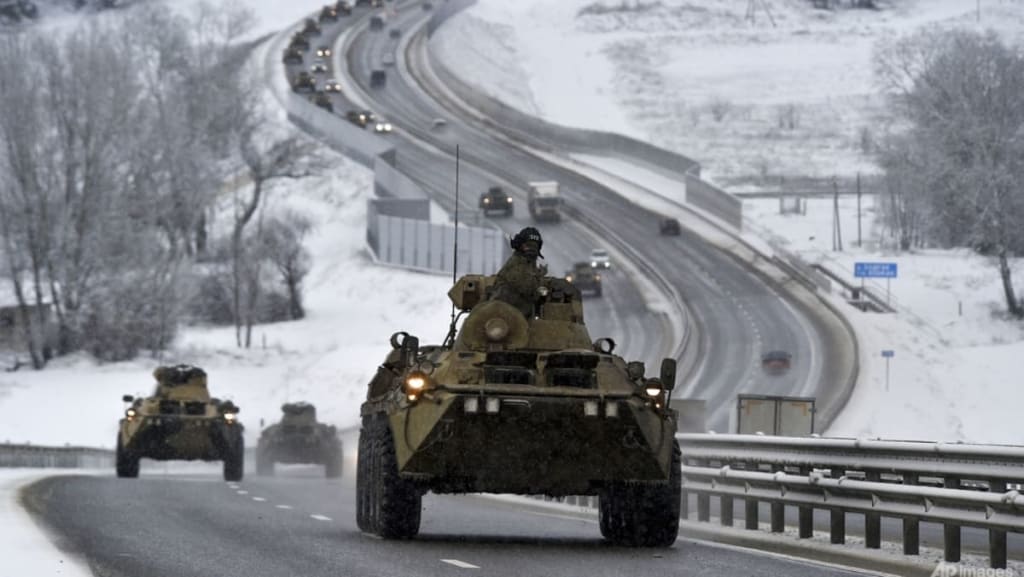
The conflict between Ukraine and Russia has its roots in a complex web of historical, political, and ethnic factors. It can be traced back to the dissolution of the Soviet Union in 1991, which resulted in the emergence of an independent Ukraine. Over the years, Ukraine has struggled to assert its sovereignty and determine its geopolitical orientation amidst competing influences from Russia and the West. #Russia One of the key triggers of the conflict was Ukraine's decision to pursue closer integration with the European Union (EU). In 2013, Ukraine was on the brink of signing an Association Agreement with the EU, which would have deepened its political and economic ties with Europe. This move was met with strong opposition from Russia, as it viewed Ukraine's drift towards the EU as a threat to its sphere of influence. In response to Ukraine's pro-European stance, Russia employed various tactics to assert control and undermine Ukraine's aspirations for closer integration with the West. This included applying economic pressure, imposing trade restrictions, and offering financial incentives to dissuade Ukraine from pursuing the EU agreement. #Ukraine The political situation in Ukraine reached a tipping point in late 2013 when widespread protests erupted in the capital city of Kyiv. The protests, known as the Euromaidan movement, were fueled by popular discontent with widespread corruption, economic stagnation, and a desire for closer ties with Europe. The Euromaidan movement gained momentum, eventually leading to the ousting of President Viktor Yanukovych in February 2014. Yanukovych, who had close ties with Russia, fled to Russia after violent clashes between protesters and security forces resulted in numerous deaths. In response to Yanukovych's ousting, Russia swiftly seized the opportunity to assert its influence in Ukraine. Russian military forces, without official insignia but widely believed to be Russian troops, occupied Crimea, a region with a significant Russian-speaking population and a strategically important naval base in Sevastopol. In March 2014, Russia organized a controversial referendum in Crimea, which resulted in the region's annexation by Russia. The annexation of Crimea was widely condemned by the international community, with most countries refusing to recognize it as a legitimate action. The United Nations General Assembly passed a resolution affirming Ukraine's territorial integrity and condemning Russia's actions in Crimea. #Crimea The conflict further escalated when pro-Russian separatist movements emerged in eastern Ukraine, primarily in the Donetsk and Luhansk regions. These separatist groups, backed by Russia, declared independence and sought to establish self-proclaimed republics. The Ukrainian government, perceiving these separatist movements as a threat to its territorial integrity, launched military operations to regain control over the separatist-held territories. The conflict in eastern Ukraine took on the characteristics of a full-scale war, with both sides engaging in armed confrontations, shelling, and other military actions. The Ukrainian government accused Russia of directly supporting the separatist forces by providing troops, weapons, and military equipment. There is evidence to support these claims, including the presence of Russian military personnel and sophisticated weaponry in the conflict zone. Russia, however, has consistently denied direct involvement in the conflict, claiming that any Russian citizens fighting in Ukraine are there as volunteers. While Russia has acknowledged providing support to the separatists, it maintains that its actions are limited to humanitarian aid and protection of the rights of Russian-speaking populations in Ukraine. Efforts to resolve the conflict through diplomatic means have been made, including negotiations and ceasefire agreements. The most notable diplomatic initiatives are the Minsk agreements, signed in September 2014 and February 2015. These agreements aimed to establish a ceasefire, implement a political process, and address other key issues, such as the withdrawal of heavy weapons and the restoration of Ukraine's control over its border with Russia. Despite these agreements, the conflict has persisted, with periodic violations of the ceasefire and continued instability in the region. The humanitarian consequences of the conflict have been significant, with thousands of lives lost, widespread displacement of people, and severe economic and social disruptions in the affected areas. The international community has been actively engaged in seeking a peaceful resolution to the conflict. Sanctions have been imposed on Russia by the United States, the European Union, and other countries in response to its actions in Ukraine. Mediation efforts have been made by international organizations and individual countries, with varying degrees of success. In conclusion, the conflict between Ukraine and Russia is a complex and multifaceted issue that arose from a combination of historical, political, and ethnic factors. It began with Ukraine's pursuit of closer integration with the EU and Russia's subsequent attempts to assert control over Ukraine. The conflict escalated with Russia's annexation of Crimea and the emergence of pro-Russian separatist movements in eastern Ukraine. Despite diplomatic efforts, the conflict remains unresolved, resulting in significant humanitarian and geopolitical implications for the region.Start writing...
About the Creator
Enjoyed the story? Support the Creator.
Subscribe for free to receive all their stories in your feed.
Comments