
Why Ocean-Themed Learning Helps Young Children Develop Essential Skills
Exploring Marine Life Through Visual Learning and Early Childhood Education

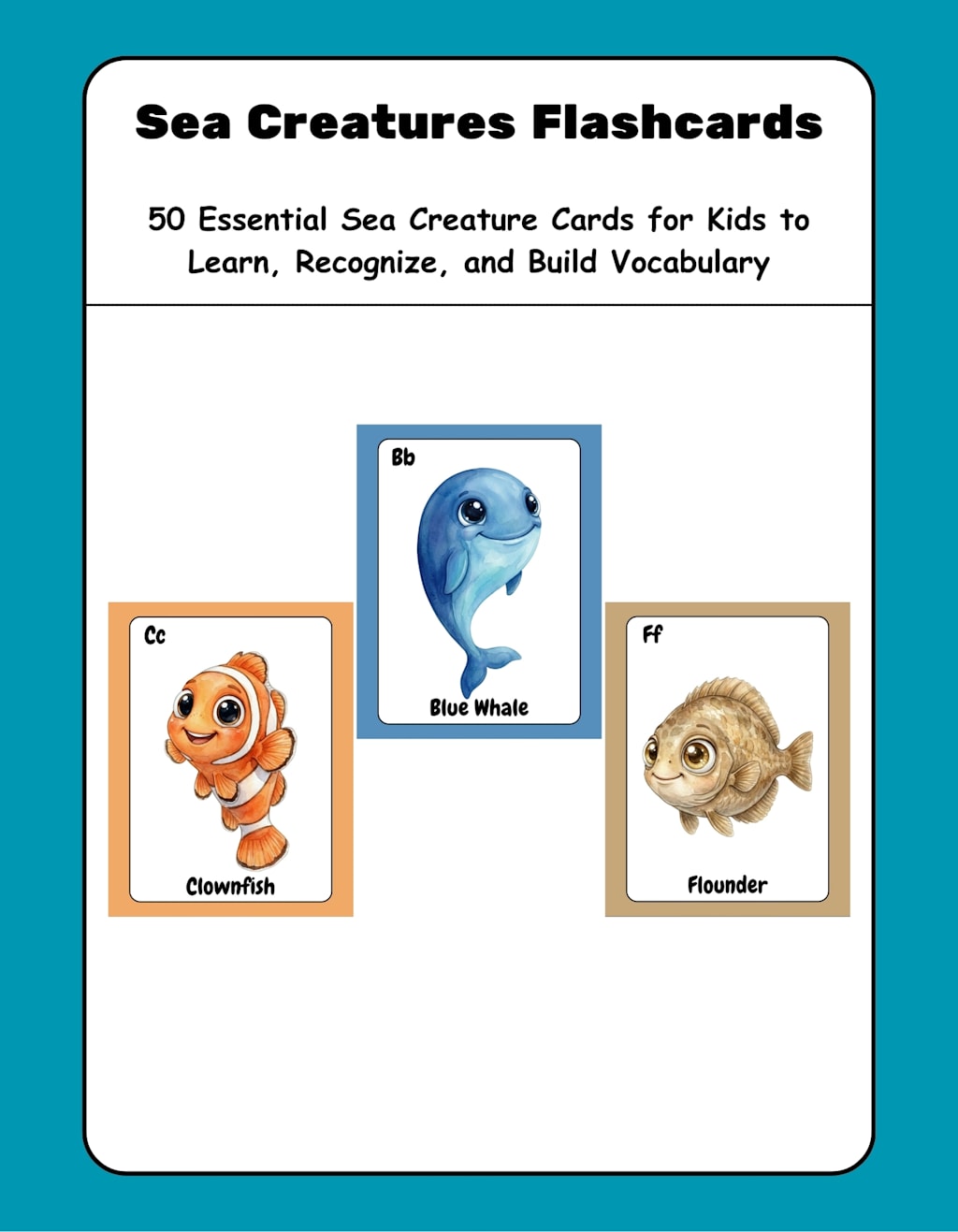
Children learn best when they are curious, engaged, and excited about the subject they are exploring. For this reason, educators and parents often search for topics that naturally capture a child's attention while supporting important developmental milestones. One topic that consistently fascinates young learners is the ocean and the incredible variety of creatures that live beneath its surface.
The underwater world is filled with mystery, color, and diversity. From giant whales and playful dolphins to tiny seahorses and fascinating octopuses, marine life offers endless opportunities for discovery. Introducing children to ocean animals at an early age can provide educational benefits that extend far beyond simple animal recognition.
Research in early childhood education has shown that visual learning plays a significant role in helping children absorb and retain information. Young learners often understand concepts more effectively when information is paired with engaging images. This is one reason why educational materials that combine illustrations with vocabulary are commonly used in homes, classrooms, and homeschooling environments.
Ocean-themed learning activities create a unique opportunity to combine science, language development, and creativity. When children are introduced to marine animals, they begin developing observation skills as they notice differences in size, shape, color, and behavior. These observations encourage critical thinking and help children build a deeper understanding of the natural world.
Language development is another major advantage of introducing children to marine life. Every new animal represents a new word, and every new word expands a child's vocabulary. Learning names such as whale, dolphin, jellyfish, starfish, stingray, and sea turtle provides children with opportunities to practice pronunciation, improve word recognition, and strengthen communication skills.
In addition to vocabulary growth, marine life activities encourage curiosity-driven learning. Children naturally ask questions when they encounter unfamiliar animals. Where do whales live? What do sea turtles eat? How do octopuses protect themselves? These questions inspire exploration and help children develop a habit of seeking knowledge.
Ocean-themed education also supports memory development. Repeated exposure to information through games, discussions, and visual materials helps strengthen memory retention. Children often remember information more effectively when it is associated with interesting and meaningful images. As a result, educational activities centered around marine animals can become both enjoyable and memorable learning experiences.
Another benefit of studying ocean life is the opportunity to introduce basic environmental awareness. Even young children can begin learning about the importance of protecting oceans and preserving marine ecosystems. By understanding that sea creatures depend on healthy environments, children develop a greater appreciation for nature and the world around them.
Parents and educators can incorporate marine-life learning into daily activities in many ways. Storybooks, art projects, educational videos, nature documentaries, and interactive games all provide opportunities for children to engage with ocean-related topics. These activities can be adapted for different ages and learning styles, making them accessible to a wide range of learners.
Visual learning tools can be especially effective when introducing ocean animals to young children. Illustrations help transform abstract information into something concrete and understandable. Children can connect words with images, making it easier to recognize and remember new concepts. This combination of visual and verbal learning supports multiple areas of cognitive development simultaneously.
Perhaps the greatest advantage of ocean-themed learning is that it makes education feel like an adventure. Children are naturally drawn to exploration and discovery. The ocean offers countless opportunities for imagination, storytelling, and creative thinking. Whether they are learning about a giant blue whale or a tiny seahorse, children are encouraged to view learning as an exciting journey rather than a routine task.
As technology continues to shape modern education, the importance of engaging and meaningful learning experiences remains unchanged. Topics that inspire curiosity and wonder will always play an important role in helping children develop lifelong learning habits. Marine life is one such topic, providing educational value while fostering imagination and creativity.
Conclusion
Ocean-themed learning offers a powerful combination of education and engagement. By introducing children to the fascinating world of marine animals, parents and educators can support vocabulary development, memory skills, observation abilities, curiosity, and environmental awareness. Most importantly, children discover that learning can be enjoyable, interactive, and filled with exciting opportunities for exploration.
About the Creator
Meshal Sprout
Author of fun & educational kids books | Inspiring creativity & imagination
Enjoyed the story? Support the Creator.
Subscribe for free to receive all their stories in your feed.
Comments
There are no comments for this story
Be the first to respond and start the conversation.