
Why Low-Code Platforms Are Revolutionizing Business Analytics
Empowering Businesses with Simplified Tools for Data-Driven Decisions
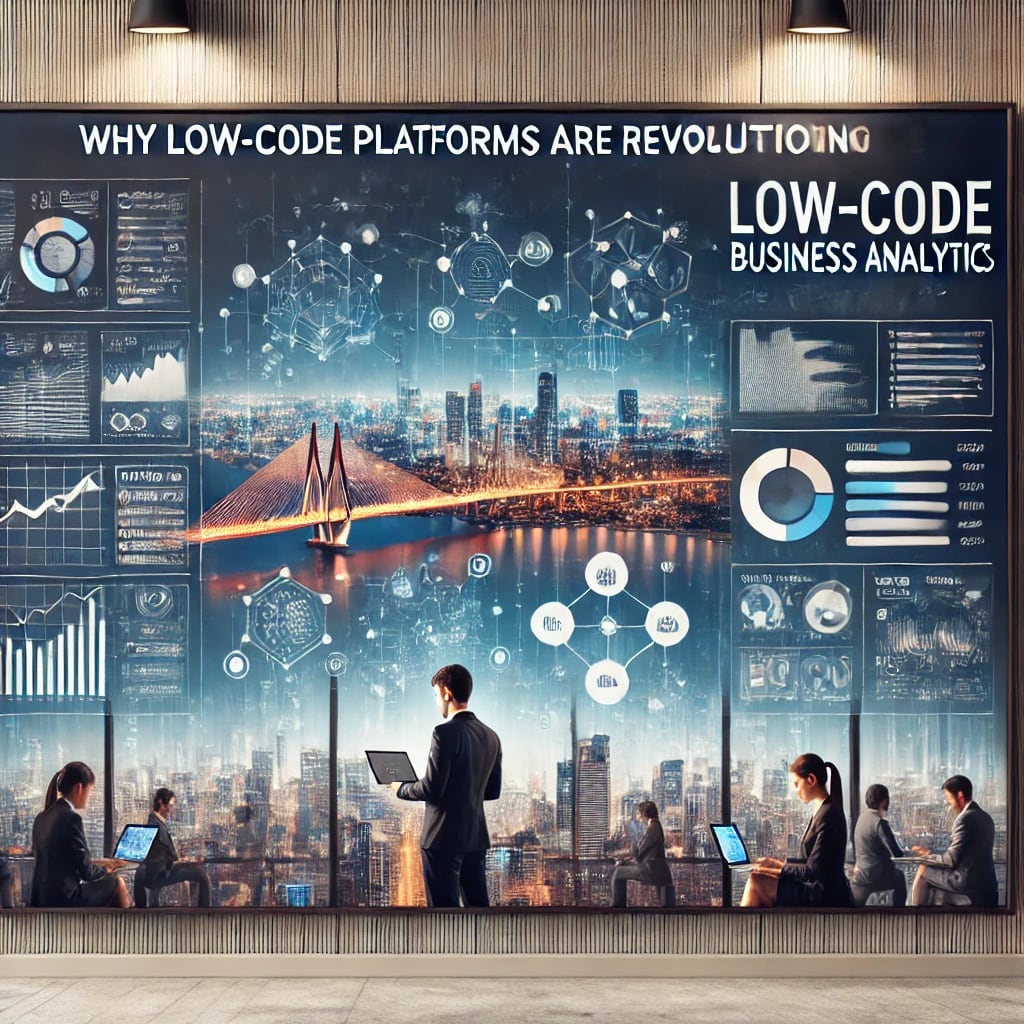
Introduction
In recent years, there has been great concern about the implementation of low-code platforms in business analytics. All these platforms are making it easy for businesses of all sizes to carry out data analysis, which was difficult for them in the past due to the expertise involved. These tools have been actively used by professionals in the retail, healthcare, and other sectors, including the financial industry in Mumbai. This is why any person interested in this area should enroll in a business analytics course in Mumbai and learn how to cope with all these changes.
Hence, in this blog, we will try to understand why low-code has become important, especially in business analytics, what the benefits of low-code platforms are, and how it is changing businesses' decision-making processes.
What Are Low-Code Platforms?
Low-code tools are application development environments that enable people to build apps or workflow applications with little coding. These platforms utilize graphical interfaces with drag-and-drop features – as well as reusable components– to implement otherwise-complicated procedures. That is why they allow business people, who do not necessarily possess programming skills to analyze the data and produce insights.
Those who want to focus on this area pass through handy training, such as a business analyst course in Mumbai that offers fundamental comprehension of how low-code tools can be employed.
Why Are Low-Code Platforms Popular in Business Analytics?
1. Ease of Use
There is a consensus about one of the primary factors behind the low-code platforms' success: the simplicity of the tools. These platforms allow business analysts, most of whom might lack advanced coding skills, to conduct analyses easily. The data visualization software they use has easy-to-understand dashboards and pre-built templates to help them quickly gain value and make decisions.
Depending on the institute a candidate attends for their business analyst course in Mumbai, these platforms are a plus for any organization they work with.
2. Faster Time to Insights
Today, commerce changes rapidly, and as a result, speed is crucial in business. Low-code platforms are effective because they enable organizations to create applications without relying heavily on IT specialists. This allows them to gain insight faster and respond to market trends as quickly as possible.
Business analysts trained in Mumbai in business analyst training are better placed to fully capitalize on the platforms to undertake to model and offer actionable insights within a much shorter timeframe than it would have taken under traditional methods.
3. Cost-Effectiveness
The use of a low-code platform decreases the cost of hiring complex technical teams for analytics. This will benefit the business since non-technical workers will be allowed to conduct the data analysis, which will lead to better use of resources and efficient use of people's budgets. For example, most firms in the current Mumbai startup scene rely on these tools to keep organizational overhead low while increasing productivity.
4. Accessibility to Non-Technical Users
Low-code platforms are not like normal analytical tools; they are made for everyone. It allows marketing people, sales teams, and operation managers to extract insights from these platforms without involving data scientists or IT support.
Enrolling in a business analytics course in Mumbai can prepare one to bridge the gap between prevailing business needs and technical tools and efficiently adopt low-code platforms.
5. Seamless Integration with Existing Systems
the low-code platforms are quite compatible with other systems like CRMs, ERPs, and the cloud. This integration guarantees that data from various sources can also be analyzed continuously without interrupting activities in business organizations.
Key Benefits of Low-Code Platforms in Business Analytics
1. Enhanced Agility
Low-code platforms allow enterprises to organize their work effectively and adapt to new market conditions. Both of these aspects, customer analytics, and predictive sales, are real-time and provide information that feeds directly into the strategies being implemented.
2. Democratization of Data
Low-code tools enable employees at different levels of the organization across the company departments to engage in the analytics task. This democratization of data allows data to be shared across the working units and ensures that decision-making comes with a touch of data.
3. Customization and Flexibility
It shows that organizations can further tailor low-code solutions according to their needs. As for me, these instruments are as flexible as they can be – from creating specific dashboards to automating processes.
4. Increased Productivity
Simplifying complex analytical processes with low-code platforms also helps the time commitments of the employees in their high-level core working areas. They improve the business results, the bottom line being that increased efficiency is always good for productivity.
5. Scalability for Growing Businesses
When it comes to data analytics, the requirements expand as the businesses grow. Low code tools offer flexibility in relation to the amount of data that companies can cope with and address in the future since investment in this regard is not significantly affected.
How Low-Code Platforms Are Transforming Industries in Mumbai
Since Mumbai is India's financial capital, it has a higher adoption rate of low-code platforms in industries. Here are some examples:
Retail and E-Commerce: Low-code applications are implemented to analyze customer purchase patterns, manage inventory, and target marketing campaigns.
Healthcare: Hospitals and clinics use low-code platforms to analyze patient data, which optimizes health delivery and impacts clinic functionality.
Finance: The platforms above are used by financial institutions in Mumbai for risk assessment, fraud detection, and compliance management.
Real Estate: Because property investments involve a lot of capital, developers must make informed decisions based on market and customer data.
Professionals in these industries can enroll in business analyst training in Mumbai to compete in today's job market. This training prepares them to operate in an environment that highly values data.
The Future of Low-Code Platforms in Business Analytics
Depending on the current trend, the use of low-code platforms is expected to increase as companies look forward to leveraging data without entailing complicated coding mechanisms. These platforms will continue to improve through artificial intelligence and machine learning, making predictive and prescriptive analytics almost effortless.
The Business Analyst Institute in Mumbai trains students by putting them at the cutting edge of a change that will transform business through data.
Final Thoughts
The latest advances in business analytics are low-code platforms that make data-driven decisions more accessible. Due to their simplicity, low cost, and quick readability, they are powerful tools, especially for businesses in a competitive economy such as Mumbai.
For career-oriented people who are willing to create a career in this competitive field, it is important to be admitted to a business analytics or business analyst course in Mumbai. These programs deliver the knowledge necessary to drive low-code platforms strategically using technical analysis and succeed in the present existential world.
Utilizing low-code platforms can, therefore, be a great opportunity for both businesses and professionals in the market.
About the Creator
Enjoyed the story? Support the Creator.
Subscribe for free to receive all their stories in your feed.
Comments
There are no comments for this story
Be the first to respond and start the conversation.