
Why Is Iran Attacking Israel?
Unraveling the Roots of Middle Eastern Tensions and the Motives Behind Iran’s Aggression Toward Israel
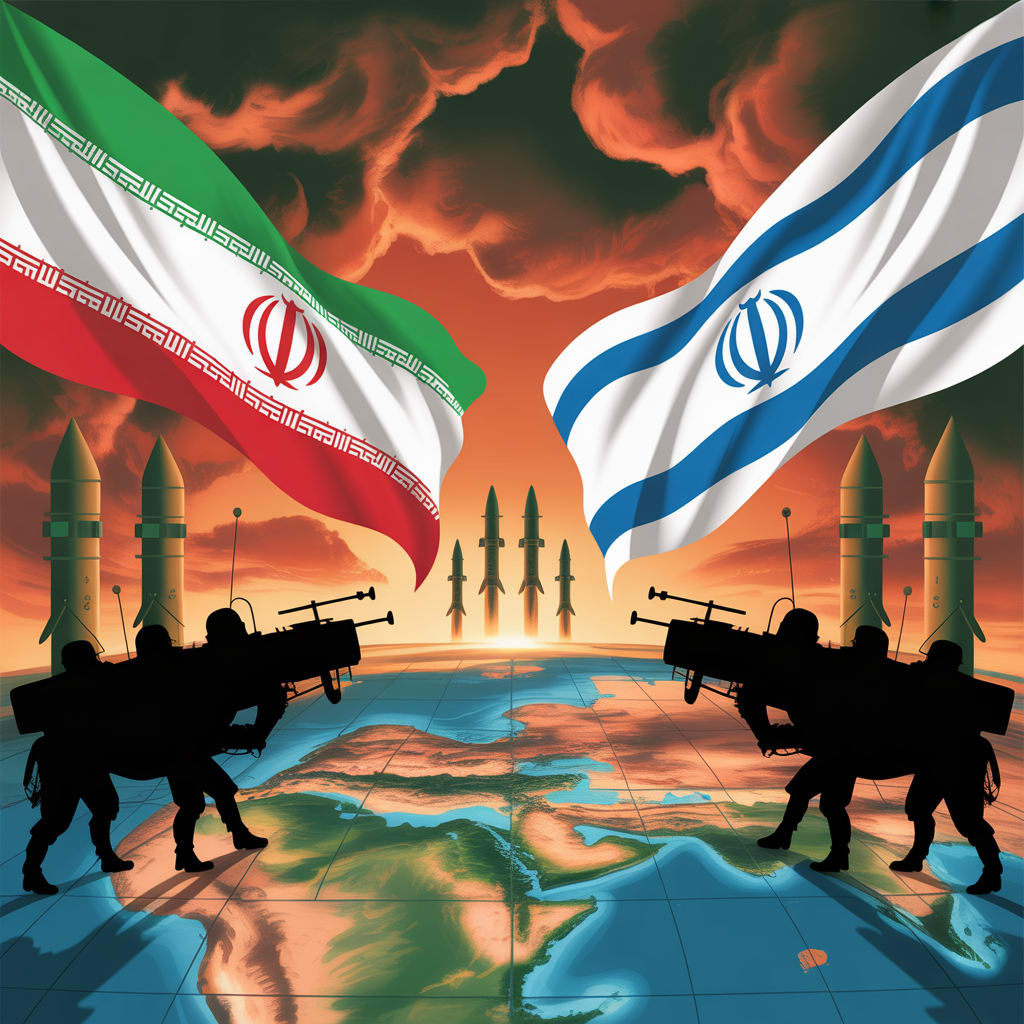
Start writing..The ongoing conflict between Iran and Israel is a complex and deeply rooted geopolitical struggle shaped by ideology, religion, politics, and military strategy. While the recent escalations have reignited global concerns, the roots of the tension go back decades. To understand why Iran is attacking Israel—or threatening to—it is essential to delve into the historical context, regional dynamics, and present-day triggers. 𝗔 𝗛𝗶𝘀𝘁𝗼𝗿𝘆 𝗼𝗳 𝗛𝗼𝘀𝘁𝗶𝗹𝗶𝘁𝘆 Iran and Israel were once allies during the Shah’s reign. However, after the 1979 Islamic Revolution, Iran underwent a dramatic political transformation, becoming an Islamic Republic under Ayatollah Khomeini. The new regime adopted an anti-Western and anti-Israeli stance, declaring Israel as the “Zionist regime” that must be removed from the map. This ideological opposition is fueled by Iran’s support for the Palestinian cause and its view of Israel as an occupying force. Over the years, Iran has supported militant groups such as Hezbollah in Lebanon and Hamas in Gaza, which are both enemies of Israel. These proxies have frequently clashed with Israel, acting as the frontlines of Iran’s indirect war against the Jewish state. Proxy War and Strategic Influence Iran rarely attacks Israel directly. Instead, it uses a network of militias and armed groups to wage a proxy war. Hezbollah, for instance, possesses thousands of rockets aimed at Israel and has played a significant role in Lebanese politics with strong Iranian backing. The presence of Iranian forces and militias in Syria has also alarmed Israel. These forces are seen as a direct threat to Israeli national security, especially as Iran attempts to build a land corridor from Tehran to Beirut, consolidating its influence in the region. Israel, in turn, has launched numerous airstrikes in Syria targeting Iranian assets, weapons shipments, and military installations. These strikes have occasionally led to casualties among Iranian commanders, further increasing tensions. 𝗧𝗵𝗲 𝗡𝘂𝗰𝗹𝗲𝗮𝗿 𝗜𝘀𝘀𝘂𝗲 One of the core reasons for the animosity is Iran’s nuclear program. Israel considers a nuclear-armed Iran an existential threat. Iran claims its nuclear development is for peaceful energy purposes, but intelligence reports and defiance of international inspections have fueled suspicions. The 2015 Iran nuclear deal (JCPOA), which aimed to curb Iran’s nuclear capabilities in exchange for sanctions relief, was welcomed by many nations. However, Israel opposed it, arguing it was too lenient. When the U.S. withdrew from the deal in 2018 under President Trump, tensions flared further. Iran began enriching uranium beyond the agreed limits, bringing the region closer to confrontation. Recent Triggers: Gaza War and Regional Politics Recent escalations, especially in 2024 and 2025, stem from multiple flashpoints: Gaza Conflict: Iran increased support for Hamas during Israel’s military operations in Gaza. In retaliation, Israel accused Iran of funding and arming militant groups to launch attacks. Al-Aqsa Tensions: Clashes around the Al-Aqsa Mosque in Jerusalem—a site sacred to both Muslims and Jews—have often led to Iran issuing statements threatening Israel with "punishment" for perceived offenses. Normalization of Arab-Israel Ties: Iran sees the Abraham Accords and warming of relations between Israel and Gulf countries like UAE, Bahrain, and even indirect ties with Saudi Arabia, as a direct threat to its influence in the region. 𝐈𝐫𝐚𝐧’𝐬 𝐌𝐨𝐭𝐢𝐯𝐞𝐬 𝐟𝐨𝐫 𝐀𝐠𝐠𝐫𝐞𝐬𝐬𝐢𝐨𝐧 There are multiple reasons why Iran might choose to act aggressively toward Israel: 1. Political Distraction: Internal unrest in Iran, including protests over economic hardship and government repression, might drive the regime to stoke external conflicts to unify its population against a common enemy. 2. Deterrence Strategy: By threatening or attacking Israel through proxies, Iran tries to deter further Israeli or U.S. military action against its nuclear and regional assets. 3. Regional Leadership: Iran wants to be seen as the defender of Muslim lands and the Palestinian cause. Aggression toward Israel boosts its image among certain populations in the Arab and Muslim world. 4. Retaliation: Israeli assassinations of Iranian nuclear scientists and airstrikes on Iranian assets provoke direct or indirect retaliatory responses. 𝗧𝗵𝗲 𝗥𝗶𝘀𝗸𝘀 𝗼𝗳 𝗮 𝗕𝗿𝗼𝗮𝗱𝗲𝗿 𝗪𝗮𝗿 Though full-scale war between Iran and Israel is unlikely due to the massive consequences, the risk always looms. Both countries possess advanced military capabilities. Israel is believed to have nuclear weapons, while Iran has built a large missile arsenal. A miscalculation could lead to devastating regional conflict, involving the U.S., Hezbollah, and other actors. 𝗚𝗹𝗼𝗯𝗮𝗹 𝗥𝗲𝗮𝗰𝘁𝗶𝗼𝗻𝘀 𝗮𝗻𝗱 𝗗𝗶𝗽𝗹𝗼𝗺𝗮𝘁𝗶𝗰 𝗘𝗳𝗳𝗼𝗿𝘁𝘀 The international community, especially the United Nations and European Union, often calls for restraint. The U.S. supports Israel, but also tries to prevent escalation. Russia and China, which have ties to Iran, usually urge diplomatic solutions. However, until the underlying ideological and strategic issues are resolved, peace remains elusive. 𝐀𝐮𝐭𝐡𝐨𝐫 𝐍𝐨𝐭𝐞: 𝐖𝐫𝐢𝐭𝐭𝐞𝐧 𝐛𝐲 𝐌. 𝐉𝐮𝐧𝐚𝐢𝐝 – 𝐀 𝐝𝐞𝐞𝐩 𝐥𝐨𝐨𝐤 𝐢𝐧𝐭𝐨 𝐠𝐞𝐨𝐩𝐨𝐥𝐢𝐭𝐢𝐜𝐬 𝐚𝐧𝐝 𝐢𝐭𝐬 𝐢𝐦𝐩𝐚𝐜𝐭 𝐨𝐧 𝐨𝐮𝐫 𝐦𝐨𝐝𝐞𝐫𝐧 𝐰𝐨𝐫𝐥𝐝.
About the Creator
Enjoyed the story? Support the Creator.
Subscribe for free to receive all their stories in your feed.
Comments
There are no comments for this story
Be the first to respond and start the conversation.