
Why Early Number Recognition Is One of the Most Important Skills for Young Children
How Parents Can Build Strong Math Foundations Through Simple Daily Learning Activities

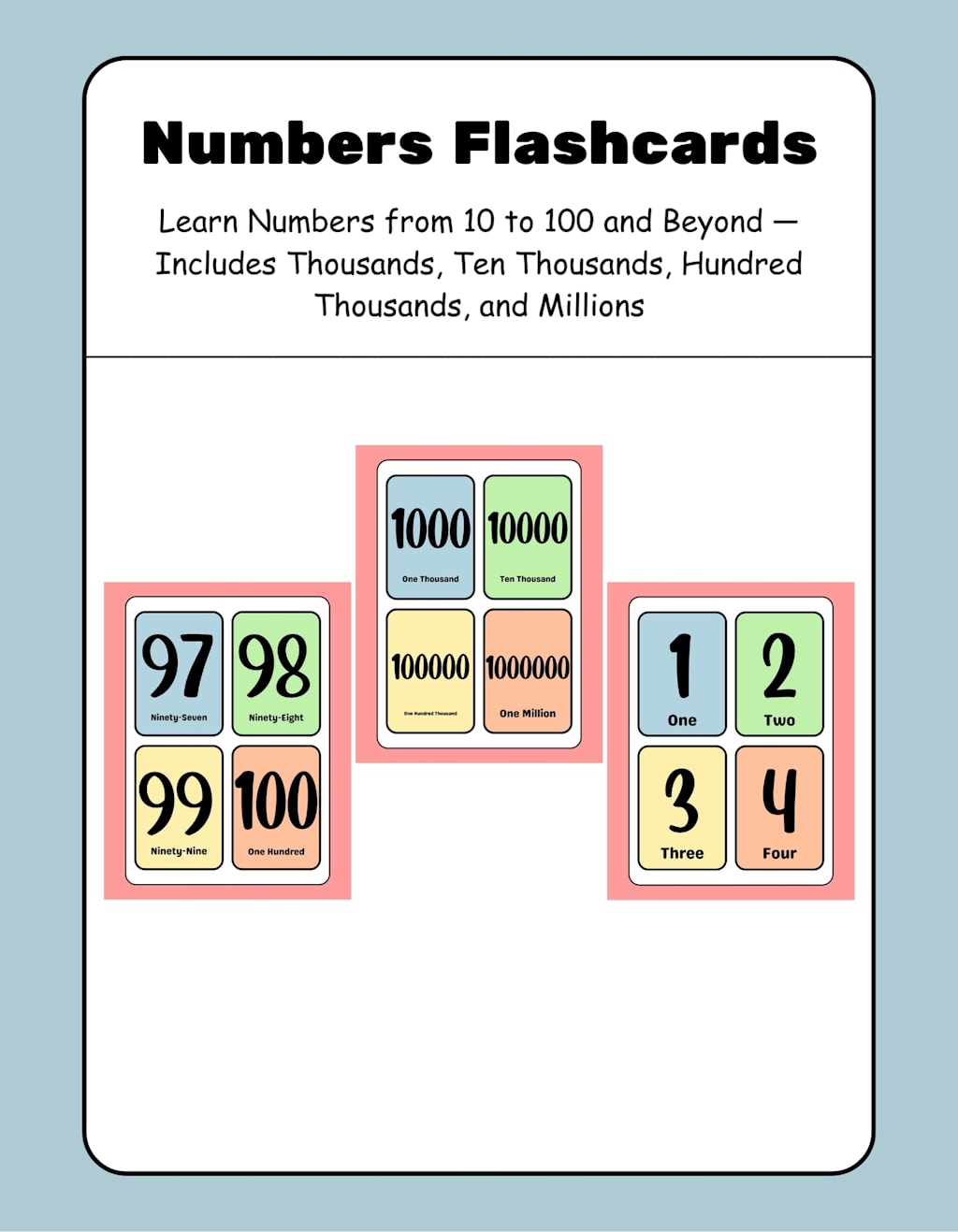
When parents think about preparing their children for academic success, they often focus on reading and language development. While literacy is undoubtedly important, another essential skill deserves equal attention: number recognition.
Long before children begin solving mathematical problems in school, they must first understand what numbers are, how they are represented, and how they relate to the world around them. These early experiences with numbers form the foundation upon which future mathematical understanding is built.
The good news is that helping children learn numbers does not require complicated lessons or expensive educational programs. In fact, some of the most effective learning opportunities occur during simple everyday activities and playful interactions.
Understanding the importance of early number recognition can help parents and educators create meaningful learning experiences that support children's long-term academic development.
What Is Number Recognition?
Number recognition refers to a child's ability to identify numbers and understand that each number represents a specific quantity. For example, a child who recognizes the number five understands not only the symbol "5" but also that it represents five objects.
This may seem like a simple concept to adults, but for young children it represents a significant developmental milestone. Number recognition serves as a bridge between visual symbols and mathematical understanding.
Before children can count confidently, compare quantities, or perform basic calculations, they must first become familiar with numbers themselves.
Why Early Math Skills Matter
Research in early childhood education suggests that strong early math skills are closely linked to later academic success. Children who enter school with a basic understanding of numbers often adapt more easily to classroom instruction and demonstrate greater confidence in learning environments.
Mathematics is present in nearly every aspect of daily life. Children encounter numbers when reading clocks, counting toys, measuring ingredients, identifying house numbers, or keeping score during games.
Developing familiarity with numbers at an early age helps children make sense of the world around them. It also strengthens critical thinking, reasoning, and problem-solving abilities that extend beyond mathematics.
Learning Happens Everywhere
One of the biggest misconceptions about early education is that learning only occurs in formal settings. In reality, children learn continuously through observation, interaction, and play.
Parents can encourage number recognition during everyday activities such as:
Counting steps while climbing stairs
Identifying numbers on signs and buildings
Counting pieces of fruit during snack time
Reading number-based storybooks
Playing simple counting games
Sorting objects by quantity
These experiences help children connect numbers with real-world situations, making learning more meaningful and memorable.
The Power of Visual Learning
Young children are naturally drawn to visual information. Bright colors, clear images, and simple designs capture their attention and support memory retention.
Visual learning tools are particularly effective because they allow children to focus on one concept at a time. When information is presented clearly and consistently, children are more likely to understand and remember it.
Educational materials that combine visual appeal with simplicity often produce better learning outcomes than resources that overwhelm children with too much information at once.
This is one reason visual learning aids have remained popular among educators for generations.
The Role of Repetition in Learning
Children rarely master new skills after a single exposure. Repetition plays a vital role in helping young learners build familiarity and confidence.
Each time a child sees, hears, or uses a number, the brain strengthens the neural pathways associated with that information. Over time, repeated exposure transforms unfamiliar symbols into recognizable concepts.
Repetition does not need to be boring. Through games, conversations, songs, and visual activities, children can encounter numbers in enjoyable and engaging ways.
The goal is to create frequent opportunities for interaction rather than formal lessons that feel like work.
Building Confidence Through Small Successes
Confidence is one of the most important outcomes of early learning experiences. When children successfully recognize a number, count a group of objects, or complete a simple activity, they experience a sense of accomplishment.
These small victories encourage continued participation and foster a positive attitude toward learning.
Children who feel capable are often more willing to explore new concepts, ask questions, and persist when faced with challenges.
For this reason, early educational experiences should focus not only on academic skills but also on helping children develop confidence in their abilities.
Choosing the Right Learning Resources
Parents and educators have access to countless educational tools, but the most effective resources often share several characteristics:
Simple and easy to understand
Age-appropriate
Visually engaging
Interactive
Encouraging rather than overwhelming
Learning materials that support active participation tend to be more effective than those that require passive observation.
Resources that encourage children to identify, discuss, and interact with numbers can significantly enhance the learning process.
Looking Ahead
The journey toward mathematical understanding begins with simple experiences. Learning to recognize numbers may seem like a small achievement, but it represents an important step in a child's educational development.
By providing consistent opportunities to explore numbers through everyday activities, visual learning tools, and playful interactions, parents and educators can help children build strong foundations for future success.
Every child learns at a different pace, but with patience, encouragement, and the right resources, developing early number skills can become an enjoyable and rewarding experience.
The first step toward mathematical confidence starts with recognizing a single number, and that small step can open the door to a lifetime of learning.
About the Creator
Meshal Sprout
Author of fun & educational kids books | Inspiring creativity & imagination
Enjoyed the story? Support the Creator.
Subscribe for free to receive all their stories in your feed.
Comments
There are no comments for this story
Be the first to respond and start the conversation.