
Why Choose 17-4 PH Stainless Steel Plate? Properties, Uses, and More
17-4 PH Plate

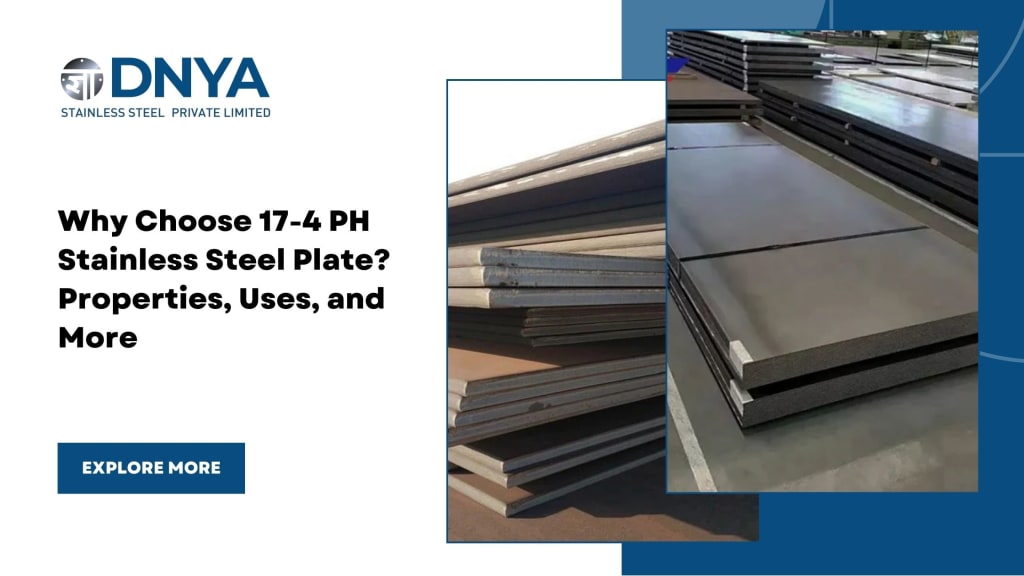
Stainless steel plays an indispensable role in various industries, providing high levels of durability, strength, and corrosion resistance. One of the most remarkable stainless steel grades, 17-4 PH stainless steel, offers unique benefits that make it a sought-after material in sectors ranging from aerospace to chemical processing. In this article, we’ll explore why 17-4 PH stainless steel plate stands out, highlighting its properties, applications, and benefits.
What is 17-4 PH Stainless Steel?
17-4 PH stainless steel, also known as Type 630, is a precipitation-hardening martensitic stainless steel. Combining high strength and corrosion resistance, it has become an excellent choice for applications that require durable, long-lasting materials. The alloy's composition includes chromium, nickel, and copper, which enhance its strength and durability.
17-4 PH stainless steel is especially known for its ability to undergo heat treatment, making it adaptable to various conditions and hardness requirements. It is widely available in plate, bar, and sheet forms, with the plate being the most common in heavy-duty applications.
Key Properties of 17-4 PH Stainless Steel Plate
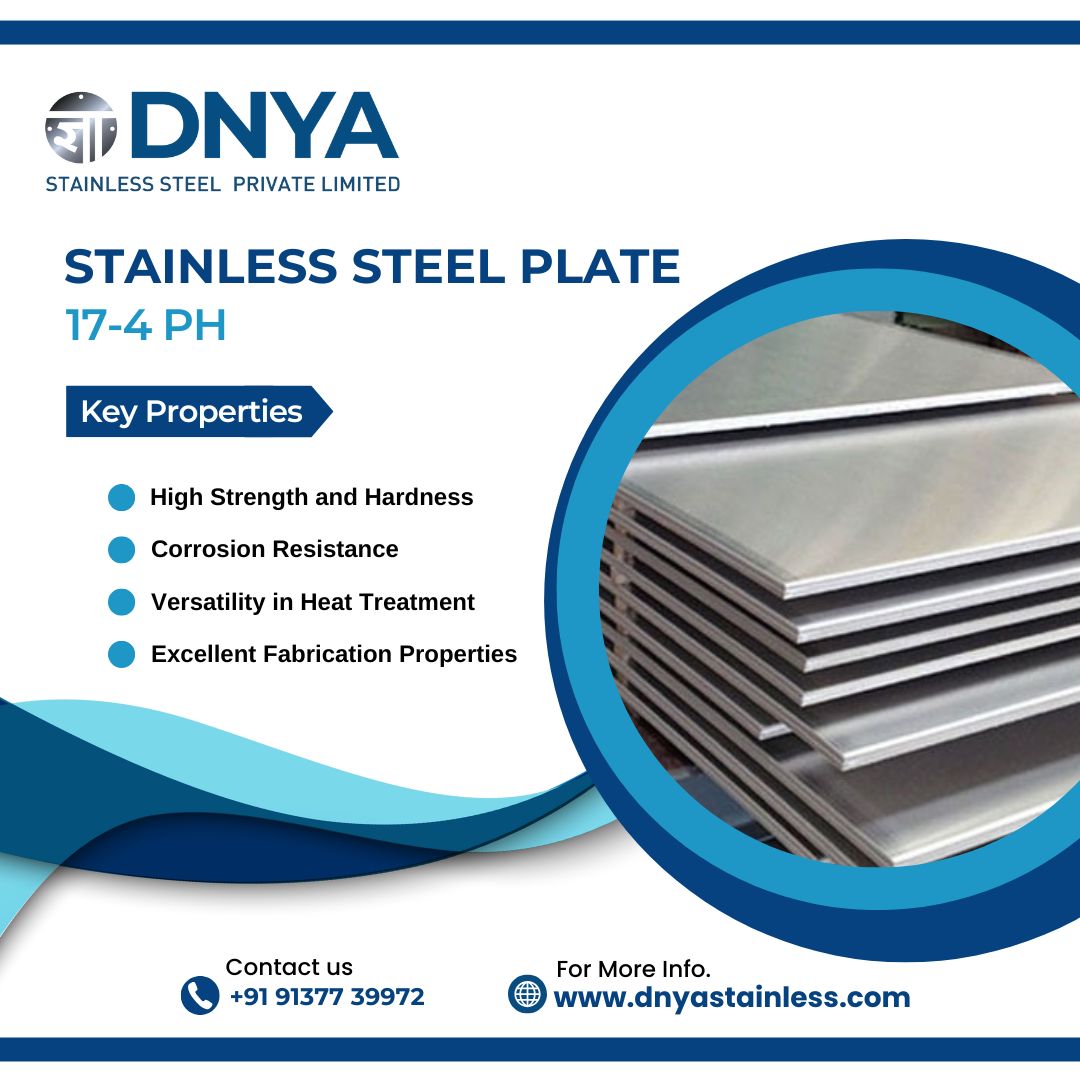
1. High Strength and Hardness
One of the standout properties of 17-4 PH stainless steel is its high strength. This material’s martensitic structure allows it to be hardened through heat treatment, increasing its tensile and yield strength significantly. The strength of 17-4 PH stainless steel is comparable to some tool steels, yet it maintains a higher level of corrosion resistance than these steels. In fact, 17-4 PH stainless steel can achieve ultimate tensile strengths between 930 and 1310 MPa (135,000 to 190,000 psi), depending on the heat treatment applied.
2. Corrosion Resistance
17-4 PH stainless steel offers excellent corrosion resistance against various environmental factors, including atmospheric and diluted acid exposure. Although it may not match the corrosion resistance of austenitic stainless steels like 304 or 316, 17-4 PH is still highly effective in moderately corrosive environments. It is suitable for use in environments where chloride-induced stress corrosion is a concern, which makes it valuable in chemical processing and marine industries.
3. Versatility in Heat Treatment
The “PH” in 17-4 PH stands for precipitation hardening, which is a heat treatment process that enhances the alloy’s mechanical properties. Through aging at various temperatures (between 482°C and 621°C or 900°F and 1150°F), the steel can be hardened to different degrees to meet specific application needs. This flexibility in heat treatment means it can be adjusted for desired levels of toughness, strength, and hardness, making it suitable for a wide range of industries.
4. Excellent Fabrication Properties
17-4 PH stainless steel plate is relatively easy to machine, weld, and form compared to other high-strength alloys. Due to its martensitic structure, it is compatible with standard machining techniques and responds well to welding processes, including gas tungsten arc welding (GTAW) and gas metal arc welding (GMAW). This makes it an ideal choice for manufacturers who require versatile and adaptable fabrication options without compromising on strength or durability.
Benefits of Using 17-4 PH Stainless Steel Plate
1. Long-Lasting Durability
The high tensile and yield strength of 17-4 PH stainless steel contribute to its long-lasting performance, even in demanding environments. Its corrosion resistance, combined with its strength, ensures that components made from this material can withstand extreme conditions, resulting in reduced maintenance and repair costs over the life of the product.
2. Cost Efficiency
The durability and strength of 17-4 PH stainless steel make it a cost-effective choice for applications where replacement and downtime costs are a concern. Because of its extended life and ability to withstand harsh conditions, using 17-4 PH stainless steel in manufacturing processes can reduce operating expenses in the long run, making it an economical solution.
3. Adaptability Across Industries
The combination of high strength, corrosion resistance, and heat treatment flexibility allows 17-4 PH stainless steel to be used across various industries, including aerospace, medical, oil and gas, and food processing. Its unique properties are particularly valuable in sectors where material integrity and reliability are paramount, helping manufacturers to meet stringent industry standards and specifications.
Common Applications of 17-4 PH Stainless Steel Plate
1. Aerospace Industry
In aerospace, materials must endure high-stress conditions without compromising safety. 17-4 PH stainless steel is often used for turbine blades, structural components, and fasteners that require high tensile strength and corrosion resistance. Its ability to perform in extreme temperatures and corrosive environments makes it an optimal choice for aerospace components that undergo rigorous testing and operation.
2. Medical Equipment Manufacturing
17-4 PH stainless steel is widely used in medical instruments, implants, and surgical tools. This is largely due to its biocompatibility and corrosion resistance, which allow it to withstand sterilization and bodily fluids without degrading. Its strength and machinability also ensure that medical devices made from 17-4 PH are reliable and can maintain their integrity throughout repeated use.
3. Oil and Gas Sector
The oil and gas industry demands materials that can withstand corrosive substances, high pressures, and temperature fluctuations. 17-4 PH stainless steel is often employed in valves, fittings, and pumps, as well as components used in offshore drilling. Its excellent corrosion resistance and mechanical strength allow it to perform consistently in challenging environments, contributing to its widespread use in the sector.
4. Chemical Processing and Marine Applications
Because of its resistance to corrosive elements like chlorides, 17-4 PH stainless steel is popular in chemical processing and marine environments. Components such as heat exchangers, reaction vessels, and propeller shafts benefit from the material’s durability, allowing it to function effectively in settings where chemical exposure is common.
5. Food Processing Industry
17-4 PH stainless steel is also highly valued in the food processing industry for its ease of sterilization and corrosion resistance. Equipment like mixers, conveyor belts, and fasteners benefits from its ability to withstand cleaning agents and various food processing chemicals, ensuring that the equipment remains sanitary and durable.
Comparing 17-4 PH to Other Stainless Steels
17-4 PH vs. 304 Stainless Steel
While 304 stainless steel is highly popular for its corrosion resistance, 17-4 PH stands out due to its superior strength and hardness. Unlike 304, which lacks the ability to be hardened through heat treatment, 17-4 PH provides enhanced durability and can be tailored to meet the unique requirements of applications that demand both strength and moderate corrosion resistance.
17-4 PH vs. 316 Stainless Steel
316 stainless steel offers better corrosion resistance in environments with saltwater exposure, making it ideal for marine applications. However, 17-4 PH stainless steel provides higher tensile and yield strength, which makes it the preferred choice in scenarios where both corrosion resistance and structural integrity are required.
17-4 PH vs. Duplex Stainless Steels
Duplex stainless steels combine austenitic and ferritic structures, giving them high strength and corrosion resistance, especially in chloride environments. However, 17-4 PH stainless steel offers superior machinability and fabrication versatility, making it easier to work with in high-precision applications.
Conclusion
In industries where strength, corrosion resistance, and durability are essential, 17-4 PH stainless steel plate delivers unmatched performance. Its adaptability through heat treatment and compatibility with machining and welding make it a versatile material for a range of demanding applications. From aerospace components to chemical processing equipment, 17-4 PH stainless steel plate meets the rigorous standards of modern industry, providing a cost-effective and long-lasting solution for manufacturers.
About the Creator
Dnya Stainless Steel
DNYA Stainless Steel is a top global supplier, distributor, and manufacturer of premium steel plates, offering a wide range of durable and corrosion-resistant products to meet various industrial needs.
Enjoyed the story? Support the Creator.
Subscribe for free to receive all their stories in your feed.
Comments
There are no comments for this story
Be the first to respond and start the conversation.