
Why Bun.js is the Future of Node.js** 🚀
here is why… Bun js is a node js killer
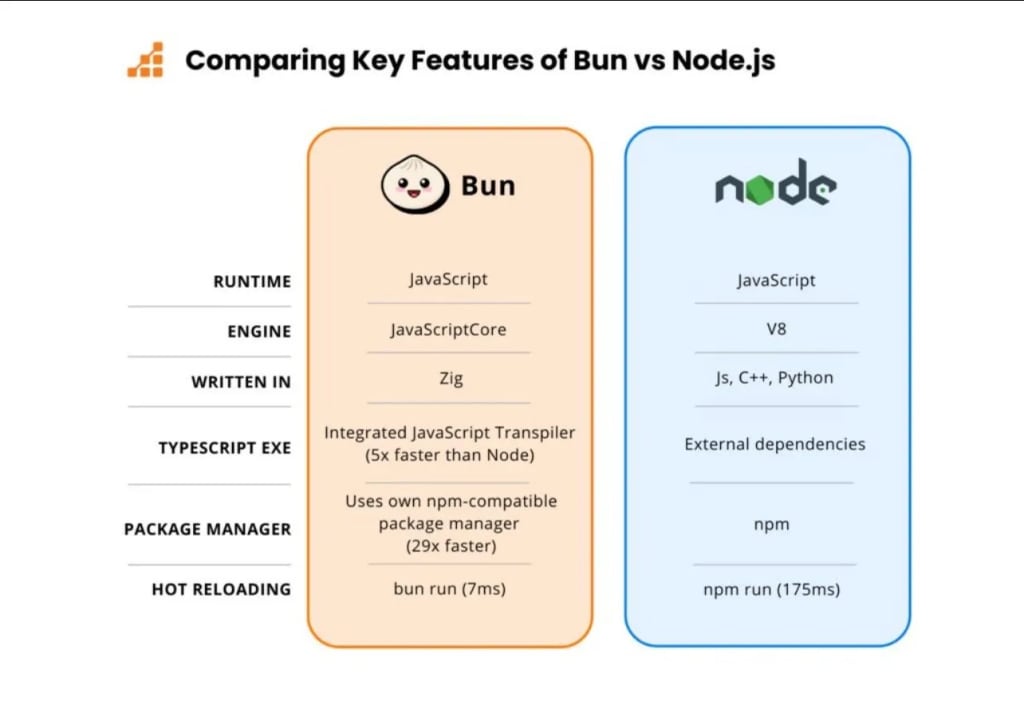
Bun.js: The Fast, All-In-One Alternative to Node.js
In the ever-evolving world of JavaScript and web development, performance is crucial. Developers are always looking for tools and frameworks that can help them build applications faster and more efficiently. Enter Bun.js, a next-generation runtime that is gaining significant traction as a faster, leaner alternative to Node.js. Bun.js stands out not just for its speed but for its ability to simplify the development process with a comprehensive toolkit. This article explores why Bun.js is becoming a compelling choice for modern web applications and how its unique features are reshaping the JavaScript ecosystem.
The Speed Revolution: Bun vs. Node.js
One of the key selling points of Bun.js is its speed. In comparison to Node.js, Bun processes start up to 4x faster. This drastic reduction in startup time is particularly beneficial in modern development environments where speed is of the essence. Faster startup times mean developers can spend less time waiting for their tools to initialize and more time building and testing their applications.
Bun's performance improvements are due to its lightweight and optimized architecture, which focuses on minimizing overhead and delivering quick execution times. It's especially efficient when dealing with CPU-bound tasks and file I/O operations, both of which are critical for web applications. For example, Bun’s built-in file system APIs are designed to work seamlessly with large projects, making it a great choice for developers working on performance-critical applications or those managing substantial datasets.
A Comprehensive Toolkit: All-in-One Solution
What truly sets Bun apart from Node.js and other runtimes is its all-in-one toolkit. Unlike Node.js, which relies on third-party libraries and tools for tasks like bundling, testing, and managing dependencies, Bun comes bundled with everything you need to build, test, and deploy JavaScript or TypeScript applications. This integrated approach is perfect for developers who prefer a more streamlined workflow.
Bun includes several essential tools:
Runtime: Like Node.js, Bun serves as a runtime for executing JavaScript code.
Package Manager: Bun includes a built-in package manager that is faster than npm and yarn, enabling quicker installations and dependency management.
Bundler: Bun’s bundler compiles your code efficiently, offering significant performance improvements over traditional bundlers like Webpack.
Test Runner: It also includes a test runner, making it easier to run tests directly from the command line, without needing to set up third-party testing frameworks.
This comprehensive ecosystem makes it easier for developers to avoid the complexity of managing multiple tools and dependencies. Everything is integrated into a single runtime environment, which accelerates development cycles and enhances productivity.
TypeScript & JSX Support
Bun.js also brings full support for TypeScript and JSX, two of the most commonly used technologies in modern JavaScript development. You can run .ts, .tsx, and .jsx files directly in Bun without needing to transpile them first. Bun's transpiler efficiently converts these files to vanilla JavaScript before execution, saving developers the hassle of managing separate tools like Babel or TypeScript's compiler.
This seamless integration with TypeScript and JSX ensures that developers can write clean, modern code while enjoying the performance benefits of Bun without sacrificing developer experience. Whether you're building a React app, using TypeScript for type safety, or working with pure JavaScript, Bun provides an optimized, one-stop solution.
ESM & CommonJS Compatibility
As the JavaScript ecosystem moves towards ECMAScript Modules (ESM), developers have been forced to deal with compatibility issues between different module systems. While the world is transitioning to ESM, many packages on npm still use CommonJS modules. Bun.js gracefully handles both ESM and CommonJS, providing compatibility with both systems.
Bun recommends using ES modules because of their modern syntax and better tree-shaking capabilities, which can improve performance. However, Bun recognizes the sheer number of packages still using CommonJS, and it supports these as well. This flexibility ensures that developers can use Bun with existing projects and libraries without needing to worry about module resolution issues.
Web Standard APIs & Native Integrations
Another standout feature of Bun.js is its support for Web-standard APIs. These are the same APIs that run in the browser, such as fetch, WebSocket, and ReadableStream, which makes Bun particularly attractive for web developers. Additionally, Bun is powered by JavaScriptCore, an engine developed by Apple for Safari, allowing it to inherit many web-standard behaviors and performance optimizations from the browser.
For example, APIs like Headers and URL are directly implemented using Safari’s version, offering a consistent experience across the browser and Bun runtime. This brings the best of both worlds, making it easier for developers to build applications that behave the same way in both the browser and the server.
Node.js Compatibility
While Bun is designed to be a modern alternative to Node.js, it does not completely discard the vast Node.js ecosystem. Bun’s Node.js compatibility ensures that developers can run most existing Node.js code with minimal adjustments. It supports many built-in Node.js globals like process, Buffer, and modules such as path, fs, and http. This backward compatibility means that migrating to Bun from Node.js is relatively straightforward for most applications.
Bun's team continues to work on enhancing compatibility with Node.js features, and full compatibility is expected in the future. For now, developers can leverage Bun’s speed and additional features while still benefiting from the familiarity of the Node.js ecosystem.
The Future of Bun.js
Bun’s mission extends beyond simply being a runtime. The long-term goal is to create a cohesive infrastructural toolkit that encompasses all aspects of building modern JavaScript and TypeScript applications. This includes the package manager, transpiler, bundler, script runner, test runner, and much more. As Bun continues to mature, it’s poised to become a central tool in the development of high-performance web applications, challenging Node.js and other runtimes.
In conclusion, Bun.js offers a fresh, speed-optimized alternative to Node.js that simplifies the development process with its all-in-one toolkit. Its lightning-fast startup times, TypeScript and JSX support, compatibility with both ESM and CommonJS, and native implementation of web APIs make it a powerful choice for modern web development. As the ecosystem continues to grow, Bun.js is positioned to become a cornerstone of the JavaScript and TypeScript development landscape.
hashtag#nodejs hashtag#bunjs hashtag#javascript hashtag#futuredevelopment
About the Creator
Enjoyed the story? Support the Creator.
Subscribe for free to receive all their stories in your feed.
Comments
There are no comments for this story
Be the first to respond and start the conversation.