
Why are plant leaves green?
The Science Behind Leaves
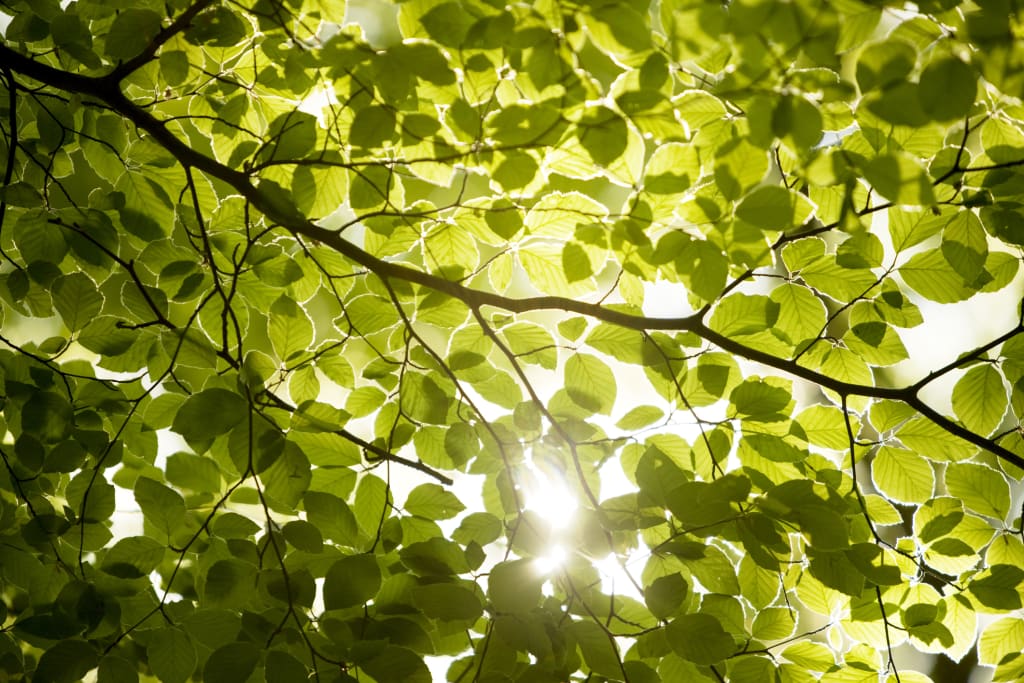
Leaves are green because they contain chlorophyll, which is used for photosynthesis. Green is the predominant colour in nature and is found in most plants. The lush greenness of forests and hillsides is a characteristic of nature.
Leaves are green because of chlorophyll. Scientists are unsure of the exact reason for this. One theory suggests that the colour green may help plants protect themselves from varying sunlight. It may seem like any colour would work, but green is an unexpected plant choice. Plants need sunlight for energy, so one might assume they want to absorb as much as possible. However, if they absorbed all the light, they would appear black.
Plants are not green. Green is the colour they reflect the most. It's strange because the Sun emits a lot of green. But plants reject this significant portion of the Sun's rays. According to a paper from June 2020, scientists think they know why. The study, led by a group at UC Riverside, suggests that plants may not be trying to absorb as much light as possible.
Plants need to absorb consistent light levels to avoid damage. In the jungle canopy, sunlight fluctuates due to shifting shadows. Plants are like electric power grids, susceptible to sudden changes. Surges can harm cells, while power drops can hinder function. Plants must regulate the amount of sunlight they absorb to prevent harmful fluctuations.
The green color of plants is a result of the presence of chlorophyll, a pigment found in the chloroplasts of plant cells. Chlorophyll absorbs light energy from the sun and converts it into chemical energy through photosynthesis. This process allows plants to produce their own food by converting carbon dioxide and water into glucose and oxygen.
One reason why plants appear green is because chlorophyll primarily absorbs blue and red light wavelengths while reflecting green light. This means that the green light is not absorbed by chlorophyll and is instead reflected back to our eyes, making the leaves appear green.
The ability of chlorophyll to absorb specific wavelengths of light is essential for photosynthesis. Blue and red-light ha participate in the chemical reactions of photosynthesis. The absorbed light energy is used to power the conversion of carbon dioxide and water into glucose, which serves as the main source of energy for plants.
The green light that is not absorbed by chlorophyll is reflected to our eyes, giving leaves their characteristic green color. This is why plants appear green to us.
In order to investigate this hypothesis, researchers conducted a simulation of a chloroplast, which is responsible for photosynthesis in plants. They designed the simulation to absorb energy from only two specific colours of light and tested how the simulated chloroplasts would respond to fluctuations in brightness, like what natural chloroplasts experience.
"Why are leaves green?" they asked. Through their research, they discovered that the amount of power produced by the plant depended on the two wavelengths it absorbed. This made sense as sunlight has different intensities at different wavelengths and absorbing more sunlight means more power production. However, the difference between the two input wavelengths also played a crucial role. If the difference was too large, the molecular network couldn't even out the noise and if it was too small, the signal got dampened too much resulting in low output. The optimal combination was a compromise between absorbing enough sunlight and handling fluctuations. Additionally, they could predict the color of photosynthesizing organisms based on the sunlight in their surroundings, using the model.
The model they used determined that green is the ideal color for plants in normal sunlight, which was expected. However, it also revealed that under a dense canopy of trees, a shade of purple is the optimal color. Interestingly, certain photosynthesizing bacteria that live in dense forests are exactly that shade. This suggests that, once again, evolution has solved a complex physics problem without us even realizing it. It has pinpointed the perfect color for plants to grow. Therefore, it seems that when it comes to photosynthesis, being green is truly the easiest option.
About the Creator
Enjoyed the story? Support the Creator.
Subscribe for free to receive all their stories in your feed.
Comments
There are no comments for this story
Be the first to respond and start the conversation.