
Why a Technical Audit in Digital Marketing Matters
Technical Audit in Digital Marketing


Why a Technical Audit in Digital Marketing Matters
As a digital marketing specialist, I’ve encountered countless scenarios where businesses were struggling to reach their full potential online. After spending years planning, creating content, and launching campaigns, many companies were left wondering, "Why isn't our digital marketing working as expected?" The answer often lies in the technical aspects of their website and online presence, which are frequently overlooked. A Technical Audit in digital marketing can be the game changer that transforms a struggling campaign into a growing one.
The reality is that digital marketing isn't just about great content or flashy ads. It’s about ensuring that your website is technically sound, search engine-friendly, and provides a seamless user experience. That’s where a Technical Audit in Digital Marketing comes into play. It’s a comprehensive analysis that identifies issues affecting your website’s performance, SEO, user experience, and ultimately, your marketing results.
What is a Technical Audit in Digital Marketing?
A Technical Audit in Digital Marketing is essentially a thorough examination of your website’s backend to ensure that all technical aspects are optimized for better search engine rankings, improved user experience, and greater conversion rates. Unlike regular audits that focus on content or design, technical audits consider elements such as site speed, mobile-friendliness, crawlability, and security. This kind of audit digs deep into the infrastructure of your website to identify errors and areas for improvement, which directly affect how search engines index and rank your site.
In simple terms, if your website isn’t optimized on a technical level, no amount of content or advertising will make it successful. Even if your blog posts, landing pages, and ads are on point, technical issues can significantly reduce their impact.
The Benefits of a Technical Audit in Digital Marketing
A Technical Audit in Digital Marketing is not just a diagnostic tool it’s a strategic asset that can improve your website's performance, user experience, and SEO rankings. By conducting a thorough technical audit, you can.
Identify and fix technical problems that hinder your site’s performance.
Improve user engagement by ensuring a smooth browsing experience.
Boost SEO rankings by addressing issues like crawl errors and page speed.
Secure your website from potential threats, building trust with visitors.
Increase conversion rates by optimizing the user journey from start to finish.
Why is a Technical Audit in Digital Marketing essential?
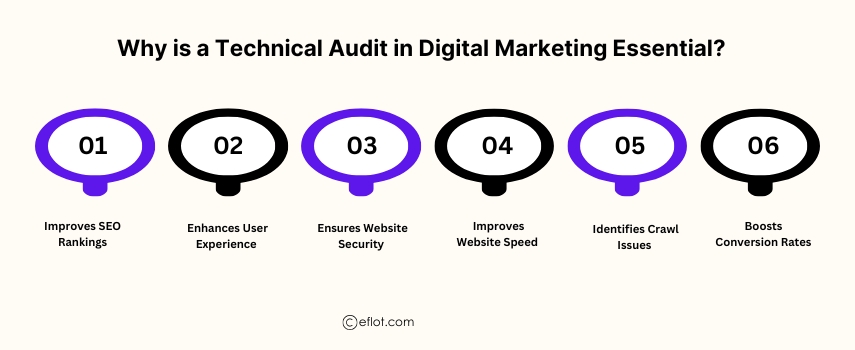
The digital environment is highly competitive. Every day, businesses are fighting for attention in a crowded marketplace. If your website doesn’t function properly, visitors won’t stick around, and search engines will penalize you. A Technical Audit helps you to identify and fix potential roadblocks that prevent your website from achieving its full potential. Here are several reasons why it matters.
1. Improves SEO Rankings
Search engines, like Google, use complex algorithms to determine which websites are the most relevant to user queries. A Technical Audit ensures your website adheres to the best SEO practices, such as proper keyword use, optimized metadata, and fast page load speeds. If your website has broken links, slow load times, or isn’t mobile-friendly, it can significantly affect your rankings. A technical audit helps you identify these issues and fix them, giving you a better chance to rank higher and attract organic traffic.
2. Enhances User Experience
User experience (UX) plays a vital role in both retaining visitors and improving SEO. Google has made it clear that websites with poor UX will rank lower. A Technical Audit checks critical elements that impact user experience, such as mobile responsiveness, loading speed, and site navigation. If your website is slow or difficult to navigate, visitors are likely to leave and never return. By addressing these technical problems, you ensure that visitors have a smooth, pleasant experience, which can increase engagement and conversions.
3. Ensures Website Security
Security is a growing concern for online users and search engines alike. Google and other search engines prioritize secure websites, especially those that handle sensitive data like customer details and payment information. A Technical Audit checks for vulnerabilities in your website, such as outdated software, unpatched security holes, and issues with your SSL certificate. A secure website is crucial for building trust with users, avoiding penalties from Google, and preventing cyberattacks.
4. Improves Website Speed
Website speed is one of the most important factors affecting user experience and SEO rankings. Websites that take too long to load often lead to higher bounce rates and lower rankings. A Technical Audit helps identify speed issues and suggests improvements. Whether it's optimizing images, reducing server response time, or fixing JavaScript errors, a technical audit provides solutions that can boost your website's performance and decrease load times.
5. Identifies Crawl Issues
For search engines to rank your website, they need to crawl and index it first. If search engines can’t crawl your website properly due to broken links, poor site structure, or blocked resources, your pages may not get indexed correctly or at all. A Technical audit checks for crawl issues and helps fix them, ensuring that search engines can access and index all of your website’s valuable content.
6. Boosts Conversion Rates
Ultimately, the goal of any digital marketing campaign is to drive conversions. If your website isn’t technically optimized, even the most compelling content or the best ads won’t result in sales or leads. A Technical Audit in Digital Marketing looks for obstacles that prevent your visitors from converting, such as broken forms, slow checkouts, or poor navigation. By optimizing these technical aspects, you can create a smoother journey for visitors, increasing the likelihood of conversions.
How Does a Technical Audit in Digital Marketing Work?
A Technical Audit in Digital Marketing involves several key steps. Here's how the process typically works:
Crawlability and Indexing Check: The first step is to ensure search engines can crawl your website properly. This involves reviewing your site’s robots.txt file, and sitemap, and ensuring there are no errors that prevent search engines from indexing important pages.
Site Speed Analysis: The audit checks your website’s speed, analyzing elements like page load times, server response times, and image optimization. Tools like Google PageSpeed Insights and GTmetrix are often used for this analysis.
Mobile-Friendliness Test: With the increasing use of mobile devices, your website must be optimized for mobile. The audit checks for responsive design and mobile performance, ensuring that users have a seamless experience across devices.
On-Page SEO Factors: The audit examines important on-page SEO elements like meta tags, header tags, URL structure, and internal linking. It ensures that your website follows SEO best practices, making it easier for search engines to understand and rank your content.
Security Review: A security review looks for potential vulnerabilities such as outdated plugins, lack of HTTPS, and weak password policies. It ensures that your website is secure for both visitors and search engines.
Content Optimization: The audit checks if your content is optimized for SEO. This includes keyword usage, meta descriptions, alt text for images, and ensuring that your content is accessible and valuable to your target audience.
Case Studies
Case Study 1:
Lenskart is India’s leading online eyewear retailer, offering everything from prescription glasses to sunglasses. While Lenskart had a vast array of products and a significant market presence, they were struggling to translate that success into higher conversion rates on their website.
Challenges: Despite their strong digital marketing campaigns, Lenskart was facing several technical challenges that were hindering their ability to fully capitalize on their website traffic and drive conversions. One of the main issues was slow website load times, especially during peak traffic hours. This delay in loading caused potential customers to abandon the site before completing their purchases.
Solutions: To address the technical issues impacting Lenskart’s performance, a comprehensive Technical Audit in Digital Marketing was conducted, leading to targeted improvements. First, the website's load time was optimized by reducing image sizes and implementing a content delivery network (CDN), which helped distribute content more efficiently across regions, significantly improving page speed.
Case Study 2:
Nykaa, one of India's leading beauty and wellness e-commerce platforms, offers a wide variety of beauty products, cosmetics, and wellness items to its customers. The brand’s popularity grew exponentially, particularly among millennials and Gen Z. Despite its massive growth, Nykaa faced challenges related to website performance and technical aspects of its digital marketing efforts.
Challenges: Even with strong content, influencer marketing, and a vast catalog of beauty products, Nykaa faced several technical challenges that negatively impacted its online sales performance. One of the most significant issues was slow website performance, especially during peak traffic periods like sales events and promotions. As traffic surged, the website’s load times slowed down considerably, causing frustration among customers. This delay often led to abandoned shopping carts and a loss of potential sales.
Solution: To address the technical challenges limiting its site performance, Nykaa decided to undergo a comprehensive Technical Audit in Digital Marketing. This audit revealed several key areas where improvements were crucial to boosting their digital marketing effectiveness and enhancing customer experience.
A Technical Audit in Digital Marketing ensures that your website is not only functional but also optimized for maximum performance. By identifying and fixing technical issues, improving SEO, enhancing user experience, and ensuring security, you set the foundation for successful digital marketing efforts. Whether you're a small business just starting or a large enterprise aiming to refine your digital marketing strategy, investing in a technical audit is an essential step toward sustainable growth. Don’t overlook the technical side of your website it could be the key to unlocking your online potential.
About the Creator
Enjoyed the story? Support the Creator.
Subscribe for free to receive all their stories in your feed.
Comments
There are no comments for this story
Be the first to respond and start the conversation.