
Which is Better, Montessori or Traditional Preschool?
Montessori vs. Traditional Preschool: Which is Better for Your Child?
Introduction
When it comes to early childhood education, parents often face a crucial decision: should they choose a Montessori or a traditional preschool for their child? Both approaches have unique philosophies, teaching methods, and goals. While Montessori schools emphasize self-directed learning and independence, traditional preschools focus on structured activities and teacher-led instruction. For parents looking for the best Preschool in Durga Pura, understanding the differences between these two systems can help make an informed choice that aligns with their child’s needs.
Understanding Montessori Education
Montessori education focuses on child-led learning, where children explore their interests through hands-on activities. This method, developed by Dr. Maria Montessori, emphasizes independence, creativity, and critical thinking. Classrooms are designed to foster self-discipline and curiosity, with materials that encourage exploration. Teachers serve as guides, allowing children to learn at their own pace. The Montessori approach is particularly effective for nurturing a child’s natural curiosity and helping them develop a lifelong love for learning.
Key Features of Traditional Preschool
Traditional preschools follow a structured curriculum that includes teacher-led lessons and group activities. These programs emphasize early academic skills like counting, reading readiness, and basic writing. The classroom environment often includes a mix of playtime and structured activities like art, music, and storytime. Children are grouped by age, and the focus is on meeting developmental milestones within a set timeline. Traditional preschools also encourage social interaction through group activities, helping children develop teamwork and communication skills. This structured approach helps prepare children for the routines of formal schooling.
Learning Styles: Montessori vs. Traditional Preschool
Montessori schools prioritize hands-on, self-directed learning, allowing children to choose activities that align with their interests. This approach fosters independence and intrinsic motivation. In contrast, traditional preschools focus on teacher-led instruction, where all children follow a set schedule and participate in the same activities. While Montessori encourages exploration and creativity, traditional preschools emphasize foundational academic skills and collaborative learning. Both approaches have unique strengths, catering to different learning styles.
Curriculum Focus: Montessori vs. Traditional Preschool
Montessori curriculums focus on holistic development, integrating academic, social, and emotional growth. Activities are designed to nurture practical life skills, sensory exploration, and problem-solving abilities. Many Montessori programs adopt a high-scope curriculum, which encourages active participation and critical thinking. Traditional preschools, on the other hand, follow a structured curriculum with predefined goals for subjects like math, literacy, and science. While Montessori offers flexibility and personalized learning, traditional preschools prepare children for standardized academic expectations. The choice between these curriculums depends on your child’s learning preferences and readiness.
Classroom Environment: Montessori vs. Traditional Preschool
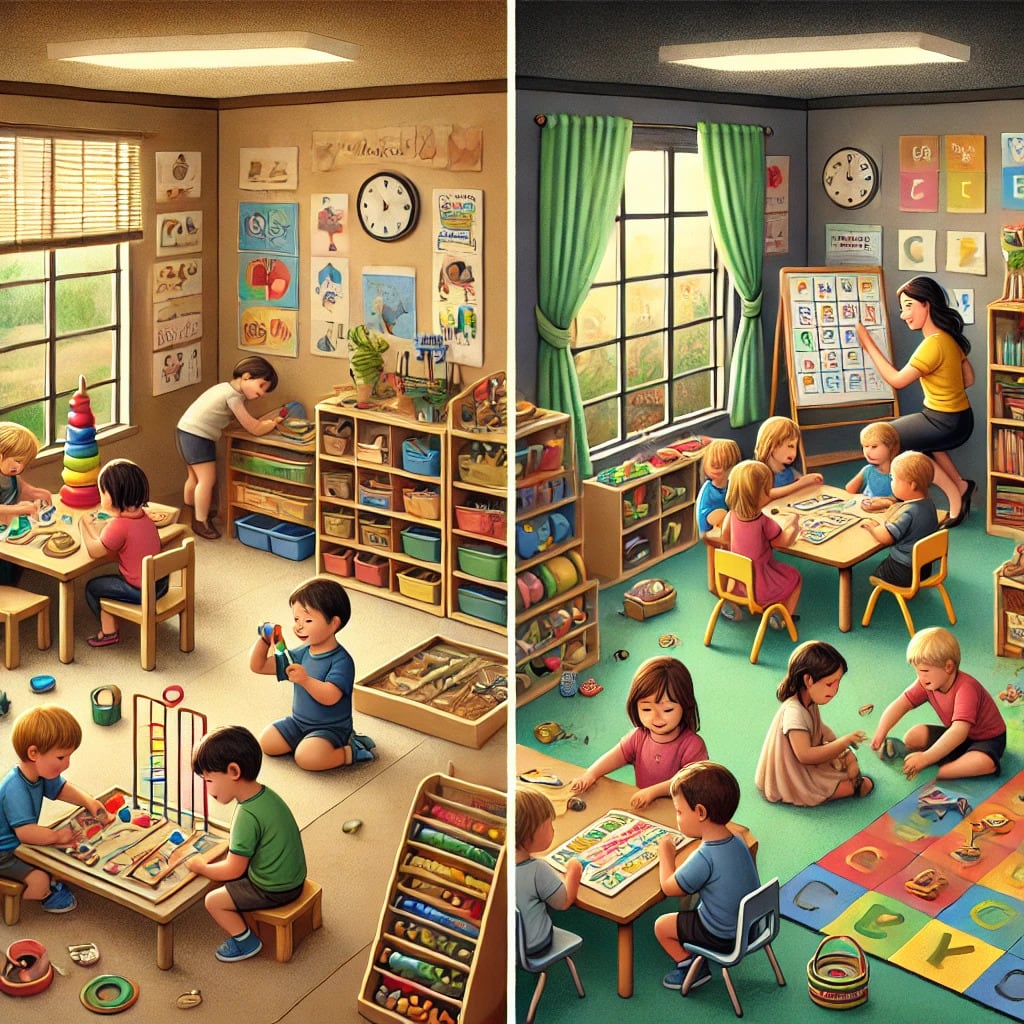
Montessori classrooms are calm, organized, and designed to promote self-directed learning. Materials are accessible, allowing children to explore independently. Traditional preschool classrooms are lively, with teacher-led activities and group interactions. They include areas for different activities like art, reading, and play. Both environments aim to create a positive learning experience, but Montessori emphasizes individual growth, while traditional settings focus on group learning.
Teacher Roles in Montessori and Traditional Preschools
In Montessori schools, teachers act as guides, observing and supporting children’s learning without direct interference. They encourage independence and self-discovery. Traditional preschool teachers take a more active role, leading lessons, directing activities, and ensuring all children stay on track with the curriculum. While Montessori teachers facilitate exploration, traditional teachers provide structured guidance.
Social Development in Montessori and Traditional Settings
Montessori emphasizes mixed-age classrooms, where older children mentor younger ones, fostering a sense of community. Social interaction occurs naturally through collaborative projects. Traditional preschools encourage peer interaction within same-age groups, promoting teamwork and communication through group activities like games and storytelling. Both systems support social growth but in different ways.
Age Grouping: Montessori vs. Traditional Preschools
Montessori classrooms often include mixed-age groups, allowing children to learn from and mentor peers. This system promotes leadership and cooperation. Traditional preschools group children by age, focusing on developmentally appropriate activities for each group. Age grouping in traditional settings ensures all children progress through similar milestones together.
Parental Involvement in Montessori and Traditional Preschools
Parental involvement is essential in both Montessori and traditional preschools but varies in approach. Montessori schools often encourage parents to extend the child’s learning environment at home, emphasizing activities that foster independence. Traditional preschools engage parents through regular meetings, events, and updates about the child’s progress. For parents searching for a Daycare school near me, evaluating how each program integrates family participation can help. While Montessori offers a holistic partnership between school and home, traditional preschools create opportunities for parents to engage with their child’s structured educational journey.
Which Approach is Best for Your Child?
Choose Montessori if your child thrives in self-directed, hands-on learning environments.
Opt for traditional preschool if your child benefits from structured activities and teacher-led instruction.
Consider your child’s temperament, learning style, and developmental needs when making your decision.
Conclusion
Choosing between Montessori and traditional preschool depends on your child’s unique needs and your educational priorities. Montessori programs are ideal for fostering independence and creativity, while traditional preschools excel at preparing children for structured academic environments. For parents considering a Preschool in Durga Pura, understanding these differences can guide you to the best fit for your child. Whichever approach you choose, early childhood education lays the foundation for a lifetime of learning and growth.
About the Creator
Footprints childcare
Footprints Preschool & Daycare in East of NGEF Layout, Kasturi Nagar is a trusted early learning visit:https://www.footprintseducation.in/pre-school-daycare-east-of-ngef-layout-kasturi-nagar-bengaluru
Enjoyed the story? Support the Creator.
Subscribe for free to receive all their stories in your feed.
Comments
There are no comments for this story
Be the first to respond and start the conversation.