
When Feng Shui Entered a Sculpture Classroom at MassArt
Wind, Space, and the Invisible Structure of Human Experience
“Feng Shui is such a beautiful example of how the material arrangement of spaces and objects affects people on psychological, emotional, and spiritual levels. This is the core of what it means to be a sculptor.”
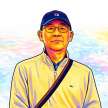
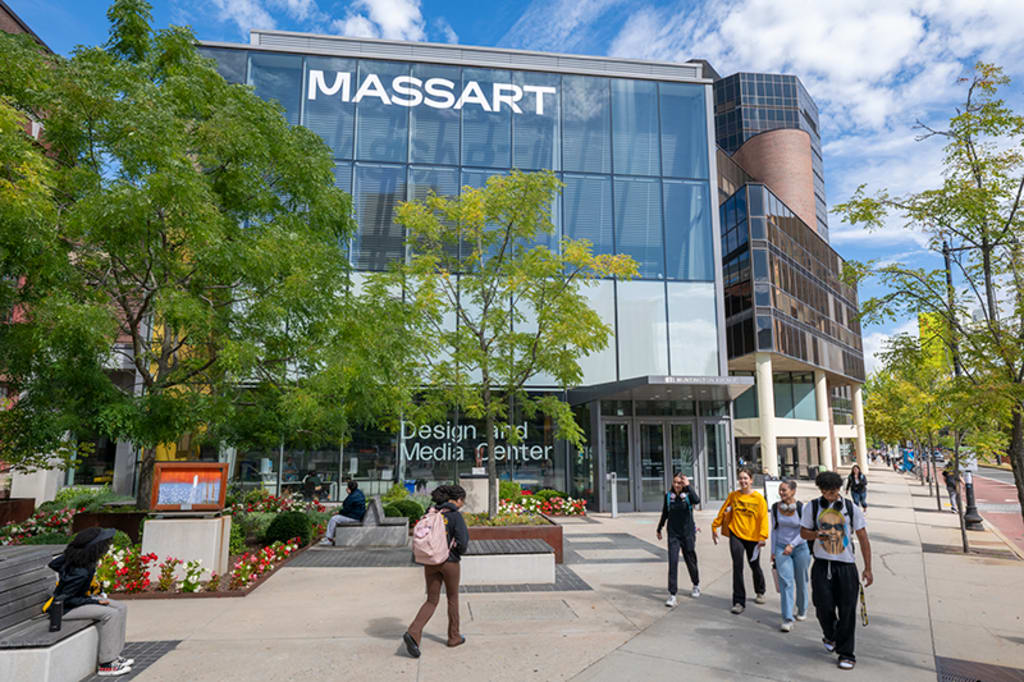
This was written to me in an email by Professor Petra Szilagyi of the Massachusetts College of Art and Design, who invited me to speak to a group of sculpture students about Feng Shui.
Her observation immediately caught my attention.
Most people in the West encounter Feng Shui through interior decoration, furniture placement, or symbolic objects. But Professor Szilagyi approached it differently. She saw Feng Shui as a way of understanding how environments shape human experience.
This lecture was therefore different from many Feng Shui talks I had previously given.
Rather than presenting Feng Shui simply as a form of traditional Chinese knowledge, I introduced it as a practical system for understanding the relationship between human beings and their environment — place, structure, movement, and the flow of energy.
Professor Szilagyi also proposed a fascinating idea:
Could wind itself be understood as a kind of invisible sculptural material?
Wind cannot be seen like clay or stone, yet it still shapes the atmosphere of a space. It moves through architecture, interacts with structures, and changes human perception.
In this sense, Feng Shui and sculpture may share an unexpected similarity.
Sculpture shapes objects in space.
Feng Shui shapes the space in which life unfolds.
To some extent, Feng Shui may even be understood as a form of “expanded sculpture” — not focused on a single object, but on the structural relationships of an entire living environment.
I began the lecture by explaining the meaning of the term Feng Shui itself.
Feng means wind.
Shui means water.
But in classical Chinese thought, “wind” does not simply refer to moving air. It symbolizes an invisible force within the environment — what Chinese philosophy calls Qi.
Water, meanwhile, is understood as the medium through which Qi gathers and flows.
From the perspective of Feng Shui, the environment is not static. Mountains, water, terrain, architecture, and spatial structure all influence how energy moves through a place.
In traditional Feng Shui, the movement of Qi through mountain ranges is sometimes described metaphorically as the movement of the “Dragon.”
What fascinated the students most was the relationship between visible structure and invisible energy.
Just as clay is shaped by the hands of a sculptor, Qi can also be shaped by environmental conditions, forming what Feng Shui practitioners describe as an energy field.
At that moment, an interesting parallel emerged between Feng Shui and sculpture.
Sculptors work primarily with visible materials.
Feng Shui works primarily with invisible yet real energetic relationships.
But both are deeply concerned with space, rhythm, movement, and the interaction between human beings and their environment.
This is also why authentic Chinese Feng Shui extends far beyond simply rearranging furniture inside a room.
The larger environment always matters first.
A house does not exist in isolation. It exists within an energetic relationship with the surrounding landscape, streets, structures, light, wind, and spatial flow.
This idea also echoes a famous passage from the Dao De Jing, a classical text that deeply influenced Chinese philosophy and later Feng Shui thought:
“The greatest sound is barely heard.
The greatest form has no shape.”
In Chinese, this is expressed as:
“大音希声,大象无形。”
The passage suggests that the most fundamental forces of the universe are often difficult to perceive directly.
In Feng Shui, wind is not understood merely as moving air, but as a manifestation of invisible environmental energy.
It may be everywhere around us, constantly shaping human experience, while remaining largely unnoticed.
One artwork presented during the class particularly stayed in my memory: a student-created wind chime.
A wind chime is fascinating because it transforms invisible wind into audible sound. It allows an unseen force to become perceptible.
In Feng Shui practice, wind chimes are sometimes used to help adjust the energetic field of a space.
I shared with the students a case from several years ago in which I used a wind chime to help a client rebalance the atmosphere of her home.
The wind chime itself was not merely an object.
It functioned as a medium between environment, movement, sound, and human perception.
This naturally led into a broader discussion about ritual and space in Chinese culture.
Traditional Feng Shui practices are often accompanied by symbolic activities — selecting a site, beginning construction, or ceremonies such as the raising of the ridge beam.
These rituals are not simply superstitions.
They help people gradually establish psychological and spatial connections with a new environment.
In Chinese philosophy, time and space are deeply interconnected. The Chinese term yuzhou (宇宙), often translated as “cosmos,” originally expresses the unity of space (yu) and time (zhou).
This experience reminded me that Feng Shui does not belong only to traditional architecture or everyday life.
It can also enter the context of contemporary art and design education, becoming a cultural language through which we explore how invisible forces shape human experience.
When Feng Shui is returned to its philosophical and cultural context, it no longer appears mysterious or outdated.
Instead, it reveals itself as a way of thinking about how human beings live within space, time, and the invisible structures of the environment.
About the Creator
Lidong Yu
I am a Chinese Feng Shui consultant and educator, raised and trained in China. My work draws on classical Feng Shui traditions to help people better understand the relationship between themselves, their environments, and time through Qi.
Enjoyed the story? Support the Creator.
Subscribe for free to receive all their stories in your feed.
Comments
There are no comments for this story
Be the first to respond and start the conversation.