
What's in a second?
Tracking history in real time.
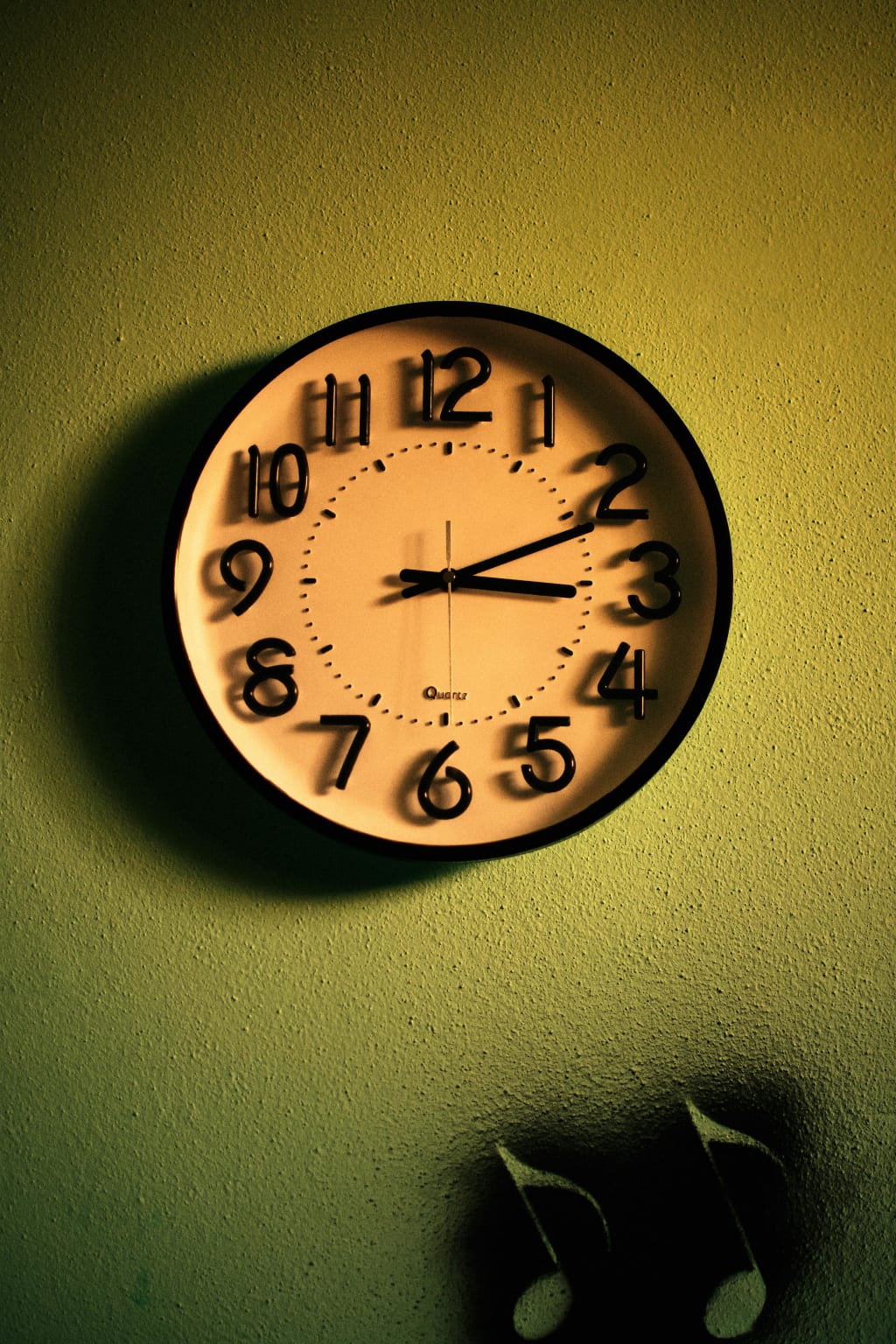
In 1967, an international assembly of researchers convened to address a longstanding scientific inquiry that has intrigued minds for centuries: the precise duration of a second. Despite its seemingly straightforward nature, the concept of a second had sparked questions regarding its accuracy, basis, and scientific definition as a fundamental unit of time.
Throughout much of human history, time measurement was intertwined with celestial movements, as ancient civilizations relied on unique calendars tied to the rhythms of the cosmos. From the ancient Egyptians to the Mayans, various cultures devised their own methods for tracking time based on astronomical observations, such as the movement of the sun, moon, and stars. These early timekeeping systems served their respective societies well, guiding agricultural cycles, religious ceremonies, and societal events.
However, the modern definition of a second emerged in the late 1500s with the introduction of the Gregorian calendar, gaining global adoption during the era of British colonialism. This calendar reform standardized the measurement of time, defining a second as one-sixtieth of a minute, which in turn was defined as one-sixtieth of an hour. The hour itself was based on the concept of one rotation of the Earth about its axis, creating a uniform framework for time measurement that transcended cultural and geographical boundaries.
Despite this definition, the second, initially more of a mathematical concept, lacked practical utility in everyday life until the need for precise timekeeping arose. As societies became increasingly interconnected, particularly with the advent of rapid transportation like railways and later air travel, the importance of synchronized timekeeping became evident. Inaccuracies in timekeeping could lead to disastrous consequences, such as train collisions or navigation errors for ships at sea.
This growing need for precision spurred the development of atomic clocks in the mid-20th century. These clocks represented a revolutionary leap forward in timekeeping technology, harnessing the unchanging laws of physics to measure time with unprecedented accuracy. Atomic clocks operate based on the oscillation of atoms, particularly the consistent oscillation of electrons around a nucleus when exposed to certain electromagnetic fields. By measuring these oscillations, scientists could create a highly precise and reliable standard for timekeeping.
The Thirteenth General Conference of the International Committee for Weights and Measures in 1967 marked a pivotal moment in the quest to define the second. The conference aimed to determine the optimal atom for atomic clocks, considering factors such as electron oscillation frequency, quantum spin, and ease of vaporization. After careful deliberation, cesium-133 emerged as the atom of choice, with cesium atomic clocks already in use for research purposes by 1968.
Using the most accurate astronomical measurements available at the time, the conference defined one second as precisely 9,192,631,770 oscillations of a cesium-133 atom. This definition provided a stable and universally applicable standard for timekeeping, paving the way for the widespread adoption of atomic clocks as the gold standard in time measurement.
Fast forward to the present day, and atomic clocks have become ubiquitous tools in various fields, from telecommunications and global navigation to scientific research and space exploration. Synchronized in radio signal transmitters and satellites for global positioning systems, atomic clocks ensure that our modern world operates with unparalleled precision and reliability.
In conclusion, the journey to define the second is not just a story of scientific curiosity but a testament to humanity's quest for precision and understanding of the fundamental aspects of our universe. From ancient calendars to atomic clocks, our methods of timekeeping have evolved alongside our understanding of physics, enabling us to synchronize our activities with unprecedented accuracy and reliability. The definition of a second may seem like a simple concept, but its significance reverberates throughout virtually every aspect of modern life, reminding us of the intricate interplay between science, technology, and human ingenuity.
About the Creator
finding.dharma
Little bit's of information to inspire you.
Enjoyed the story? Support the Creator.
Subscribe for free to receive all their stories in your feed.
Comments
There are no comments for this story
Be the first to respond and start the conversation.