
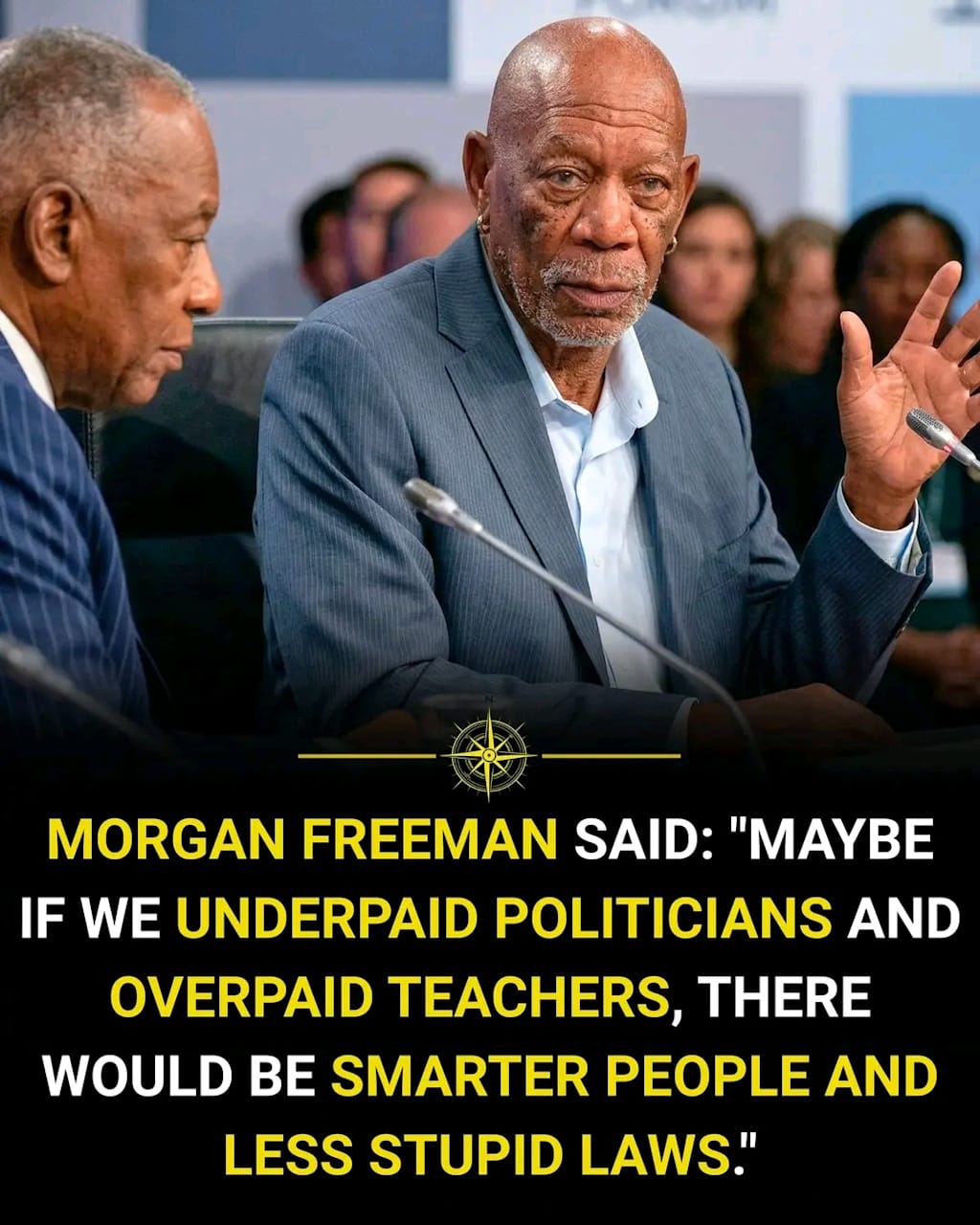
What Morgan Freeman Never Said About Teacher Pay
A small-town classroom, a state budget, and the quiet breakdown of public trust.
The red pen
Clarksdale, Mississippi. Four in the afternoon. The sun hung over the river, yellow and heavy. Sarah Wade closed the last student notebook and set her red pen on the desk. The ink tube showed through the plastic. Half gone.
She counted the stack. Twelve notebooks. Three students had not turned one in. Two had written only a title. She wrote their names in her planner, pressed the pen cap on, and walked to the supply closet. The last roll of tape had been used that morning. She had bought a new roll at the convenience store with her own card. The receipt was folded in her wallet, pressed against three other receipts she had not turned in for reimbursement.
Her phone buzzed on the podium. She did not look. It buzzed again. Then a third time.
She wiped the board clean, put the eraser back on the ledge, and picked up the phone. A photo filled the screen: Morgan Freeman outside the Ground Zero Blues Club, hands in his pockets, hat low. The caption read: “He’s right.” She scrolled. The first comment said, “I agree.” The second said, “What did he say?” No one answered. The third had already moved to politicians’ salaries. The fourth said teachers should be paid more. The fifth was an ad for a book club. The sixth said, “Follow me.” The seventh was a row of emojis. The eighth was an insult. The ninth was a reply to the insult. The tenth had nothing to do with any of it.
Sarah put the phone in her pocket. She still had to get gas. The tank was a quarter full. She did the math in her head: base salary, performance supplement, district stipend. Together they came to eleven dollars more than last year. Rent had gone up forty.
In Jackson, State Representative Robert Carr walked into the chamber for a vote. The budget bill was four hundred pages. Page 312 contained a line item: an increase in the travel stipend for legislators. He pressed the green button. No one on the floor had read page 312. A reporter waited in the hallway and asked about school funding. Robert said the state needed to attract talent. His salary was in the six figures. His pension was calculated by years of service. His health coverage continued after he left office. He walked out, and his phone buzzed. A reminder for a fundraiser that evening.
Sarah waited in line at the gas station. The man ahead of her filled his tank, then went inside and bought two bottles of water, a pack of cigarettes, and a scratch-off ticket. When it was her turn, she pumped fifteen dollars. The cashier asked if she wanted the receipt. She said yes. The paper printed the date and the amount. She folded it and put it in her wallet, behind the other three.
That night she sat at the kitchen table and graded. One student had written: “The government should give teachers more money.” Her red pen stopped. She underlined the sentence and wrote in the margin: “Where is the argument?” She turned the page. The next student had written: “Morgan Freeman is right.” She drew a question mark. She turned the page. The next student had written only the title.
Her phone buzzed again. She did not look. When she finished the last line, she opened it. New comments kept appearing. Politicians took too much. Where would the money for teacher raises come from. Where did their taxes go. Keep politics out of the classroom. Teaching history cannot avoid politics. I agree. I disagree. Good evening. Follow me. Join a book club.
Sarah scrolled down. One comment had forty-seven likes: “Politicians are the only ones who get to decide their own pay. That is a system that leans toward corruption.” Then new comments buried it.
She locked the screen.
The next morning, the audit report came out. Page 47, a single line in small print: travel stipends exceeded the allowed amount by three hundred percent. No one was charged. The report was filed. The news ran the story for thirty seconds.
At school, Sarah went to the supply closet and looked for tape. The last roll was gone. She had forgotten to buy more. She held the torn textbook together with a rubber band. A student asked, “Why doesn’t the government give schools money?” Sarah said, “Ask the government.” The student said, “How?” Sarah said, “Write a letter.” The student said, “To who?” Sarah said, “To someone who decides.” The student said, “Who decides?” Sarah said, “People who vote.” The student said, “My parents don’t vote.” Sarah said, “What about you?” The student said, “How old do I have to be?” Sarah said, “Eighteen.” The student said, “That’s eight years.” Sarah said, “Yes.”
At lunch, she sat in the teachers’ lounge with a sandwich. The television was on. A report about legislative pensions played. The screen showed a row of hands raised in a vote. Sarah took a bite. A colleague asked, “Did you see that Morgan Freeman post?” Sarah said, “I saw it.” The colleague said, “Is he right?” Sarah said, “Who?” The colleague said, “Morgan Freeman.” Sarah said, “What did he say?” The colleague said, “I don’t know. But he’s right.” Sarah did not answer. She finished the sandwich, folded the wrapper, and threw it away.
In the afternoon, an email arrived. The district announced budget cuts. Extracurricular funding was canceled. She closed the email. She opened another. A credit card bill. The minimum payment. She calculated how long it would take to pay off. Four years. She put the phone in her pocket and went back to grading.
The pen was running out.
She opened a notebook. A student had written: “Morgan Freeman says if politicians made minimum wage, they would work harder.” Sarah underlined the sentence and wrote: “Who says? Source?” She turned the page. Another student had written: “Why don’t you go on strike?” She drew a question mark. She turned the page. Another student had written only the title.
After school, she went to the gas station. The tank was an eighth full. She pumped ten dollars. The cashier asked if she wanted the receipt. She said yes. She folded it and put it in her wallet, behind the other four.
On the way home, she passed the Ground Zero Blues Club. A man stood outside with his phone, filming himself. “He’s right,” he said. The person beside him nodded. Sarah kept walking. She remembered she still had not bought tape. She would need it tomorrow.
That night she sat at the kitchen table. Her phone lit up. New comments kept appearing. Politicians take too much. Where does the money come from. Where do my taxes go. Keep politics out of the classroom. Teaching history is politics. I agree. I disagree. Good evening. Follow me. Join a book club.
She turned the screen off. The red pen lay on the table. Half gone. Tomorrow there would be twelve more notebooks. Three missing. Two with only titles. No tape in the closet.
The next morning, she did not check the comments. She handed each student a sheet of paper. “Write a letter,” she said. “To someone who decides. Ask one question.” A student asked, “What question?” Sarah said, “Ask where the tape comes from.” The class laughed. Sarah did not. “Write it,” she said. “I will mail them.”
The students bent over their papers. Sarah stood at the front of the room. The red pen sat on the desk. Half gone. Outside, the sun hung over the river. She had five receipts in her wallet. The supply closet had no tape. Page 312 still had the line item. Page 47 still had the small print. Below the photo, someone typed: “Follow me.”
About the Creator
Jin
Writer of reamstories
https://reamstories.com/jin
Enjoyed the story? Support the Creator.
Subscribe for free to receive all their stories in your feed. You could also become a paid subscriber, letting them know you appreciate their work.
Comments
There are no comments for this story
Be the first to respond and start the conversation.