
What is Zen Buddhism—— The most comprehensive understanding
What is Zen Buddhism—— The most comprehensive understanding

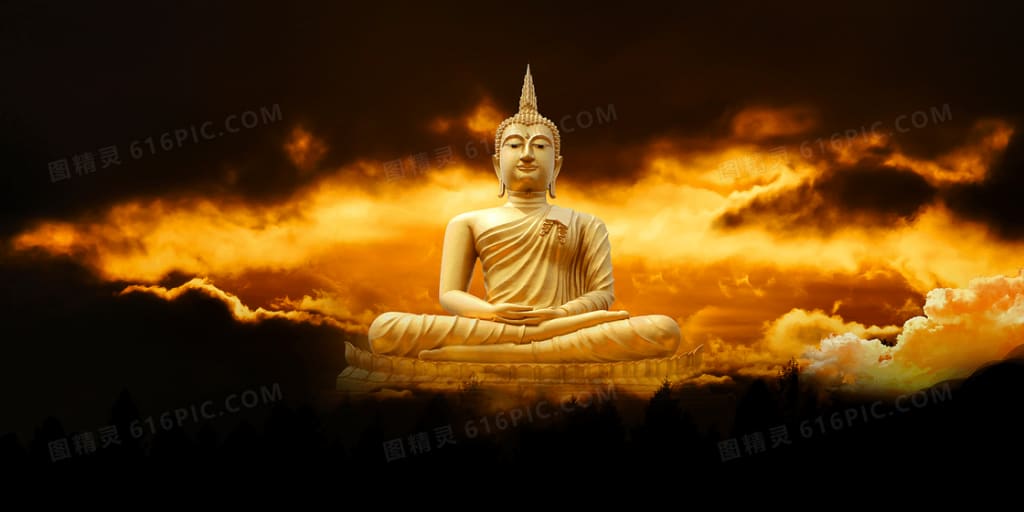
What is' Zen '?Zen "is the abbreviation for" Zen meditation ". The word 'Zen' is actually translated from the sound of the Sanskrit word 'Channa', which means' contemplation and maintenance 'or' contemplation '. It belongs to the first degree of Bodhisattva's six levels of practice and refers to a method of practice. The "Zen" we commonly refer to now generally refers to the Zen passed down in the "Zen sect", which has both the same and different aspects as the "Zen meditation" in the sixth dimension.Zen meditation can be said to be the oldest form of practice, which was already prevalent in India before the establishment of Buddhism. During the process of preaching, the Buddha regarded "precepts, calmness, and wisdom" as the fundamental teachings that every Buddhist must practice. After Buddhism was introduced to China, the ancestors and various sects throughout history used "Zen meditation" or "Zen view" as the fundamental basis for their practice and establishment of their sect.The sixth ancestor of Zen, Huineng, once said, "Outside of all good and evil realms, the mind cannot name itself as sitting, while inside, one sees one's own nature and does not move, which is Zen." "Outside, one is Zen, while inside, one is calm. If outside, one is chaotic; if outside, one is chaotic; if outside, one is not chaotic. One's nature is pure and calm, and if one sees all realms and the mind is not chaotic, it is truly calmFrom a modern perspective, 'Zen' should be a form of 'meditation', and the method of 'meditation' should be used to reach a state of meditation. In fact, the content of "Zen" is difficult to express in words and words, and it must be personally demonstrated.
Zen "is a sect of Chinese Buddhism, with Bodhidharma as the founder of China, hence also known as the Dharma Sect; It is also named after claiming to have obtained the Buddha Heart Seal, also known as the Buddha Heart Sect, and taking meditation as the entire practice of Buddhism. The general purpose of using research methods is to fully understand the inherent Buddha nature. Dharma, the founder of Zen Buddhism, was the 28th ancestor of Buddhism. During the reign of Emperor Liang Wu of the Southern Dynasty, he sailed to Guangzhou and participated in activities in the Luoyang area in the late Northern Wei Dynasty. He advocated the principle of practicing Zen with the two elements and four elements, and was apprenticed under the "Lengja Sutra".The "Zen" sect began with the establishment of Bodhidharma as the founder of the mountain sect. Its disciples were passed down as Huike, the monks were passed down again, the disciples were Daoists, and the believers were Hongren, who established the Dongshan Dharma. It is known as the fifth ancestor of Zen. My subordinates went to two capitals to promote Dharma, which was of great significance. Among them, disciples Shen Xiu and Hui Neng separated into the Northern Sect's Gradual Gate and the Southern Sect's Dun Gate, which were known as the "Southern and Northern Xiu". Beizong advocated the gradual cultivation of "brushing the dust to observe cleanliness". In his later years, Shenxiu entered the capital and was known as the Three Imperial Masters. His disciples included Songshan Puji and Zhongnan Mountain Yifu, which gradually declined after several generations of inheritance. The inheritance of Nanzong is very extensive. Huineng resides at Baolin Temple in Caoxi, Shaozhou, and has many disciples under his sect. Huineng is revered as the Sixth Ancestor, becoming the orthodox of Zen Buddhism. The main teachings are based on the "Lengja Sutra", "Vajra Sutra", and "Mahayana Qixin Lun", represented by the "Sixth Ancestor Tanjing".
About the Creator
free Ryan
Share my story and life insights
Enjoyed the story? Support the Creator.
Subscribe for free to receive all their stories in your feed.
Comments
There are no comments for this story
Be the first to respond and start the conversation.