
What is the Future of Data Science?
Data Science has become a critical part of how businesses operate, innovate, and grow. As technology advances rapidly, so does the field of Data Science, bringing with it new tools, trends, and opportunities. Looking ahead, the future of Data Science is rich with possibilities. From automation to ethics and from industry expansion to real-time insights, this field is set to redefine how decisions are made.
Expanding Across All Industries
Data Science is no longer confined to the tech world. Today, nearly every sector uses Data Science to solve complex problems, streamline operations, and make informed decisions. Its growth across industries shows no signs of slowing down.
- Healthcare: Predictive models help with early diagnoses, patient monitoring, and drug development.
- Finance: Algorithms support fraud detection, credit scoring, and investment strategy.
- Retail: Companies use Data Science to personalize shopping experiences and optimize supply chains.
- Agriculture: Farmers rely on AI and Data Science to forecast weather, manage crops, and monitor soil.
- Education: Learning analytics enable institutions to track student performance and personalize content. This widespread adoption ensures that careers in Data Science will remain in high demand for years to come.
Automation and the Rise of Augmented Analytics
Automation is transforming the way Data Science tasks are performed. With the emergence of augmented analytics, many steps in the data pipeline—like data cleaning, model selection, and insight generation—can now be handled by intelligent systems.
- Faster Data Processing: Automated tools prepare and clean data without human input.
- AI-Driven Insights: Augmented platforms generate insights with just a few clicks.
- Natural Language Processing (NLP): Users can ask questions and receive data-backed answers in plain language.
- Reduced Skill Barriers: Even non-experts can extract value from data using user-friendly platforms.
Ethics, Bias, and Responsible Data Practices
As Data Science becomes more embedded in everyday life, ethical concerns grow. Issues such as biased algorithms, privacy violations, and data misuse are pushing organizations to adopt responsible practices.
- Algorithmic Fairness: Ensuring that models don’t discriminate based on race, gender, or other factors.
- Data Privacy Compliance: Adhering to regulations like GDPR, HIPAA, and CCPA.
- Transparency: Explaining how AI models make decisions, especially in sensitive areas like finance or healthcare.
- Governance and Accountability: Establishing clear policies for data collection, use, and access. In the future, Data Science professionals will need to combine technical expertise with a strong ethical foundation.
Generative AI and Language Models
The rise of Generative AI and large language models (LLMs) such as ChatGPT has made a significant impact on the field of Data Science. These models open up exciting possibilities for automation, creativity, and advanced analytics.
- Enhanced Efficiency: Data Scientists can use LLMs to generate code, summarize data, and even explain findings.
- Rapid Prototyping: Teams can build and test models faster than ever before.
- Democratization: Generative AI makes Data Science more accessible to a broader audience.
- New Job Categories: Roles like AI Prompt Engineer and Model Curator are emerging. Understanding and working with generative models will become a core skill in the Data Science toolkit.
Real-Time Data and Instant Decision-Making
Businesses are increasingly relying on real-time data to make swift, data-driven decisions. Traditional batch processing is giving way to live analytics, changing how Data Science is applied in high-stakes environments.
- Live Dashboards: Decision-makers view up-to-the-minute KPIs across operations.
- Event-Driven Systems: Systems can respond instantly to data changes or anomalies.
- Fraud Detection: Financial institutions act in real time to prevent unauthorized activity.
- Customer Experience: Personalized offers and content are delivered instantly based on user behavior. The future of Data Science will be defined by how quickly and accurately data can be turned into action.
The Importance of Certifications
As the field matures, the importance of certifications in Data Science is growing. Employers now look for professionals with verified skills and recognized credentials.
- Skill Validation: Certifications prove that a professional has the necessary knowledge.
- Career Growth: Certified individuals often have better job opportunities and salaries.
- Industry Standards: Certifications align skills with real-world business applications.
- Global Recognition: Bodies like IABAC offer certifications trusted by employers worldwide. Whether you're entering the field or aiming to advance, a Data Science certification is a strong step forward
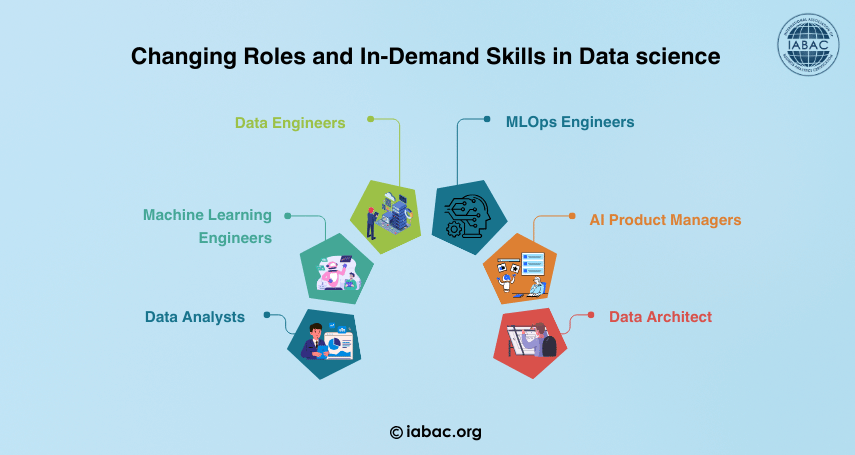
Changing Roles and In-Demand Skills
As organizations build larger, more specialized data teams, new roles and skillsets are emerging. The traditional "Data Scientist" title is branching into multiple career paths.
- Data Engineers: Build and maintain the infrastructure needed for data workflows.
- Machine Learning Engineers: Focus on designing and deploying predictive models.
- Data Analysts: Provide actionable insights through visualization and exploration.
- MLOps Engineers: Ensure models run efficiently in production environments.
- AI Product Managers: Bridge technical teams with business stakeholders.
A Future Full of Possibilities
The future of Data Science is bright, dynamic, and full of new opportunities. From solving global challenges to powering everyday business operations, Data Science will remain a cornerstone of innovation and strategy. As the field continues to evolve, staying updated with the latest trends, tools, and certifications will be essential.
Whether you’re just starting your journey or looking to level up, investing in your Data Science skills is a smart move. With organizations like IABAC offering globally recognized certifications, professionals can position themselves at the forefront of this transformative field.
About the Creator
Enjoyed the story? Support the Creator.
Subscribe for free to receive all their stories in your feed.
Comments
There are no comments for this story
Be the first to respond and start the conversation.