
What is SSO and Why Your Business Needs It in 2025
Discover Single Sign-On (SSO) is and its implementation that is crucial for enhancing security, improving user experience, and streamlining business operations

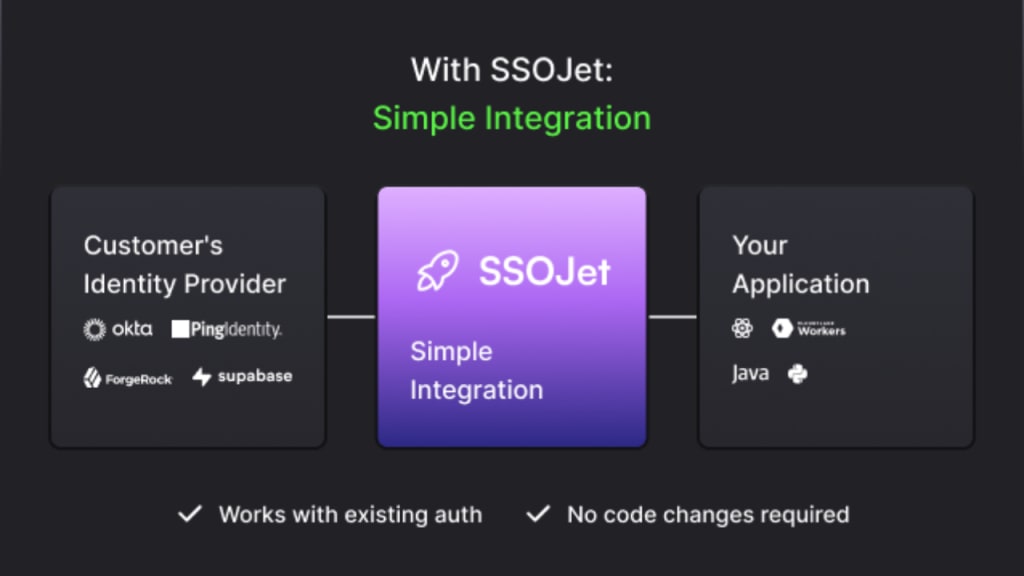
In 2025, SSO isn’t a “feature” anymore — it’s infrastructure. Whether you're building a SaaS product, scaling your internal stack, or trying to pass an enterprise security review, Single Sign-On (SSO) is likely on your checklist.
But most content stops at the basics. This isn’t that.
This post explains SSO not just for what it is — but why modern engineering teams adopt it, what problems it really solves, and the gotchas you’ll run into when integrating it across 25+ IDPs.
What is SSO? A Layer Beneath the Buzzwords
SSO, or Single Sign-On, lets users authenticate once and access multiple applications or services without re-entering credentials.
The reality is more nuanced. You’re not just “logging in once.” You’re handing off trust between systems, relying on standardized protocols like SAML 2.0, OIDC, or OAuth 2.0 to carry identity assertions across services.
It's like building a bridge between your app and a customer's Identity Provider (IdP), with mutual guarantees around:
- User identity
- Session lifetimes
- Group membership
- Security policies
What Actually Happens During an SSO Login?
A typical SAML login flow for enterprise SSO looks like this:
- User clicks “Login with SSO”
- App generates a SAML request → redirects to customer’s IdP
- IdP authenticates the user (MFA, biometrics, etc.)
- IdP returns a SAML response → App parses and validates it
- You map fields like email, name, groups into local accounts
- You issue your own session or token
Real-world twist:
Every IdP encodes attributes differently, enforces different clocks, and fails in non-obvious ways. No two setups behave the same. That’s why testing across multiple IDPs is a nightmare.
Platforms like SSOJet abstract these differences and give you one consistent API — so you don’t lose a week debugging a broken XML signature in Azure AD.
Why SSO Actually Matters to Engineering Teams
Forget the “security” and “productivity” fluff. Here’s why teams prioritize SSO:
1. Enterprise Deals Now Demand It
If you're selling B2B SaaS (Popular SSO Solution for B2B SaaS), enterprise buyers won’t sign without SSO. It's often a checkbox on the security questionnaire.
2. Onboarding/Offboarding Is a Nightmare Without It
Manually creating and deactivating accounts across tools? In 2025, that’s a security liability — and a time sink.
3. You Can’t Afford Identity Drift
If a user’s email, role, or group changes in the IdP — and your app doesn’t reflect it — you're exposing data to the wrong person.
This is why SCIM provisioning is increasingly paired with SSO — not for convenience, but to stay compliant and accurate.
Common Pain Points (No One Tells You About)
Let’s get brutally honest about what you’ll face:
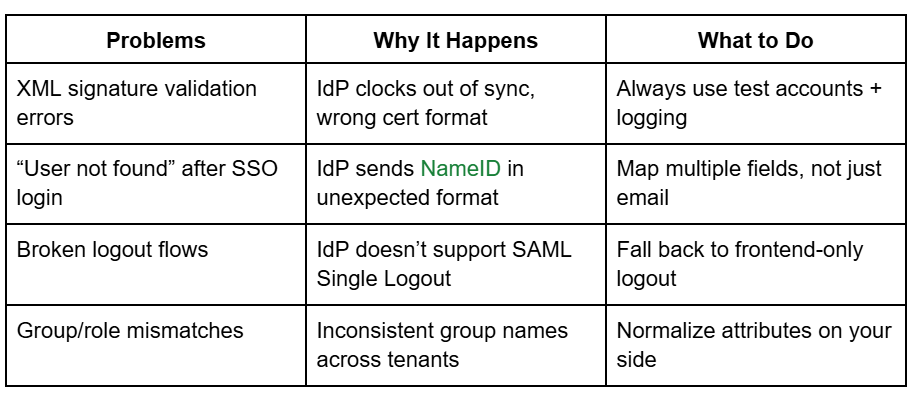
You’ll want to build (or use) an internal tool to test against Okta, Entra ID, Ping, Auth0, etc. Debugging without real data is a recipe for failure.
DIY SSO vs Using a Service
You can build SSO yourself. Many teams do. But here’s the trade-off:
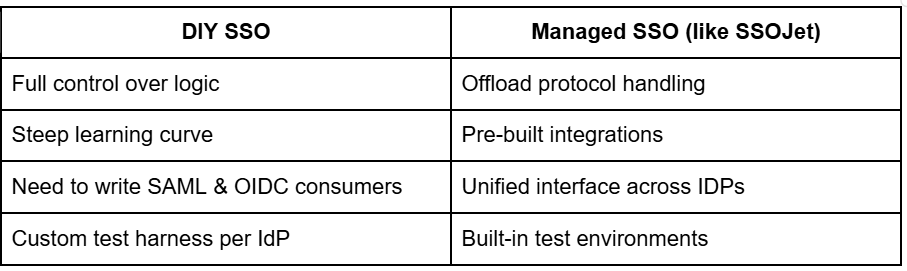
If you want to ship faster, especially under security reviews or SOC 2 audits, it often makes sense to use a ready platform like SSOJet — and focus your engineering time where it counts.
2025 Bonus: SSO + Zero Trust Is Now the Baseline
In 2025, SSO alone isn’t enough. Enterprises increasingly expect:
- MFA enforced by the IdP
- Granular access based on group/role
- Audit trails per user per app
- Just-in-time provisioning
You’re no longer just “letting someone log in.” You’re managing access with intent.
TL;DR — If You’re Building for Scale, SSO Isn’t Optional
If your roadmap includes:
- Selling to mid-market or enterprise
- Supporting internal user management at scale
- Passing a SOC 2 or ISO audit
- Enforcing least privilege access
…then SSO isn’t just an “auth feature.” It’s the identity layer of your entire product architecture.
Conclusion
If you’re not ready to build your own SAML/OIDC/SCIM stack — or if you want to fast-track enterprise readiness — check out SSOJet. It’s a developer-first platform that supports 25+ IDPs out of the box with one interface and one contract. No vendor lock-in. Just clean, fast SSO.
About the Creator
Sophia James
I am Sophia — a passionate content writer with a knack for crafting clear, engaging, and SEO-friendly content. I specialize in creating blog posts, and articles that connect with readers and drive results.
Enjoyed the story? Support the Creator.
Subscribe for free to receive all their stories in your feed.
Comments