
What is Solar System actually?
Know About Your Home: Solar System
Introduction
Our solar system, a fascinating and awe-inspiring cosmic neighborhood, has captivated human curiosity for centuries. Situated within the Milky Way galaxy, our solar system is a testament to the incredible diversity and complexity of the universe. In this article, we will embark on a journey through our solar system, delving into its key components, celestial bodies, and the remarkable phenomena that define it.
The Central Star: The Sun
At the heart of our solar system lies its brightest and most vital member: the Sun. This colossal ball of hot, glowing gas is responsible for providing the energy that sustains life on Earth and governs the orbits of all other celestial bodies within its gravitational embrace. With a temperature reaching millions of degrees Celsius at its core, the Sun's fusion reactions convert hydrogen into helium, releasing an enormous amount of energy in the form of light and heat.
The Planets: Our Cosmic Neighbors
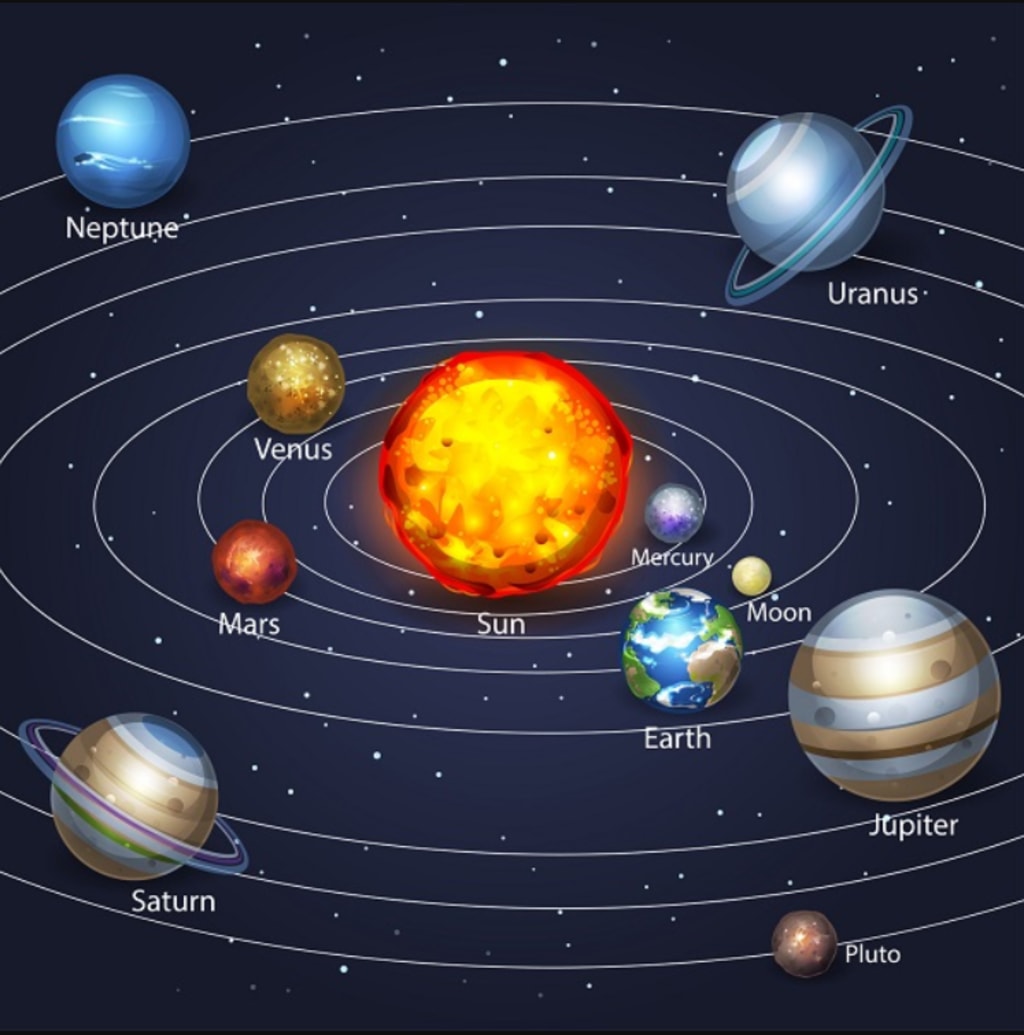
Beyond the Sun, our solar system is home to eight planets, each with its own unique characteristics and mysteries waiting to be unraveled. Let's take a brief tour of these planetary wonders:
1. Mercury: The closest planet to the Sun, Mercury is a scorching hot world with extreme temperature variations between its day and night sides.
2. Venus: Known as Earth's "sister planet" due to its similar size, Venus is a blisteringly hot, acidic world with a thick, toxic atmosphere.
3. Earth: Our home planet, Earth, is the only known celestial body where life exists. It is a diverse and beautiful world with a myriad of ecosystems and climates.
4. Mars: Often called the "Red Planet" due to its reddish appearance, Mars has intrigued scientists for years with its potential for past or present life.
5. Jupiter: The largest planet in our solar system, Jupiter is a gas giant with a magnificent system of colorful bands and swirling storms, including the iconic Great Red Spot.
6. Saturn: Saturn is renowned for its stunning system of rings, made up of countless tiny particles of ice and rock.
7. Uranus: This ice giant planet rotates on its side, giving it a peculiar and unique orientation in our solar system.
8. Neptune: The farthest known planet from the Sun, Neptune is another ice giant and boasts powerful storms and a deep blue hue.
Dwarf Planets, Moons, and Asteroids
Beyond the eight planets, our solar system is also home to a vast array of dwarf planets, moons, and asteroids. Some of these celestial bodies, like Pluto, were once considered full-fledged planets until reclassification. Moons, such as Earth's Moon, play crucial roles in shaping the dynamics of their parent planets, while asteroids are remnants from the early days of the solar system and offer valuable insights into its formation.
Exploration and Discovery
Human exploration of our solar system has advanced significantly over the past few decades. Robotic spacecraft have been sent to explore distant planets, moons, and asteroids, providing us with invaluable data and breathtaking images. Missions like NASA's Voyager probes, the Mars rovers, and the New Horizons mission to Pluto have expanded our understanding of the cosmos.
Future missions, such as the James Webb Space Telescope and plans for manned missions to Mars, promise to unveil even more mysteries and push the boundaries of our exploration efforts.
Conclusion
Our solar system is a captivating realm filled with diverse worlds, awe-inspiring phenomena, and endless opportunities for exploration and discovery. As we continue to unlock its secrets, we gain deeper insights into the formation and evolution of not only our cosmic neighborhood but also the universe at large. Whether through robotic probes, telescopes, or potential future human missions, our quest to understand the solar system remains an ongoing journey of scientific wonder and exploration.
About the Creator
Deuman Tamang
Just a student
Enjoyed the story? Support the Creator.
Subscribe for free to receive all their stories in your feed.
Comments
There are no comments for this story
Be the first to respond and start the conversation.