
What Is MCC Panel
What is an MCC Panel? A Complete Guide

Introduction
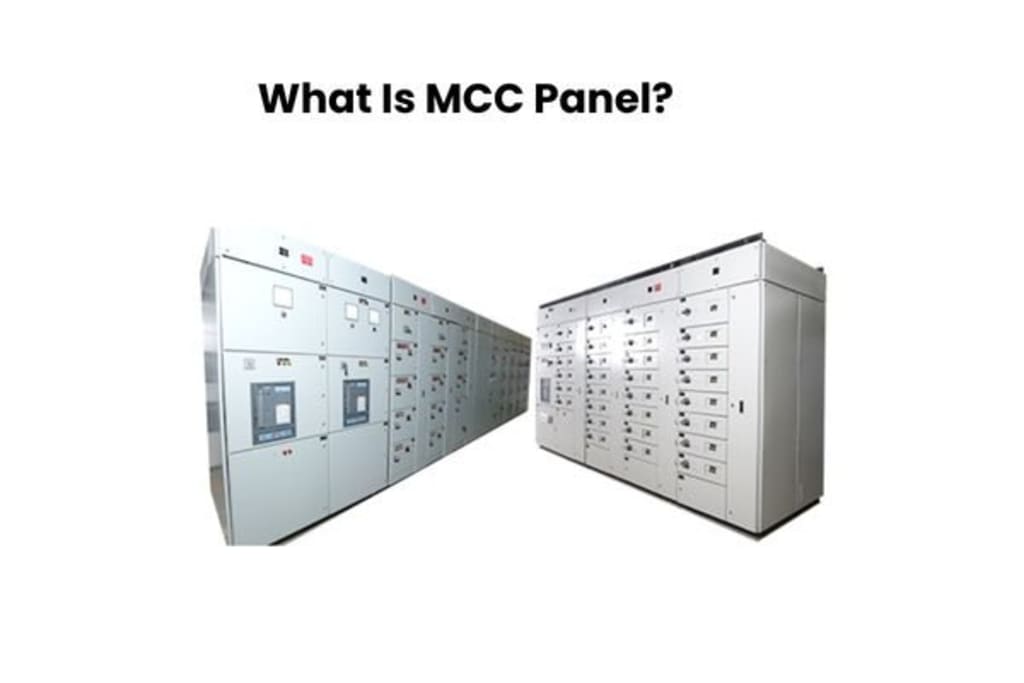
In industries that rely on multiple electric motors, ensuring smooth and efficient operation is crucial. This is where MCC panels (Motor Control Centers) come into play. An MCC panel is an electrical system designed to manage, regulate, and safeguard multiple motors from a single control point.
These panels help industries automate motor operations, improve workplace safety, and reduce power consumption. They are widely used in manufacturing plants, energy facilities, and industrial automation setups.
Understanding how an MCC panel functions, its components, and different types helps businesses choose the right one for their operational needs.
What is an MCC Panel?
An MCC panel (Motor Control Center) is a specialized electrical control system that manages multiple motors in industrial environments. It houses various essential components such as circuit breakers, contactors, overload relays, and motor starters, ensuring motors operate efficiently and safely.
The MCC meaning in electrical systems refers to a centralized control unit that enhances automation, minimizes human intervention, and safeguards motors against electrical faults like overloads or short circuits.
These panels are designed to optimize motor performance, regulate energy use, and ensure reliability in industrial and commercial applications.
How Does an MCC Panel Work?
An MCC panel controls, distributes, and protects electrical power for multiple motors, ensuring efficient operation and system safety.
Power Distribution & Control
• The MCC panel components regulate voltage and current supply, preventing sudden fluctuations and motor damage.
• Each motor is connected to a dedicated feeder, allowing independent operation without disrupting the entire system.
• Advanced MCC electrical systems come with smart automation features for remote monitoring and efficiency improvement.
Safety & Fault Prevention
• Circuit breakers and overload relays automatically detect excessive electrical loads and cut power to prevent damage.
• Well-structured wiring and insulation ensure safety and prevent system failures.
• Modern MCC panels feature remote operation capabilities, reducing the need for on-site manual intervention in hazardous environments.
Types of MCC Panels
Different MCC panel designs cater to different industrial needs, offering varying levels of flexibility, automation, and cost efficiency.
1. Fixed-Type MCC
• Cost-effective and ideal for industries with basic motor control requirements.
• Compact structure that saves space in industrial settings.
• Less adaptable, as components are permanently installed and not easily replaceable.
• Maintenance requires downtime, as the system must be shut down for repairs.
2. Draw-out Type MCC
• Modular system, allowing individual units to be removed and replaced without shutting down the entire panel.
• Enhanced safety, as maintenance can be performed without de-energizing the entire system.
• Higher cost compared to fixed-type MCCs.
• Ideal for industries that require frequent maintenance and upgrades.
3. Intelligent MCC (iMCC)
• Advanced automation capabilities with smart monitoring systems.
• Remote control features, enabling real-time diagnostics and energy management.
• Higher initial cost but offers long-term savings by reducing operational downtime.
• Best suited for industries focused on digital transformation and efficiency.
Where Are MCC Panels Used?
MCC panels are crucial for industries that require reliable motor control and electrical safety.
Industrial Applications
• Manufacturing plants – Controls conveyor systems, robotic arms, and automated production lines.
• Oil & gas sector – Manages pumps, compressors, and drilling machinery.
• Food processing industry – Regulates mixers, refrigeration units, and packaging machines.
• Pharmaceutical manufacturing – Controls high-precision equipment for drug production.
Commercial Applications
• Shopping malls & office complexes – Manages HVAC systems, elevators, and lighting.
• Hospitals & data centers – Ensures continuous power for medical devices and IT infrastructure.
Power Plants & Utilities
• Power distribution systems – Regulates substations and transformers.
• Renewable energy facilities – Monitors wind turbines, solar panels, and hydroelectric stations.
• Water treatment plants – Controls pumps and filtration units.
Key Components of an MCC Panel
Each MCC panel consists of several components that contribute to safe and efficient motor control.
• Main Circuit Breaker – Manages electricity flow and prevents system-wide power failures.
• Contactors – Electromechanical devices that turn motors on and off.
• Overload Relays – Protect motors from excessive current, preventing overheating.
• Busbars – Distribute electrical power across different panel sections.
• HMI (Human-Machine Interface) – Displays real-time data for motor performance monitoring.
MCC Panel vs. PCC Panel: Key Differences
While both MCC panels and PCC panels (Power Control Centers) are used in industrial power management, they serve distinct roles.
• MCC Panel – Specializes in motor control, ensuring smooth operation and automation.
• PCC Panel – Focuses on power distribution, managing high-voltage electricity supply to different sections of a facility.
For motor-heavy industries, an MCC panel is the right choice, while facilities that need overall power management require a PCC panel.
Choosing the Right MCC Panel
Before selecting an MCC panel, businesses should consider:
• Power Requirements – Ensure the panel can handle the voltage and current load.
• Safety Features – Overload protection, short circuit prevention, and thermal monitoring are essential.
• Automation Needs – Intelligent MCCs provide better control and monitoring.
• Compliance with Standards – Panels should meet IEC, NEMA, and IS safety regulations.
Partnering with a trusted MCC panel manufacturer ensures access to reliable and high-performance systems.
Installation & Maintenance of MCC Panels
Proper installation and regular maintenance keep an MCC panel functioning at its best.
Installation Guidelines
• Site Preparation – Install the panel in a ventilated, dust-free location to prevent overheating.
• Wiring & Connections – Ensure cables are correctly routed to avoid electrical faults.
• Safety Measures – Grounding and insulation must be properly implemented.
Maintenance Tips
• Routine Inspections – Check circuit breakers, relays, and wiring regularly.
• Cleaning & Ventilation – Remove dust buildup and ensure adequate airflow.
• System Monitoring – Use remote diagnostic tools to detect potential faults early.
Following these practices prevents costly breakdowns and extends the panel’s lifespan.
Frequently Asked Questions
Q1. What is the full form of an MCC panel?
Answer- MCC stands for Motor Control Center, a centralized electrical system that manages multiple motors.
Q2. How is an MCC panel different from a PCC panel?
Answer- An MCC panel controls individual motors, while a PCC panel distributes power throughout a facility.
Q3. What are the main components of an MCC panel?
Answer-
Circuit Breaker – Regulates power flow.
Contactors – Controls motor operation.
Overload Relays – Protects against excess current.
Busbars – Ensures stable electricity distribution.
HMI – Provides real-time system monitoring.
Q4. Where are MCC panels commonly used?
Answer- They are widely used in manufacturing, oil & gas, food processing, pharmaceuticals, and power plants.
Q5. How do I choose the right MCC panel?
Answer- Consider power capacity, automation features, safety requirements, and industry compliance.
Conclusion
MCC panels play an essential role in modern industries by ensuring efficient motor control, energy savings, and enhanced safety. Choosing the right MCC panel type and performing regular maintenance can help businesses improve operations and reduce downtime.
By working with a trusted MCC panel supplier like DJ Electro Controls industries can access high-quality, compliant, and long-lasting electrical solutions for motor control.
About the Creator
Djelectro controls
DJ Electro Controls Leading APFC panel manufacturer with 10+ years of expertise. CPRI & ISO 9001:2008 certified, delivering quality and innovation on time.
Enjoyed the story? Support the Creator.
Subscribe for free to receive all their stories in your feed.
Comments
There are no comments for this story
Be the first to respond and start the conversation.