
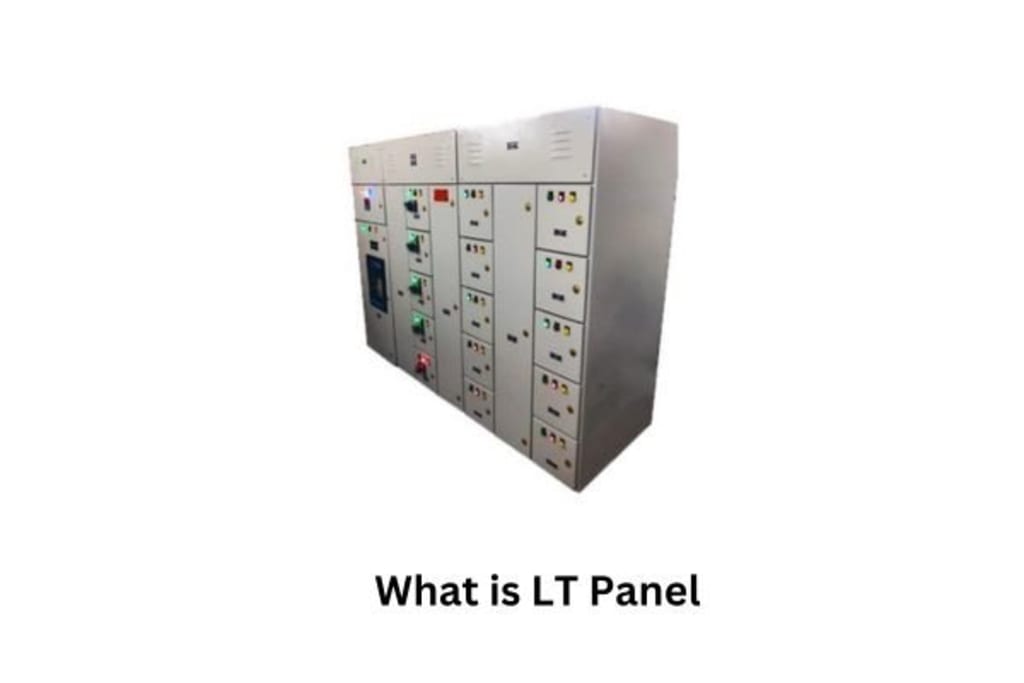
What is LT Panel
LT Panels: The Backbone of Efficient Power Distribution in Industries
Introduction
An LT panel (Low Tension panel) is a key component of modern electrical systems, designed to manage and distribute power at low voltage levels efficiently. These panels are widely used in manufacturing units, commercial buildings, hospitals, and educational institutions to ensure seamless power distribution, minimize energy loss, and maintain safety standards.
Understanding the LT full form in electrical—“Low Tension”—highlights its role in handling lower voltage electricity, making it safer for industrial and commercial applications. Whether for industrial plants, mining facilities, or office complexes, LT panels are indispensable for energy management and operational continuity
What is an LT Panel?
An LT panel is an electrical control panel that distributes electricity at low voltage (below 1,000 volts) to different circuits, ensuring uninterrupted power supply and protecting systems from overloads and short circuits.
Key Features of LT Panels:
• Reliable Power Distribution – Prevents fluctuations and maintains efficiency.
• Safety and Protection – Equipped with circuit breakers, relays, and busbars to prevent electrical faults.
• Energy Efficiency – Minimizes power losses and optimizes electrical usage.
These panels are housed in an LT panel room to ensure safety, proper ventilation, and easy maintenance.
Essential Components of an LT Panel
LT panels consist of several crucial components that work together to manage electricity effectively.
1. Circuit Breakers
Circuit breakers protect electrical systems by automatically disconnecting circuits during overloads or short circuits. The three main types include:
• Miniature Circuit Breaker (MCB) – Ideal for small electrical loads like lighting circuits.
• Molded Case Circuit Breaker (MCCB) – Handles higher loads and allows adjustable tripping settings.
• Air Circuit Breaker (ACB) – Used in industrial power distribution for high-voltage applications.
2. Busbars
Busbars are high-conductivity metal strips (copper or aluminum) that distribute electricity efficiently across different circuits in the LT panel.
3. Feeders
Feeders are power cables that connect the LT panel to external loads such as machinery, lighting circuits, and distribution boards.
4. Relays
Relays act as protective devices by detecting voltage fluctuations or current overloads and triggering circuit breakers to prevent system damage.
5. Control Switches and Indicators
These allow manual operation and real-time monitoring of voltage levels, current flow, and system performance.
6. Enclosure
The LT panel enclosure is made of mild steel or stainless steel to protect internal components from dust, moisture, and environmental damage.
Each component in the LT panel is meticulously designed to ensure efficient power distribution and system safety.
Types of LT Panels and Their Applications
Different industries require specialized LT panels tailored to their power distribution needs. Here are the most common types of LT control panels:
1. Power Control Center (PCC) Panels
• Used in: Manufacturing plants, hospitals, and power stations.
• Function: Controls and distributes high electrical loads efficiently.
• Benefits: Ensures balanced power distribution and prevents overloading.
2. Motor Control Center (MCC) Panels
• Used in: Textile, mining, and oil industries.
• Function: Controls and protects electric motors from overload and short circuits.
• Benefits: Reduces downtime and improves operational efficiency.
3. Automatic Power Factor Correction (APFC) Panels
• Used in: Large-scale industries, commercial buildings, and hospitals.
• Function: Maintains the power factor of electrical systems automatically.
• Benefits: Reduces energy wastage and lowers electricity bills.
4. Distribution Boards
• Used in: Educational institutions, offices, and residential complexes.
• Function: Distributes power safely across different circuits.
• Benefits: Prevents short circuits and ensures smooth energy flow.
Each LT panel board serves a unique function, making them essential for industries that require safe, efficient, and uninterrupted power supply.
LT Panel Maintenance: Ensuring Longevity and Efficiency
Regular LT panel maintenance is crucial for preventing system failures and enhancing safety.
Steps for LT Panel Maintenance:
1. Visual Inspection: Check for damaged wiring, loose connections, or overheating.
2. Cleaning: Remove dust and debris from the LT panel room to prevent overheating.
3. Testing Circuit Breakers and Relays: Ensure quick response to faults.
4. Tightening Connections: Prevents energy loss and electrical sparks.
5. Monitoring Voltage Levels: Keeps the panel operating within safe parameters.
Benefits of LT Panel Maintenance:
• Prevents power failures and accidents.
• Improves energy efficiency.
• Reduces repair costs.
• Ensures compliance with electrical safety regulations.
LT Panel vs HT Panel: Key Differences
In electrical systems, LT panels (Low Tension panels) and HT panels (High Tension panels) serve distinct purposes based on voltage levels and applications.
Understanding the difference between LT and HT connections helps in determining their appropriate use in industries.
1. Voltage Levels
LT Panels:
The lt line full form refers to “Low Tension,” meaning the panel operates at voltage levels up to 1,000 volts.
They are primarily used for low-voltage power distribution in industries like hospitals, manufacturing units, and commercial buildings.
HT Panels:
HT panels, or High Tension panels, operate at voltages above 1,000 volts, making them suitable for transmitting electricity over long distances.
These are used in power generation plants, substations, and heavy industries.
2. Components
LT Panel:
Key components include circuit breakers (MCBs, MCCBs), busbars, and relays, which ensure efficient power distribution and protection in low-voltage systems.
LT panels also include features like lt panel boards and meters for monitoring energy use.
HT Panel:
Equipped with high-voltage vacuum circuit breakers (VCBs), transformers, and protective relays, HT panels are designed for managing heavy electrical loads.
3. Applications
LT Panels:
Used for internal power distribution in factories, schools, and offices, where low-voltage power is sufficient.
Commonly installed in an lt panel room to distribute power safely and efficiently within a facility.
HT Panels:
Suitable for industries and utilities that need to step down or step up power for transmission and distribution.
Often installed at substations to manage high-voltage electricity.
4. Cost and Maintenance
LT Panels:
Generally less expensive to install and maintain due to their simpler design and low-voltage operation.
Regular lt panel maintenance ensures optimal performance and reduces downtime.
HT Panels:
Costlier due to the advanced technology and materials required for high-voltage systems.
Maintenance is more complex and requires specialized expertise.
5. Safety Features
LT Panels:
Focused on protecting circuits and equipment within low-voltage systems.
Safer for industries that require minimal power distribution.
HT Panels:
Designed to handle high voltages safely, preventing issues like arcing or insulation breakdown.
Enhanced safety measures are essential due to the risks associated with high voltage.
Choosing Between LT and HT Panels
The choice between an LT panel and an HT panel depends on your specific power requirements:
Use an LT panel for distributing power at low voltages within a facility, ensuring efficiency and safety.
Opt for an HT panel for managing electricity at high voltages, especially when transmitting power over long distances.
For businesses handling low-voltage systems, LT panels are ideal, while HT panels are better suited for power-intensive operations.
For businesses relying on LT panels, routine maintenance is non-negotiable.
Choosing the Best LT Panel Manufacturer in India
Selecting a trusted LT panel manufacturer is crucial for ensuring durability, efficiency, and safety.
Key Factors to Consider:
• Industry Experience: A manufacturer with years of expertise can provide customized LT panels.
• Certifications: Ensure the supplier meets ISO and CPRI standards.
• Customization Options: Choose manufacturers offering tailored solutions for your industry.
• After-Sales Support: Look for suppliers providing installation, maintenance, and spare parts.
Why Choose DJ Electro Controls?
DJ Electro Controls is a leading LT panel manufacturer in India, known for:
Custom-built LT panels for industries like manufacturing, healthcare, and mining.
Top-quality components for reliability and safety.
Competitive pricing with exceptional customer support.
Whether you need LT panels for factories, hospitals, or commercial buildings, DJ Electro Controls offers premium solutions.
FAQs
Q1. What is the full form of LT in LT panel?
Ans: The lt full form in an LT panel stands for “Low Tension,” which refers to panels designed to operate at lower voltage levels, typically up to 1,000 volts.
2. How does an LT panel work?
Ans: An LT panel manages and distributes electrical power at low voltage. It channels electricity from the main supply to various circuits while ensuring protection against overloads and short circuits through components like circuit breakers, busbars, and relays.
Q3. What are the main components of an LT panel?
Ans: The primary lt panel components include:
Circuit Breakers: Protect against overloads and faults.
Busbars: Distribute electricity efficiently.
Relays: Detect faults and trigger protective measures.
Meters and Indicators: Monitor voltage, current, and energy usage.
Q4. Where are LT panels commonly used?
Ans: LT panels are widely used in industries such as manufacturing, mining, hospitals, schools, and commercial buildings for safe and efficient power distribution.
Q5. What is the difference between LT and HT panels?
Ans: The difference between LT and HT panels lies in their voltage levels:
LT panels: Operate at voltages up to 1,000 volts and are used for internal power distribution.
HT panels: Handle voltages above 1,000 volts and are used in high-voltage transmission and substations.
Conclusion
LT panels are integral to modern power management, ensuring safe and efficient energy distribution. Whether in factories, hospitals, or educational institutions, these panels help minimize downtime, reduce energy waste, and improve system reliability.
By investing in high-quality lt switch boards and ensuring regular maintenance, businesses can significantly reduce downtime, improve energy efficiency, and enhance safety standards.
Proper maintenance of components housed in the lt room not only extends the lifespan of the panels but also minimizes the risk of electrical hazards.
For those searching for a reliable lt panel near me, partnering with an experienced manufacturer like Dj Electro Controls ensures you receive top-notch panels tailored to your industry needs. With the right LT panel, businesses can power their operations with confidence and efficiency.
About the Creator
Djelectro controls
DJ Electro Controls Leading APFC panel manufacturer with 10+ years of expertise. CPRI & ISO 9001:2008 certified, delivering quality and innovation on time.
Enjoyed the story? Support the Creator.
Subscribe for free to receive all their stories in your feed.
Comments
There are no comments for this story
Be the first to respond and start the conversation.