
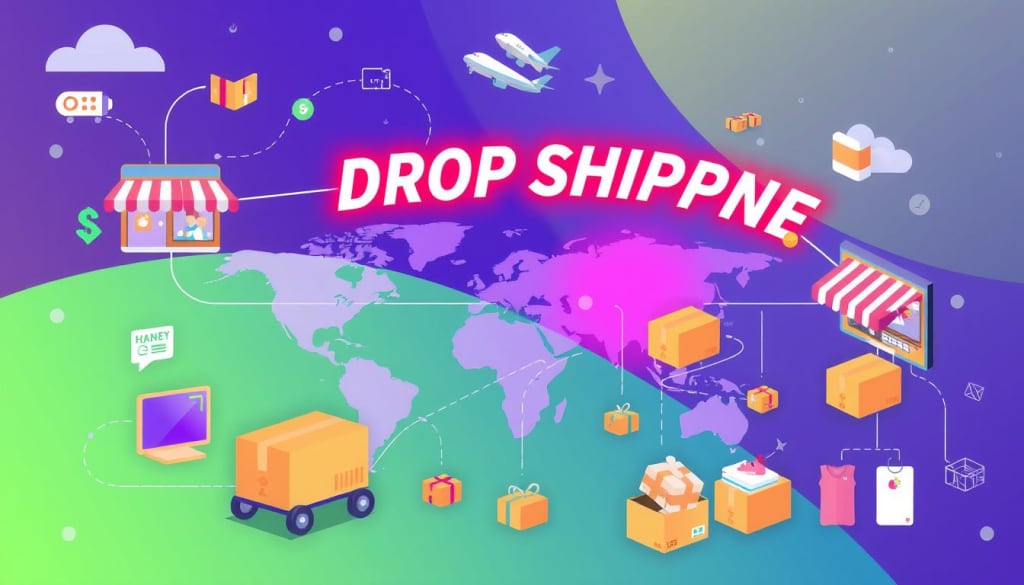
In the world of e-commerce, drop shipping is changing the game. It lets businesses sell lots of products without keeping them in stock. When a customer buys something, the store buys it from a supplier. Then, the supplier sends it straight to the customer.
Drop shipping is great for starting small online businesses. It means you don't need to worry about storing products. You can focus on marketing and helping customers instead. This article will look into the details of drop shipping. We'll explore its different types and how to use it to succeed online.
Key Takeaways
- Drop shipping is a retail fulfillment method where businesses don't keep products in stock
- It allows entrepreneurs to start and grow online stores with minimal upfront investment
- The article will explore the different types of drop shipping businesses and how to set them up
- Key benefits of drop shipping include reduced inventory costs and operational complexity
- Strategies for marketing and managing a successful drop shipping business will be discussed
Understanding Drop Shipping Business Model
The drop shipping business model is a great chance for new entrepreneurs. It's a way to sell products without keeping any stock. When a customer buys something, the seller buys it from a supplier. Then, the supplier sends it straight to the customer.
Definition and Key Characteristics
Drop shipping has some key traits that make it different from old-school retail. These include:
- No inventory: The seller doesn't keep any stock, saving on storage and warehouse costs.
- Direct-to-customer shipping: The supplier sends the items directly to the buyer, skipping the seller.
- Involvement of a third-party supplier: The seller partners with a supplier to handle orders and shipping.
Benefits of Drop Shipping for Entrepreneurs
Drop shipping has many perks for entrepreneurs:
- Low startup costs: Starting a drop shipping business needs little money, unlike traditional retail.
- Flexibility: Sellers can try new products and grow their range without worrying about unsold stock.
- Scalability: As the business grows, adding more products and suppliers is easy, without the hassle of inventory.
Knowing the drop shipping model's key traits and benefits helps entrepreneurs decide if it's right for them.
Characteristic Description
No inventory The retailer does not hold any physical inventory, eliminating the need for storage and warehousing costs.
Direct-to-customer shipping The supplier ships the products directly to the customer, bypassing the retailer.
Involvement of a third-party supplier The retailer works with a supplier who fulfills the orders and handles shipping.
Drop Shipping
Drop shipping is a modern way to run a business in e-commerce. It lets entrepreneurs sell products without keeping inventory or handling shipping. This section will explain how does drop shipping work and the drop shipping process.
Drop shipping involves three main groups: the customer, the online store, and the supplier. Here's how a typical drop shipping transaction goes:
- A customer places an order on the online store.
- The online store sends the order details to the supplier.
- The supplier ships the product directly to the customer, skipping the online store.
- The online store keeps the payment from the customer, making a profit from the difference in prices.
This method has many benefits for both the entrepreneur and the customer. It saves the store money by not needing to keep inventory. Customers also get their products faster because they're shipped straight from the supplier's warehouse.
- Step Description
- 1. Customer Order The customer places an order on the online store.
- 2. Order Forwarding The online store forwards the order details to the supplier.
- 3. Fulfillment The supplier packages and ships the product directly to the customer.
- 4. Payment Collection The online store collects the payment from the customer, keeping the profit margin.
By understanding the drop shipping process, entrepreneurs can start and grow online stores. They can avoid the usual problems of managing inventory and shipping.
Types of Drop Shipping Businesses
Drop shipping has become a big deal in e-commerce. It lets entrepreneurs sell products without the hassle of inventory. There are two main types: wholesaler-based and manufacturer-to-consumer drop shipping.
Wholesaler-Based Drop Shipping
In this model, your store partners with a wholesaler. You list products on your site and handle orders. When someone buys, you send the order to the wholesaler. They ship it to the customer.
This way, you can offer lots of products without keeping them in stock.
Manufacturer-to-Consumer Drop Shipping
This model has your store working directly with the product maker. When someone buys, you send the order to the maker. They ship it to the customer.
This can be good because it cuts out the middleman. This might mean you make more money.
Both models have their own benefits and things to think about. Knowing the differences can help you pick the right one for your business. This way, you can increase your chances of success.
Setting Up a Drop Shipping Store
Starting a drop shipping business needs careful planning. First, pick a profitable niche and the right products. This choice is crucial, so do your homework and find gaps in the market.
Choosing a Niche and Products
When picking a niche, think about demand, competition, and profit. Look for a spot with high demand but little competition. This gives you an edge. Look at trends, customer feedback, and industry data to find popular and profitable products.
- Research trending products and niches in your target market
- Evaluate the competition and identify underserved segments
- Choose products that align with your interests and expertise
- Ensure the selected products have a good profit margin
Finding Reliable Suppliers
After picking your niche and products, find good suppliers. Partner with trusted wholesalers or manufacturers who ship well and keep quality high. Check suppliers carefully to ensure they meet your needs and offer a smooth customer experience.
- Explore online directories and marketplaces to find pre-vetted drop shipping suppliers
- Reach out to manufacturers directly and inquire about their drop shipping programs
- Evaluate suppliers based on factors such as product quality, shipping times, and customer support
- Negotiate favorable terms, including competitive pricing and flexible order minimums
By choosing your niche well and finding reliable suppliers, you lay the groundwork for a successful online store. It will offer great service and grow over time.
Key Factors Considerations
Niche Selection
- Identify high-demand, low-competition markets
- Analyze product trends and customer preferences
- Choose a niche that aligns with your interests and expertise
Product Selection
- Evaluate product profitability and profit margins
- Ensure product quality and customer satisfaction
- Offer a diverse range of complementary products
Supplier Vetting
- Assess supplier reliability, shipping times, and customer support
- Negotiate favorable terms, including pricing and order minimums
- Maintain open communication and foster long-term partnerships
Drop Shipping Platforms and Tools
In the world of e-commerce, drop shipping is a big hit. It's a flexible and cost-effective way for entrepreneurs to start online stores. The key to success lies in the platforms and tools that make the process smooth.
Shopify and WooCommerce are top choices for e-commerce platforms with drop shipping features. They offer easy-to-use interfaces and strong inventory management. Plus, they work well with many drop shipping suppliers.
There are also drop shipping tools made just for this business model. Oberlo, Dropified, and AliExpress Dropshipping have cool features like product research and order automation. They make running a drop shipping business easier.
These drop shipping platforms and tools have changed the game for entrepreneurs. They help build and grow businesses quickly and efficiently. With these tools, entrepreneurs can focus on marketing and making decisions, while the hard work is done for them.
"The right tools can make all the difference in the world of drop shipping, transforming a promising idea into a thriving e-commerce venture."
The drop shipping industry is always growing. More e-commerce platforms for drop shipping and tools will come out. This means entrepreneurs will have even more options to make their businesses better.
Marketing Strategies for Drop Shippers
As a drop shipping entrepreneur, it's key to have good marketing strategies. Social media, content marketing, and SEO are important. They help your business grow.
Social Media and Content Marketing
Social media is great for attracting customers. It lets you show off your products and connect with people. Instagram, Facebook, and TikTok are good for this.
Content marketing also helps. It brings people to your site. Things like blog posts and videos make your brand look good and help customers decide.
Search Engine Optimization (SEO)
SEO is vital for your site to be seen online. It makes your products easier to find. This includes using the right keywords and getting links to your site.
Using social media, content marketing, and SEO together is smart. It helps you reach and sell to more people. This makes your drop shipping business grow.
Marketing Channel Key Benefits Recommended Tactics
Social Media
Increased brand awareness
Stronger customer relationships
Targeted product promotion
Consistent content publishing
Engaging visual content
Influencer collaborations
Content Marketing
Establishing industry expertise
Driving qualified traffic
Improving customer decision-making
Informative blog posts
Product guides and tutorials
Video content creation
Search Engine Optimization (SEO)
Increased organic visibility
Higher-quality website traffic
Improved conversion rates
Keyword research and targeting
On-page optimization
Link building and content promotion
"Effective marketing is the key to unlocking the full potential of a drop shipping business. By leveraging the right strategies, you can reach and connect with your target audience, driving both awareness and sales."
A good mix of social media, content marketing, and SEO is key. It helps your drop shipping business grow and succeed.
Challenges and Risks in Drop Shipping
Drop shipping is a tempting business model for many entrepreneurs. Yet, it comes with its own set of challenges and risks. The main concerns are low profit margins and the complexities of managing inventory and shipping.
Low Profit Margins
One major drawback of drop shipping is the low profit margins. Since the seller doesn't own the inventory, they must rely on the supplier's prices. This can make it hard to make a profit. Shipping costs, customer returns, and platform fees can also cut into profits.
Drop shippers need to carefully look at their pricing and expenses. This helps them keep their business running smoothly.
Inventory and Shipping Management
Managing inventory and shipping well is key in drop shipping. Without control over these areas, delays and unhappy customers can happen. It's important for drop shippers to work closely with their suppliers.
They need to keep an eye on stock levels and track shipments. Managing customer expectations is also crucial for a good customer experience.
Challenges in Drop Shipping Risks of Drop Shipping
Low profit margins
Inventory management
Shipping and logistics
Supplier reliability
Customer satisfaction
Reputation and brand image
By tackling these challenges head-on, drop shippers can reduce risks. This helps them build a successful business for the long haul.
"Effective inventory and shipping management are critical in the drop shipping business. Lack of control over the inventory and fulfillment process can lead to delays, stock-outs, and dissatisfied customers."
Legal Considerations for Drop Shippers
As a drop shipping business owner, you must carefully navigate the legal landscape. This includes sales tax compliance and product liability. Knowing these regulations helps you stay compliant and avoid legal issues.
Sales Tax Compliance
Sales tax compliance is a key legal concern for drop shippers. You might need to collect and remit sales tax based on your business location and customer locations. Keeping up with sales tax laws is essential to avoid penalties.
Product Liability
As a drop shipper, you're responsible for the products you sell. This means you could face legal issues if there are problems with the products. It's important to work with reliable suppliers and consider product liability insurance.
Intellectual Property Rights
Respecting intellectual property rights is crucial for drop shippers. Make sure the products you sell don't infringe on trademarks, copyrights, or patents. Selling counterfeit goods can lead to severe legal consequences.
Legal Consideration Key Points
Sales Tax Compliance
Understand sales tax laws and regulations in your operating states and customer locations
Collect and remit sales tax as required
Stay up-to-date with changes in sales tax rules
Product Liability
Ensure product quality and safety
Work with reliable suppliers
Consider product liability insurance
Intellectual Property Rights
Avoid selling products that infringe on trademarks, copyrights, or patents
Do not sell counterfeit goods
By addressing these legal considerations for drop shippers, you can reduce risks and maintain compliance. Understanding the regulations for drop shipping businesses is key to success in this industry.
Success Stories and Case Studies
In the world of drop shipping, many success stories show its power. Let's look at some amazing case studies. They show how smart entrepreneurs have used drop shipping to grow their online businesses.
Sarah, a stay-at-home mom, started her drop shipping business as a side job. She picked a niche and found reliable suppliers. Her e-commerce store quickly grew, making her a steady income. After a year, she could leave her day job and grow her business more.
Michael, a young college grad, turned his love for outdoor gear into a drop shipping business. He used social media and SEO to find customers. His success shows how drop shipping can connect entrepreneurs with their audience.
Entrepreneur Business Type Key Strategies Annual Revenue
Sarah Home Decor Niche market selection, reliable suppliers $250,000
Michael Outdoor Gear Social media, SEO $180,000
Emily Pet Accessories Influencer marketing, customer service $300,000
These drop shipping success stories and case studies of successful drop shipping businesses show the wide range of opportunities. By learning from these entrepreneurs, you can find your own success in drop shipping.
The stories of Sarah, Michael, and others prove drop shipping's power. It empowers entrepreneurs and opens new paths to financial freedom. As you start your drop shipping journey, let these stories inspire you and guide you to success.
Conclusion
The drop shipping business model is a great chance for entrepreneurs to start or grow their online businesses. It has low start-up costs, flexible inventory, and access to the global market. This makes it easy to tap into the growing e-commerce world and meet different customer needs.
This model lets entrepreneurs focus on picking products, marketing, and customer service. They can leave the inventory and order fulfillment to trusted suppliers. Whether you choose wholesaler-based or direct-from-manufacturer drop shipping, the right plan and tools are key to success.
To thrive in drop shipping, you need to do your homework on the market, find a profitable niche, and work with reliable suppliers. Knowing how to use SEO, social media, and customer service can help you build a strong online brand. This way, you can connect well with your customers and grow your business.
FAQ
What is drop shipping and how does it work?
Drop shipping is a way for stores to sell products without keeping them in stock. When a customer buys something, the store buys it from a supplier. The supplier then ships it directly to the customer. This method helps businesses avoid the hassle and cost of managing a big inventory.
What are the benefits of the drop shipping business model?
Drop shipping is great because it's easy to start and doesn't cost much. It lets you try out new products without much risk. Plus, you don't have to worry about storing lots of products, which saves money.
What are the different types of drop shipping businesses?
There are two main types of drop shipping. The first is wholesaler-based, where you work with a supplier. The second is manufacturer-to-consumer, where you deal directly with the maker of the product.
How do I set up a successful drop shipping store?
To start a drop shipping store, pick a profitable niche and choose the right products. It's also important to find reliable suppliers. This ensures your store runs smoothly and efficiently.
What are the common challenges and risks associated with drop shipping?
Drop shipping comes with challenges like low profit margins and managing inventory and shipping. There are also legal issues like sales tax and product liability. Finding ways to overcome these challenges is key to your business's success.
About the Creator
Enjoyed the story? Support the Creator.
Subscribe for free to receive all their stories in your feed.
Comments
There are no comments for this story
Be the first to respond and start the conversation.