
What is Configuration Management in DevOps?
Why Configuration Management is Essential in DevOps
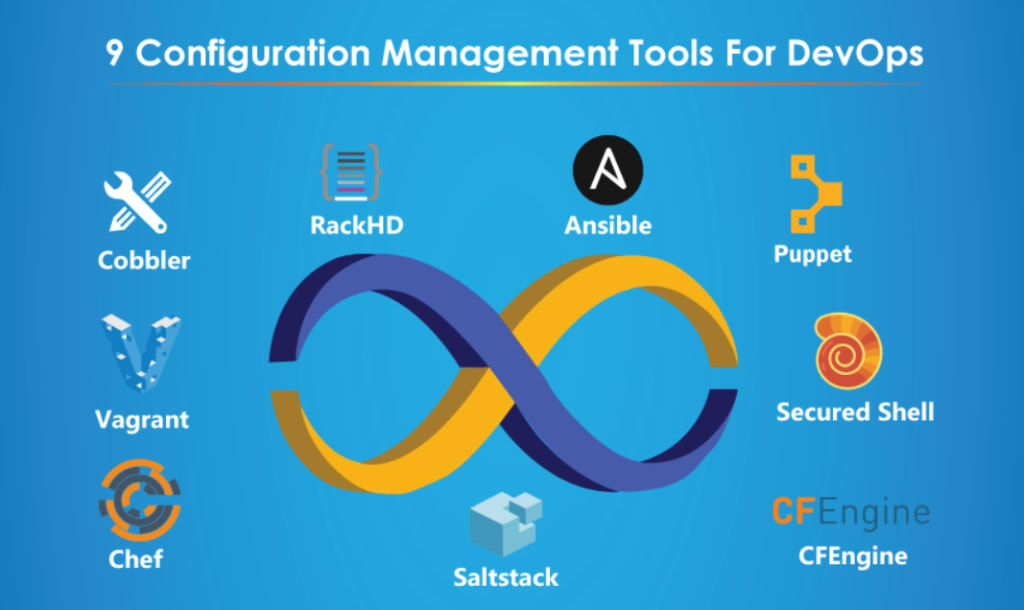
Configuration management refers to the practice of managing and maintaining the consistency of a system's resources, settings, and configurations across its lifecycle. Within DevOps services, it plays a vital role in enabling automated deployments, reducing downtime, and ensuring reliability.
Key aspects of configuration management include:
- Keeping track of system configurations.
- Automating repetitive tasks like server setups.
- Enhancing transparency for cross-team collaboration.
When integrated into DevOps services and solutions, configuration management reduces complexity, aligns with agile principles, and promotes faster delivery cycles.
The Role of Configuration Management in Streamlining IT Processes
1. Automating Manual Tasks
Repetitive manual tasks can lead to inefficiencies and errors. By leveraging configuration management tools like Ansible, Puppet, or Chef, DevOps teams can automate routine processes. Automation ensures:
- Consistency in deployments.
- Reduced human errors.
- Faster delivery timelines.
2. Ensuring Infrastructure as Code (IaC)
With configuration management, organizations can adopt Infrastructure as Code (IaC), a practice that codifies infrastructure into scripts. This approach allows for:
- Seamless scaling of resources.
- Version control of configurations.
- Quick recovery in case of system failures.
3. Enhancing Collaboration Across Teams
DevOps thrives on collaboration between development and operations teams. Configuration management acts as a shared language, ensuring both teams are on the same page, which minimizes misunderstandings and accelerates project timelines.
Why is Configuration Management Essential in DevOps Services and Solutions?
1. Improves Scalability and Agility
As businesses grow, their IT infrastructure needs to scale without compromising performance. Configuration management enables teams to replicate environments effortlessly, ensuring scalability with minimal disruption.
2. Reduces Downtime and Boosts Reliability
System outages can have a cascading effect on productivity. By standardizing processes through configuration management, teams can proactively address potential issues, significantly reducing downtime.
3. Supports Compliance and Auditing
Modern industries require stringent compliance measures. Configuration management provides detailed documentation of system states, making it easier to meet regulatory requirements and conduct audits.
4. Cost Efficiency Through Optimized Resources
Configuration management tools optimize resource utilization by ensuring that only necessary components are deployed. This approach saves time, energy, and costs while reducing waste.
Key Configuration Management Tools for DevOps
DevOps thrives on tools that simplify complex processes. Here are a few popular tools for configuration management:
Ansible: Known for its simplicity and ease of use, Ansible provides powerful automation capabilities for configuration management.
Chef: Focuses on infrastructure automation and has strong support for cloud-native applications.
Puppet: An enterprise-level solution for managing diverse environments with robust features.
Terraform: Enables IaC practices and is highly effective for provisioning cloud infrastructure.
Each of these tools integrates seamlessly into DevOps services, enabling efficient workflows and faster delivery cycles.
The Benefits of Integrating Configuration Management with DevOps
1. Faster Time-to-Market
Configuration management helps teams deploy updates and new features quickly and efficiently, ensuring a competitive edge in the market.
2. Consistency Across Environments
By maintaining uniform configurations, configuration management minimizes discrepancies between development, staging, and production environments.
3. Enhanced Security
Centralized management ensures that all systems adhere to security policies, reducing vulnerabilities and enhancing compliance.
4. Continuous Improvement
As part of the DevOps lifecycle, configuration management fosters a culture of continuous improvement by identifying and rectifying inefficiencies in real-time.
FAQs
How does configuration management fit into DevOps services?
Configuration management provides the foundation for automation, consistency, and scalability in DevOps services. It ensures that teams can deploy, monitor, and maintain systems effectively across their lifecycle.
What tools are commonly used for configuration management in DevOps?
Tools like Ansible, Chef, Puppet, and Terraform are widely used in DevOps for automating configuration management and promoting infrastructure as code.
Why is configuration management critical for businesses?
Configuration management reduces errors, improves scalability, and supports compliance, making it essential for businesses aiming to streamline IT operations and achieve faster delivery cycles.
How does configuration management enhance collaboration in DevOps?
It provides a centralized repository of system configurations, ensuring all teams have access to consistent, up-to-date information, which fosters better communication and collaboration.
What role does IaC play in configuration management?
Infrastructure as Code (IaC) allows teams to manage infrastructure programmatically, ensuring consistency, scalability, and rapid recovery from failures.
Can small businesses benefit from configuration management?
Yes, small businesses can benefit significantly from configuration management as it reduces overhead, minimizes errors, and ensures efficient resource utilization, which is critical for growth.
About the Creator
Enjoyed the story? Support the Creator.
Subscribe for free to receive all their stories in your feed.
Comments
There are no comments for this story
Be the first to respond and start the conversation.