
What is a Bug Life Cycle?
Best Software Testing

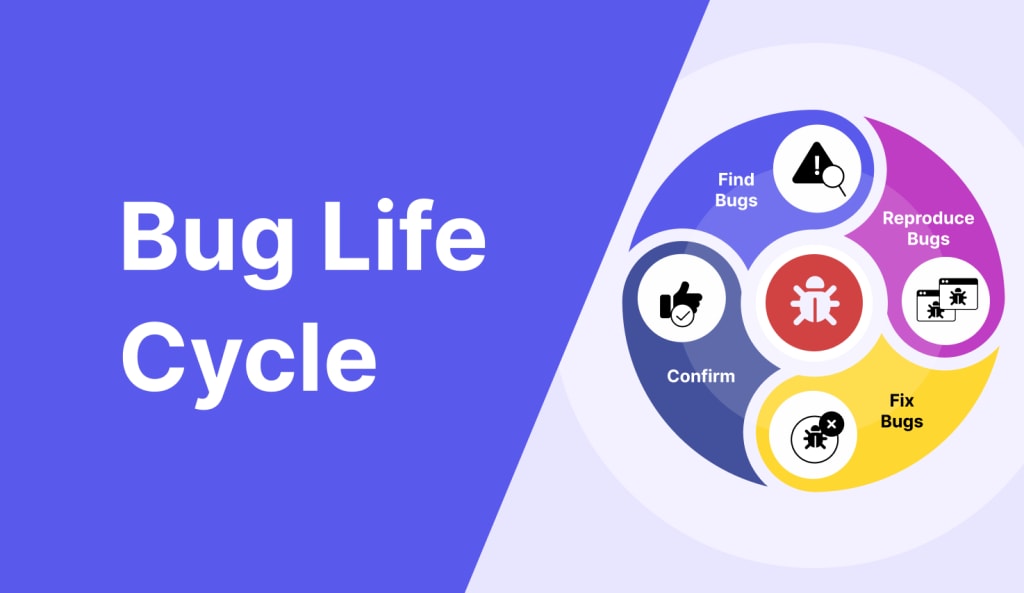
Anyone who wants to work in quality assurance should know about the bug life cycle, which the Best Software Testing Institute in India has always stressed.
There will always be bugs in software development, but a good QA engineer can keep track of, manage, and fix them quickly and easily.
To achieve this, testers need to know how a bug life cycle works in an organized way.
Understanding Bug Life Cycle
The bug life cycle, which is also called the defect life cycle, is the series of steps that a software bug goes through while it is still there.
Each step, from finding a bug to fixing it and closing it, is important for making sure the product is of high quality.
- In software testing, this cycle is crucial for keeping track of bugs in a systematic way.
- This cycle facilitates the collaboration between testers and developers.
- We maintain product stability by addressing the most critical bugs first.
For both new and experienced software testers, it is important to understand this cycle.
Key Stages of a Bug Life Cycle
1. New
If a bug is found during testing, it is put into a defect tracking platform (like JIRA or Bugzilla) and designated as "New." The development team needs to address the bug at this point.
2. Given
The project manager or test lead gives the bug to a developer, who will look into it and correct it.
To avoid delays in the release of the program, it is important to delegate tasks correctly.
3. Open
The developer starts working on the bug as soon as they get it. They look into what caused the problem and come up with a solution. This stage is one of the busiest times in the cycle.
4. Fixed
The bug is marked as "Fixed" after changes are made to the code. The procedure isn't over yet, though; the bug still needs to be tested and validated.
5. Test again
Testers examine again to see if the bug is still there. It moves forward if the problem has been fixed; if not, it may be given to another developer.
6. Confirmed
The tester marks the bug as Verified if retesting shows that it has been resolved without causing any problems.
7. Closed
Finally, the bug status is designated as Closed when the team is happy with the work. This means that the problem won't happen again unless it is found in future regression cycles.
Possible Alternate Bug States
- Rejected If the bug that was reported is not real.
- Duplicate means that the identical bug has previously been reported.
- "Deferred" means that the bug is real but will be fixed in a future release.
- Not a Bug: If the behavior that was reported is what was supposed to happen.
These several stages make sure that everything is clear and that testers and developers don't get confused.
Importance of Bug Life Cycle in Software Testing
The bug life cycle is more than simply a method; it's the main part of quality assurance. It is important because:
- Good communication: At every level, testers, developers, and project managers can talk to one another.
- Prioritization: We can immediately move very bad bugs up the list for fixing.
- Traceability: Maintains a comprehensive record of the steps taken to resolve issues.
- Process Standardization: Makes sure that all teams test projects in the same way.
Mastering this cycle is important whether you are getting ready for interviews or strengthening your testing skills with the help of Software Testing Training in Gurgaon.
Tools That Support Bug Life Cycle Management
Tools for tracking defects that speed up the bug life cycle are essential for modern software development. Some common tools are:
JIRA, Bugzilla, Mantis, Redmine, and HP ALM/Quality Center are all examples of these.
These technologies help keep track of issues by logging, assigning, prioritizing, and tracking them until they are fixed.
Conclusion
The bug life cycle is a key part of testing software. It would be hard and messy to keep track of flaws without it.
If you want to have a successful career in QA, it's just as vital to understand these steps as it is to learn automation frameworks or how to write test cases.
If you want to learn more, taking Software Testing Training in Noida or Software Testing Training in Gurgaon can help you get hands-on experience in managing bug cycles on real projects.
These programs teach you not only how to use tools but also how to think about problems, which will help you stand out in the competitive software testing field.
In short, understanding the bug life cycle is not merely theoretical; it is a practical aspect of your daily work that determines whether a product is bug-free and ready for users when it reaches the market.
About the Creator
4Achievers Noida
4Achievers is a leading training institute offering courses in IT, software development, data science, cloud computing, and more. It provides hands-on training, expert mentorship, and placement assistance for career growth.
Enjoyed the story? Support the Creator.
Subscribe for free to receive all their stories in your feed.
Comments
There are no comments for this story
Be the first to respond and start the conversation.