
Greetings Everybody.
Have you ever wondered what are we made of? Ofc we know some basics like the heart, lungs, liver and many more but Ever wondered what are these organs made of ? what forms us the way we are mentally and physically ? well the short answer is DNA which stands for "Deoxyribonucleic acid" Let us call DNA to save time.
This chemical molecule contains all of our Genome(will explain what is Genome later) but for now Genome is the same as genetics which means the pre-installed information that will unfold into all forms of life.
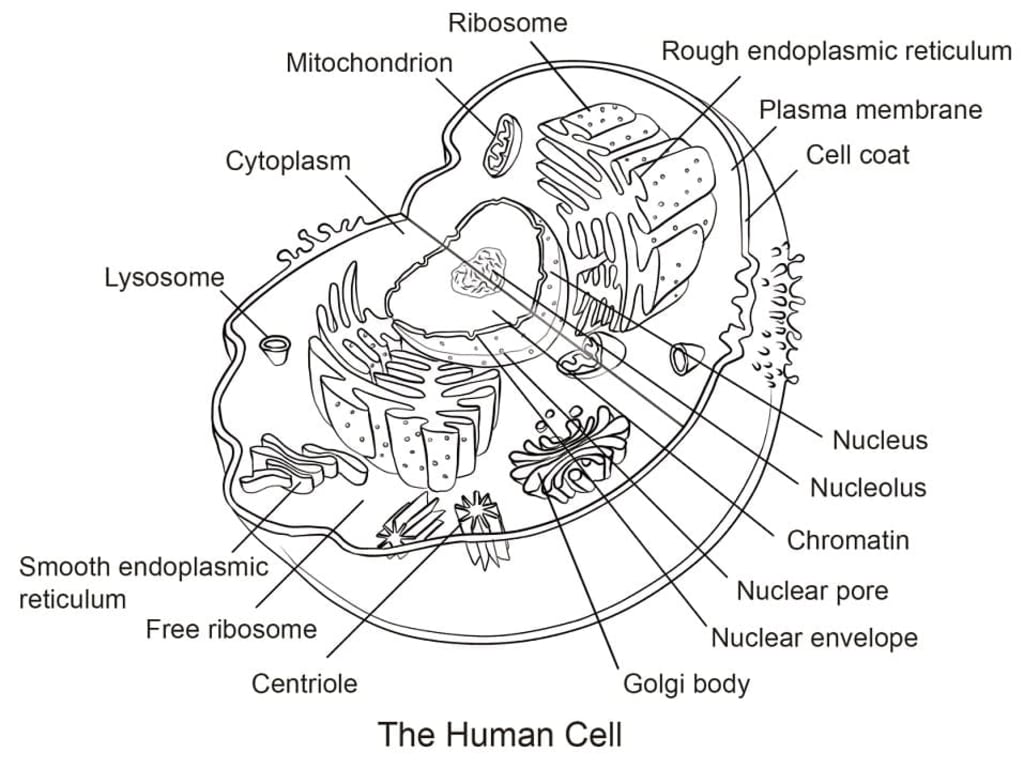
But where is our DNA ?short answer is Cells, Our Liver for example is made up of hunderds of thousands Cells But what is the Cell ? it is the small unite of life , in most cases a round compound that contains our organelles like the house that hosts all the rooms and furniture the cell hosts its parts which together create life.
This is what our DNA look like
Our DNA is shaped like a double helix opposing each other folded with its magic, when the time is right and life is about to happen these double bars unfold into stright line and the operation begins , the information packed unpackes and transcript into Amino Acid which creates enzymes and proteins, enzymes can transform proteins into sugar and lipids together these three : protein , sugar , lipids create everything from cell membrane to nuclei to plasma etc.
A Cell shape is preserved in its DNA for example Liver cells are hexagons whereas Vascular cells are straight like the pavement floor , But it does not stop here , Research had shown that even our behavior is preserved in these Genes...
Let's rearrange our thoughts
First we have the cell which is the box that has all organelles
Secondly the organelles are
Cell membrane : is a biological membrane that separates and protects the interior of a cell from the outside environment (the extracellular space). The cell membrane consists of a lipid bilayer, made up of two layers of phospholipids with cholesterols (a lipid component) interspersed between them, maintaining appropriate membrane fluidity at various temperatures. The membrane also contains membrane proteins, including integral proteins that span the membrane and serve as membrane transporters, and peripheral proteins that loosely attach to the outer (peripheral) side of the cell membrane, acting as enzymes to facilitate interaction with the cell's environment. Glycolipids embedded in the outer lipid layer serve a similar purpose.
nucleus : The nucleus provides a site for genetic transcription that is segregated from the location of translation in the cytoplasm, allowing levels of gene regulation that are not available to prokaryotes. The main function of the cell nucleus is to control gene expression and mediate the replication of DNA during the cell cycle
mitochondria : we all know mitochondria The most prominent roles of mitochondria are to produce the energy currency of the cell, ATP (i.e., phosphorylation of ADP), through respiration and to regulate cellular metabolism. The central set of reactions involved in ATP production are collectively known as the citric acid cycle, or the Krebs cycle, and oxidative phosphorylation. However, the mitochondrion has many other functions in addition to the production of ATP
Golgi apparatus: The Golgi apparatus is a major collection and dispatch station of protein products received from the endoplasmic reticulum (ER). Proteins synthesized in the ER are packaged into vesicles, which then fuse with the Golgi apparatus. These cargo proteins are modified and destined for secretion via exocytosis or for use in the cell. In this respect, the Golgi can be thought of as similar to a post office: it packages and labels items which it then sends to different parts of the cell or to the extracellular space. The Golgi apparatus is also involved in lipid transport and lysosome formation
ribosomes and endoplasmic retiuclum :The endoplasmic reticulum serves many general functions, including the folding of protein molecules in sacs called cisternae and the transport of synthesized proteins in vesicles to the Golgi apparatus. Rough endoplasmic reticulum is also involved in protein synthesis. Correct folding of newly made proteins is made possible by several endoplasmic reticulum chaperone proteins, including protein disulfide isomerase (PDI), ERp29, the Hsp70 family member BiP/Grp78, calnexin, calreticulin, and the peptidylprolyl isomerase family. Only properly folded proteins are transported from the rough ER to the Golgi apparatus – unfolded proteins cause an unfolded protein response as a stress response in the ER. Disturbances in redox regulation, calcium regulation, glucose deprivation, and viral infection or the over-expression of proteins can lead to endoplasmic reticulum stress response (ER stress), a state in which the folding of proteins slows, leading to an increase in unfolded proteins. This stress is emerging as a potential cause of damage in hypoxia/ischemia, insulin resistance, and other disorders
if you liked this article let me know so i will create a list of stories that explain everything in our Bodies
Have a good
About the Creator
Enjoyed the story? Support the Creator.
Subscribe for free to receive all their stories in your feed.
Comments
There are no comments for this story
Be the first to respond and start the conversation.