
what are Ostracods and describe its importance in freshwater?
informative analysis
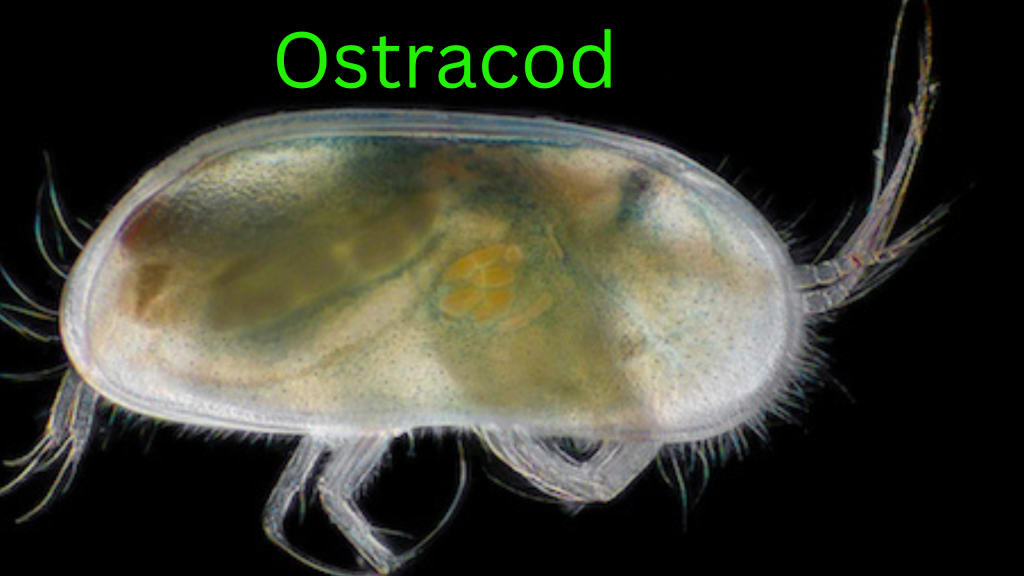
Ostracods are a group of small, shrimp-like crustaceans that are found in a variety of aquatic habitats, including freshwater, marine, and brackish environments. These tiny animals play important roles in the functioning of aquatic ecosystems, and they have also been used as indicators of environmental change and as tools for reconstructing past climates. In this analysis, I will provide a detailed overview of the biology, ecology, and significance of ostracods, with a focus on their role in water.
Biology and morphology: Ostracods are tiny crustaceans that range in size from about 0.2 to 2 millimeters in length. They have a bivalve-like carapace that covers their body and protects their delicate internal organs. The carapace is hinged, and the ostracod can close it tightly to protect itself from predators or unfavorable environmental conditions. Ostracods have a pair of antennae, several pairs of appendages, and a pair of simple eyes. They feed on a variety of small aquatic organisms, including algae, diatoms, and other microcrustaceans.
Ecology and distribution: Ostracods are found in a variety of aquatic habitats, including freshwater, marine, and brackish environments. They are highly adaptable and can tolerate a range of environmental conditions, from low to high salinity and from cool to warm temperatures. Ostracods are also highly diverse, with thousands of species found in different parts of the world. Some species are found in the shallow waters near the shore, while others are found in the deep waters of the open ocean.
Importance in water: Ostracods play important roles in the functioning of aquatic ecosystems, and they are also used as indicators of environmental change and as tools for reconstructing past climates. Some of the key ways in which ostracods are important in water include:
Indicators of water quality: Ostracods are sensitive to changes in water quality, and their presence or absence can provide important information about the health of an aquatic ecosystem. For example, the presence of certain species of ostracods can indicate high levels of eutrophication, which is the over-enrichment of water with nutrients that can lead to harmful algal blooms and other negative impacts.
Food source for other animals: Ostracods are an important food source for a variety of other aquatic animals, including fish, birds, and other crustaceans. In this way, they play a critical role in the transfer of energy and nutrients through the food web.
Paleoclimate reconstruction: Ostracods have a long fossil record, and they have been used as tools for reconstructing past climates. For example, the shells of ostracods are often well-preserved in sediments, and they contain important information about past temperatures, salinities, and other environmental conditions. This information can be used to study past climates and to understand how the earth's climate has changed over time.
Biofouling control: Ostracods are also used to control biofouling, which is the growth of unwanted organisms on man-made structures in the water, such as ships, docks, and pipelines. Biofouling can be damaging and expensive, and it is a major problem for industries that operate in the water. Ostracods are effective at controlling biofouling because they feed on the same microorganisms that form the basis of the biofouling community.
Here are some nutritional facts about ostracods:
Protein: Ostracods are a good source of protein, with an average of about 14-18 grams of protein per 100 grams of dried ostracods.
Fat: Ostracods contain relatively low levels of fat, with an average of about 1-2 grams of fat per 100 grams of dried ostracods.
Minerals: Ostracods are a good source of minerals, including calcium, phosphorus, and iron.
Vitamins: Ostracods contain small amounts of vitamins, including vitamin B12.
It's worth noting that the nutritional content of ostracods can vary depending on the species and the conditions in which they were raised or collected. Additionally, nutritional information for ostracods is not widely available, so these values are based on limited data
About the Creator
Wildlife Topics and Articles
I have spent countless hours exploring the wild and observing the incredible diversity of species that call it home.
My goal is to share this knowledge and inspire others to appreciate the beauty and significance of the natural world.
Enjoyed the story? Support the Creator.
Subscribe for free to receive all their stories in your feed.
Comments
There are no comments for this story
Be the first to respond and start the conversation.