
Western Political Thought
A Journey Through the Ideas of Influential Political Scholars

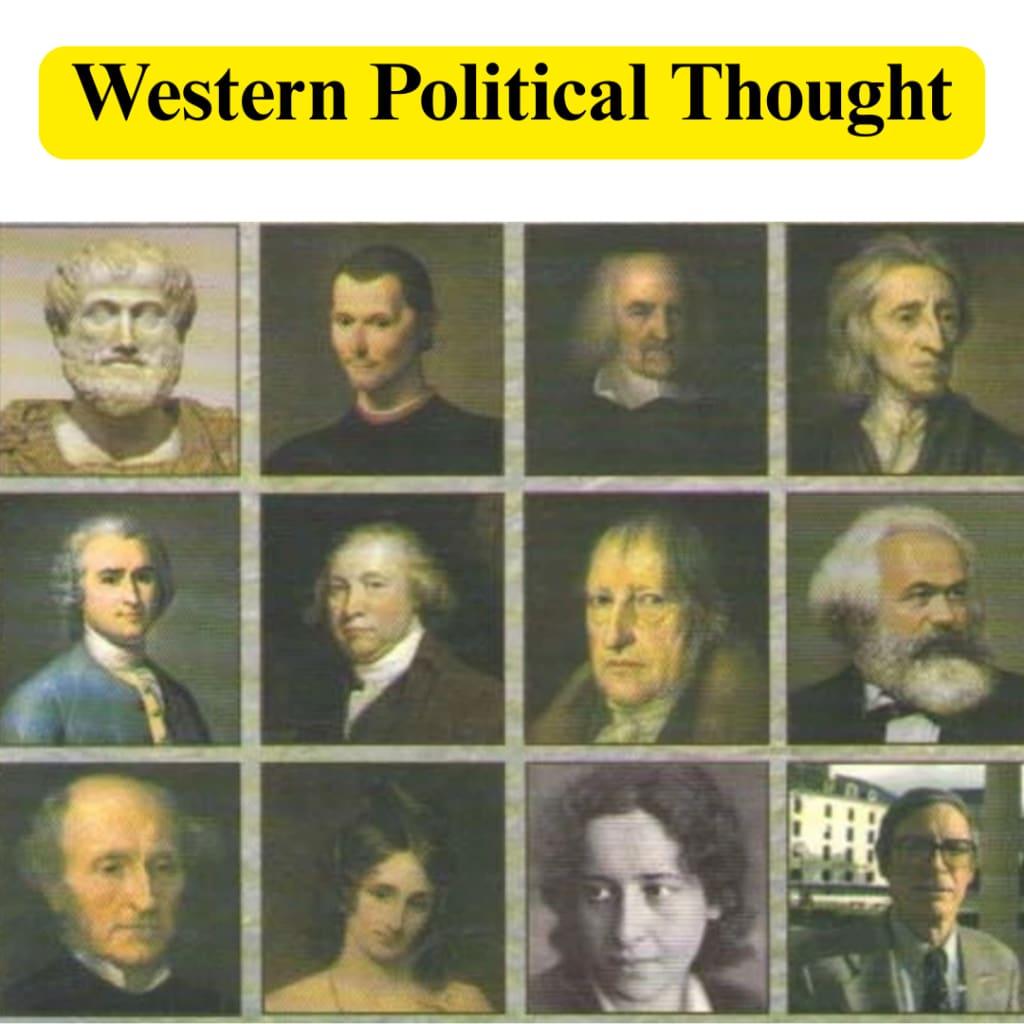
Introduction:
Western political thought has shaped the political landscape of the modern world. From ancient Greek philosophy to modern socialist movements, the ideas of various political thinkers have influenced governments, ideologies, and societies globally. In this article, we will explore the contributions of some of the most significant scholars in Western political thought, examining their theories and lasting impact.
1. Plato (427-347 BCE)
Plato, one of the most influential philosophers in Western thought, laid the groundwork for much of political philosophy. His work The Republic is a foundational text that explores justice, the ideal state, and the philosopher-king. Plato envisioned a society governed by philosopher-kings who possess wisdom and knowledge, ruling in the interest of all citizens. He emphasized the importance of justice and the role of the ideal state in achieving a harmonious society.
2. Aristotle (384-322 BCE)
Aristotle, a student of Plato, is known for his practical approach to political theory. In his work Politics, Aristotle examined different forms of government, classifying them as either good (monarchy, aristocracy, and polity) or corrupt (tyranny, oligarchy, and democracy). Aristotle believed in the idea of the best attainable state, focusing on the concept of polity, where citizens actively participate in governance, striving for the common good.
3. Niccolò Machiavelli (1469-1527)
Machiavelli’s The Prince is perhaps the most famous political treatise in Western thought. He is often regarded as the father of modern political science. Machiavelli separated politics from ethics and morality, advocating for pragmatic, sometimes ruthless, statecraft. His key idea was that rulers must be willing to use any means necessary to maintain power and ensure the stability of the state, encapsulated in the phrase "the ends justify the means."
4. Thomas Hobbes (1588-1679)
In his work Leviathan, Hobbes argued that in a state of nature, without the structure of government, life would be “solitary, poor, nasty, brutish, and short.” He advocated for an absolute monarchy as the solution to prevent anarchy. Hobbes believed that humans are naturally self-interested and that a strong, central authority is necessary to maintain order and prevent violence.
5. John Locke (1632-1704)
John Locke’s ideas were revolutionary in the development of liberalism. His theory of the social contract argued that governments are legitimate only if they have the consent of the governed. Locke believed in the protection of natural rights, specifically life, liberty, and property. His writings heavily influenced the American Revolution and the development of constitutional democracy.
6. Georg Wilhelm Friedrich Hegel (1770-1831)
Hegel is known for his development of the idea of the dialectic, where historical progress occurs through a synthesis of opposing forces. His work The Philosophy of Right explores the evolution of the state, where the individual and society are reconciled. Hegel believed that the state represents the ethical life of the people, and that freedom can only be realized through the state.
7. Jean-Jacques Rousseau (1712-1778)
Rousseau’s The Social Contract is one of the cornerstones of modern political philosophy. Rousseau argued that true political freedom is found in the general will of the people, where individuals collectively make decisions for the common good. He believed that society’s corruption stems from the inequalities created by private property and advocated for a system that emphasizes equality and popular sovereignty.
8. John Stuart Mill (1806-1873)
John Stuart Mill, a leading figure in utilitarianism, advanced the idea that the best society is one that promotes the greatest happiness for the greatest number. In his work On Liberty, Mill argued for the protection of individual freedoms against the tyranny of the majority. He also advocated for women’s rights and the expansion of democratic participation.
9. Karl Marx (1818-1883)
Karl Marx is one of the most influential political thinkers in history. In his work The Communist Manifesto, co-authored with Friedrich Engels, Marx argued that history is driven by class struggle and that capitalism would eventually be overthrown by a working-class revolution. His ideas laid the foundation for socialism and communism, advocating for the abolition of private property and the establishment of a classless society.
10. Antonio Gramsci (1891-1937)
Antonio Gramsci’s theory of cultural hegemony argues that the ruling class maintains power not only through force but through the manipulation of culture and ideology. He emphasized the importance of intellectuals and civil society in the struggle for political power, advocating for a revolutionary transformation of society’s cultural norms and values.
11. Mary Wollstonecraft (1759-1797)
Mary Wollstonecraft is regarded as one of the earliest feminist philosophers. In her work A Vindication of the Rights of Woman, Wollstonecraft argued that women should have equal access to education and opportunities, rejecting the idea that women were naturally inferior to men. Her ideas laid the foundation for the feminist movement and the struggle for gender equality.
12. John Rawls (1921-2002)
John Rawls’ Theory of Justice introduced the concept of justice as fairness, advocating for a system of distributive justice that balances the rights of individuals with the needs of society. Rawls’ difference principle argues that inequalities are acceptable only if they benefit the least advantaged members of society.
13. Frantz Fanon (1925-1961)
Frantz Fanon’s work in post-colonial theory focused on the psychological and political effects of colonialism. In his most famous works, Black Skin, White Masks and The Wretched of the Earth, Fanon explored the ways in which colonialism dehumanizes both the colonizers and the colonized. He argued for the necessity of violent revolution in the process of decolonization.
14. Hannah Arendt (1906-1975)
Hannah Arendt was a political theorist known for her work on totalitarianism, authority, and the nature of power. In The Origins of Totalitarianism, Arendt analyzed the rise of totalitarian regimes in the 20th century. Her concept of the banality of evil explored how ordinary people could become complicit in atrocities under totalitarian systems.
15. Mao Zedong (1893-1976)
Mao Zedong, the founding father of the People’s Republic of China, was a revolutionary leader who applied Marxist principles to Chinese society. His theories, known as Maoism, emphasized the role of the peasantry in revolution and advocated for protracted people's war as a means of overthrowing imperialism and feudalism.
16. Confucius (551-479 BCE)
Although Confucius is often associated with Chinese philosophy, his ideas on governance, ethics, and societal harmony have had a profound influence on Western political thought. His emphasis on moral leadership, virtue, and the importance of the social order laid the foundation for discussions on political ethics and governance.
Conclusion:
The scholars mentioned above have profoundly influenced Western political thought. From Plato’s idealism to Marx’s revolutionary theories, these thinkers have shaped our understanding of governance, justice, power, and societal organization. Their ideas continue to inspire political leaders, philosophers, and scholars, offering valuable insights into the complexities of modern politics.
Reference: Western Political Thought
About the Creator
Political Science Solution
Political Science Solution is a specialized platform dedicated to Political Science, offering highly researched and valuable content tailored for exams in the field. These exams include UGC NET, CUET PG, UPSC PSIR, and others.
Enjoyed the story? Support the Creator.
Subscribe for free to receive all their stories in your feed.
Comments
There are no comments for this story
Be the first to respond and start the conversation.