
Water Injection Strategies for Efficient Oil Recovery
Enhanced Oil Recovery
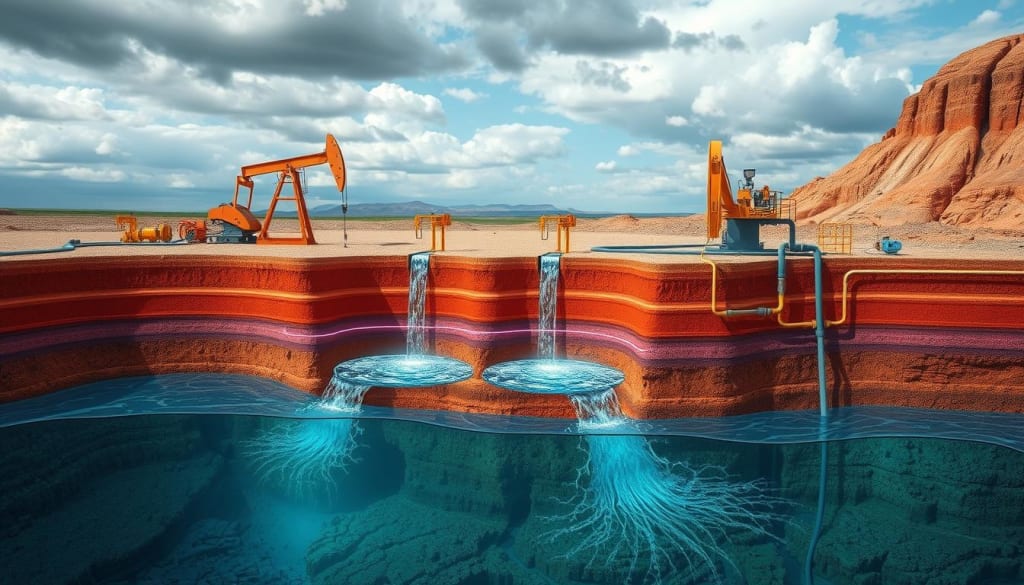
In the world of oil and gas, finding ways to get more oil is always a goal. Water injection is a key method that's becoming more popular. It helps get more oil out and is important for managing oil fields well.

Water injection works by putting water into oil reservoirs. This keeps the pressure in the reservoirs high. It helps get oil that's hard to reach, making oil production better.
Key Takeaways
Water injection is a proven strategy for efficient oil recovery, enhancing production rates and improving reservoir management.
Proper water injection techniques maintain and increase reservoir pressure, enabling the extraction of otherwise trapped oil.
Effective reservoir management is crucial for maximizing the profitability of oil fields through strategic water injection practices.
Water injection plays a pivotal role in the overall optimization of oil production, contributing to the industry's sustainability and growth.
Understanding the fundamentals of water flooding and its impact on oil recovery is essential for oil and gas professionals seeking to improve their operations.
Understanding the Basics of Water Injection in Oil Recovery
Water injection is key in the oil and gas world. It helps get more oil out of reservoirs. Let's look at how it works, why keeping reservoir pressure up is important, and how it stacks up against natural methods.
Physical Principles of Water Flooding
Water flooding uses water to push oil out of rock formations. Water is pumped into the ground, creating pressure that moves oil to wells. This process is all about fluid dynamics, capillary forces, and how rock and fluid interact.
Role of Reservoir Pressure Maintenance
Keeping reservoir pressure right is vital for water injection. The water helps keep the pressure up, helping oil flow better. This keeps the oil field productive longer and gets more oil out.
Water Injection vs. Natural Drive Mechanisms
Water injection beats natural methods in some ways. It's more controlled and fits specific reservoir needs better. It's also good for fields that have lost natural drive, making them last longer.

Historical Development of Water Injection Techniques
The journey of water injection in the oil industry is truly remarkable. It shows how technology has changed the way we extract oil. From the start of the oil industry to now, water injection's story shows the industry's creativity and strength.
Water injection started in the late 19th century. Early oil producers saw water's potential to boost oil recovery. By the 1920s, big water injection projects began. They showed how water could keep reservoir pressure up and increase oil production.
As the oil industry grew, so did water injection technology. Better drilling and pumping systems and a better understanding of reservoirs led to more effective water injection. The 1950s and 1960s saw many water injection projects. Oil companies used this technique to get more oil.
The 1970s and 1980s were full of new ideas. The industry faced old reservoirs and needed better ways to get oil. New methods like polymer flooding and surfactant-based water injection were developed. These helped water injection get even better.
Today, water injection is key to oil production. Companies use the latest tech to improve their work. They use better data analysis and digital tools. This keeps water injection important in the changing oil industry.

The history of water injection in the oil industry shows the sector's strength and drive for new tech. By always improving, oil producers have made water injection a crucial part of the industry's future.
Key Components of Water Injection Systems
Effective reservoir management needs a well-integrated water injection system. Its components work together to make water flooding successful for oil recovery.
Surface Facilities and Equipment
The surface facilities include water treatment plants, pumping stations, and pipelines. They process, pressurize, and move the injection water to the wells. Choosing and keeping the injection equipment in good shape is key for the right flow and pressure.
Injection Well Infrastructure
The well infrastructure is vital for water injection. Injection wells are placed to control water flow. They are built to ensure water flows well and doesn't leak out too soon. Keeping the well infrastructure in check is crucial for water injection success.
Monitoring and Control Systems
Control systems are essential for managing water injection. They use sensors and telemetry to track important data like flow rates and pressures. This data helps make smart decisions for better well management and reservoir performance. Strong monitoring and control systems help keep the process efficient and effective.

Efficient Reservoir Management: Water Injection Strategies for Enhanced Oil Recovery
In the quest for more oil, efficient reservoir management is key. Water injection strategies are changing the game in the oil and gas world. They offer ways to get more oil out of the ground. These methods use water to keep pressure up, push oil out, and make sure oil is well swept.
Water flooding is a main water injection strategy for EOR. It involves using water to push oil towards wells where it can be extracted. By planning the injection pattern and well placement well, oil recovery rates can go up.
Peripheral water injection is another smart strategy. It injects water around the reservoir's edges. This keeps the pressure in the reservoir steady, helping oil flow longer.
Common Challenges and Troubleshooting Measures
Starting a water injection process can face many hurdles. But, with the right steps, these problems can be solved. Scaling or corrosion in wells and facilities is a big issue. It slows down water flow and cuts down efficiency.
To fix this, keeping things clean, using chemicals, and checking water quality are key. Regular upkeep is crucial.
Reservoir management is another big challenge. Sometimes, the way water is injected or where wells are placed doesn't work best. By looking at production data and adjusting strategies, operators can make the process better.
Also, unexpected changes in the reservoir can affect water injection. Tools and experts are needed to find and fix these issues. This keeps the water injection program on track.
FAQ
- What are the physical principles of water flooding in oil recovery?
Water flooding uses the flow of fluids in porous media. The injected water pushes the oil towards the wells. The water's viscosity, density, and how it interacts with the rock are key.
- How does water injection contribute to reservoir pressure maintenance?
Water injection keeps the reservoir pressure up by replacing fluids. This is vital for keeping oil flowing. It's a key part of managing the reservoir well.
- What are the key components of a water injection system?
A water injection system has surface equipment and wells. It also has monitoring and control systems. These help manage the injection process.
- What are the benefits of a five-spot pattern in water injection?
The five-spot pattern is a common strategy. It uses a central well and four surrounding wells. This pattern helps sweep the reservoir efficiently, improving oil recovery.
- Why is water quality important in injection processes?
Water quality affects the reservoir and well performance. Treatment methods ensure the water is suitable for injection. This is crucial for effective oil recovery.
- How can reservoir response indicators be used to evaluate water injection performance?
Indicators like production data and pressure measurements help assess the system. They provide insights for improving the injection strategy. This helps increase oil recovery.
- What are some common challenges in water injection processes and how can they be addressed?
Challenges include injectivity issues and water breakthrough. Troubleshooting, like adjusting rates and improving treatment, can help. Advanced management techniques also play a role.
References
- Lake, L. W., & Johns, R. T. (2014). Enhanced Oil Recovery. Society of Petroleum Engineers.
- Sheng, J. J. (2010). Modern Chemical Enhanced Oil Recovery: Theory and Practice. Gulf Professional Publishing.
- Halliburton. (2024). "DataSphere ERD XHT Downhole Gauge System." Halliburton Official Website.
- Al-Maamari, R. S., & Al-Saedi, H. N. (2015). "Impact of Water Salinity on Wettability and Oil Recovery: A Review." Petroleum Science and Technology, 33(10), 1056-1064.
- Skrettingland, K., et al. (2011). "Low Salinity Water Flooding—Effect of Wettability and Oil Recovery." SPE Reservoir Evaluation & Engineering, 14(01), 59–70.
About the Creator
Dhivakar Poosapadi
Dhivakar Poosapadi has over 16 years of experience in the design, development, testing, installation, and commissioning of drilling equipment, subsea completion systems, well access systems,
Enjoyed the story? Support the Creator.
Subscribe for free to receive all their stories in your feed.
Comments