
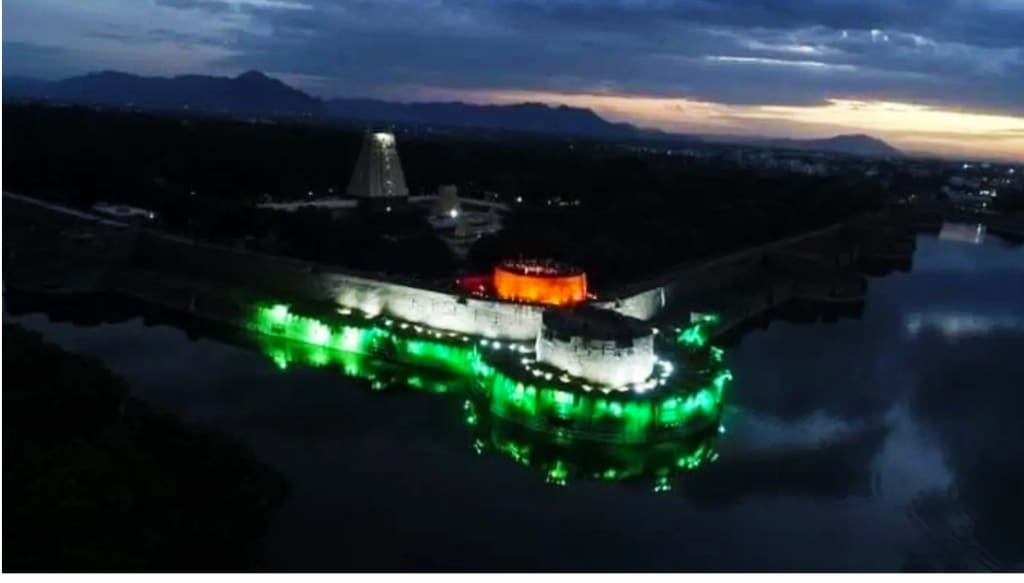
Vellore Fort: A Glimpse into South India's Historical Gem. Introduction to Vellore Fort: Nestled in the heart of Tamil Nadu, India, Vellore Fort stands as a monument to the rich and tumultuous history of the region. Constructed in the 16th century, this formidable fortification is renowned for its impressive architecture, historical significance, and role in shaping the political landscape of South India. The fort's strategic location and robust construction have made it a focal point of numerous historical events, reflecting the grandeur and complexity of the era. Architectural Marvel of the 16th Century: The construction of Vellore Fort began in 1566 under the rule of the Vijayanagara Empire, specifically by the emperor Sri Ranga III. Its design is a testament to the advanced engineering skills of the time, featuring a blend of military functionality and aesthetic appeal. The fort's layout includes a massive outer wall with bastions at regular intervals, a moat surrounding the perimeter, and several intricately designed gates. The walls are made of granite and extend approximately 2 kilometers in length, showcasing the fort's capacity to withstand prolonged sieges and attacks. The Fort’s Strategic Significance: Vellore Fort was strategically built on elevated ground, which provided a commanding view of the surrounding terrain and allowed for effective defense against potential invaders. The location was chosen due to its proximity to major trade routes and its advantageous position in the region’s geopolitical landscape. The fort’s design includes a large moat filled with water, which served as an additional defensive measure, making it difficult for attackers to breach the fortifications. This strategic placement made Vellore Fort a critical stronghold during various conflicts, particularly during the 17th century. The Fort's Role in the Vijayanagara Empire: During the Vijayanagara Empire's reign, Vellore Fort was a key military and administrative center. The Vijayanagara rulers utilized the fort as a base to assert their dominance over the region and to control the surrounding territories. The fortification was not only a symbol of the empire's power but also a practical facility for managing regional affairs. Its robust design and strategic location allowed the Vijayanagara rulers to effectively govern and protect their interests in the southern part of India. The Fall of the Vijayanagara Empire and Vellore Fort: The decline of the Vijayanagara Empire in the mid-17th century had a significant impact on Vellore Fort. In 1645, the fort was captured by the Marathas under the leadership of Chhatrapati Shivaji. The capture marked a turning point in the region’s history, as the Marathas sought to expand their influence in South India. The fort changed hands several times over the years, reflecting the shifting power dynamics of the time. Despite these changes, the fort remained a key strategic asset for various rulers. The Fort Under Mughal Control: In 1676, the fort was ceded to the Mughal Empire under the rule of Aurangzeb. The Mughals recognized the fort's strategic importance and made several modifications to its structure. During Mughal control, the fort served as a key administrative center and played a role in the Mughal Empire's efforts to consolidate power in South India. The Mughal influence on the fort's architecture and administration was evident in various modifications made during this period. The Role of Vellore Fort in the First War of Indian Independence: One of the most significant events in Vellore Fort's history occurred during the First War of Indian Independence in 1806. The fort became the epicenter of a major rebellion against British rule, known as the Vellore Rebellion. The uprising was led by Indian soldiers and was fueled by discontent with British policies and treatment of Indian troops. The rebellion was brutally suppressed by the British, leading to significant loss of life and the imposition of harsh penalties. The Vellore Rebellion is considered a precursor to the larger Indian independence movement and remains a significant chapter in Indian history. Architectural and Historical Significance of Key Structures: Vellore Fort is home to several notable structures, each with its own historical significance. The fort's primary entrance, known as the ‘Raya Gate,’ is an impressive example of Vijayanagara architecture and is adorned with intricate carvings. Inside the fort, the Karthikaiya Perumal Temple is a noteworthy example of Dravidian temple architecture, featuring a combination of Hindu and Islamic styles. The fort also houses several mosques and churches, reflecting the diverse cultural and religious influences that have shaped the region over the centuries. Preservation Efforts and Current Status: In recent years, Vellore Fort has been the focus of various preservation and conservation efforts aimed at preserving its historical and architectural integrity. The fort has been declared a protected monument by the Archaeological Survey of India (ASI), which oversees its maintenance and restoration. These efforts are crucial in ensuring that the fort's historical significance is not lost and that future generations can continue to appreciate its cultural heritage. Vellore Fort as a Tourist Destination: Today, Vellore Fort stands as a popular tourist destination, attracting visitors from around the world who are eager to explore its historical and architectural wonders. The fort's well-preserved structures and its rich history offer a unique glimpse into South India's past. Visitors can explore the various temples, mosques, and churches within the fort, as well as enjoy panoramic views from the fort's ramparts. The fort also hosts cultural events and educational programs, further enhancing its appeal to tourists and history enthusiasts. The Legacy of Vellore Fort: Vellore Fort's legacy extends beyond its historical and architectural significance. The fort serves as a symbol of the region's rich cultural heritage and the complex interplay of different rulers and cultures that have shaped its history. Its role in various historical events, from the Vijayanagara Empire to the Vellore Rebellion, underscores its importance in the broader narrative of South India's history. The fort's enduring presence continues to inspire admiration and respect for the historical and architectural achievements of the past. Conclusion: Vellore Fort stands as a testament to the rich and diverse history of South India. Its impressive architecture, strategic significance, and role in various historical events make it a unique and invaluable part of India's cultural heritage. As both a historical monument and a modern tourist attraction, Vellore Fort offers a compelling glimpse into the past and continues to capture the imagination of those who visit. Its preservation and continued relevance serve as a reminder of the enduring legacy of South India's historical and architectural achievements.
About the Creator
Enjoyed the story? Support the Creator.
Subscribe for free to receive all their stories in your feed.
Comments
There are no comments for this story
Be the first to respond and start the conversation.