
Unlocking the Future: Agentic Retrieval-Augmented Generation
RAG

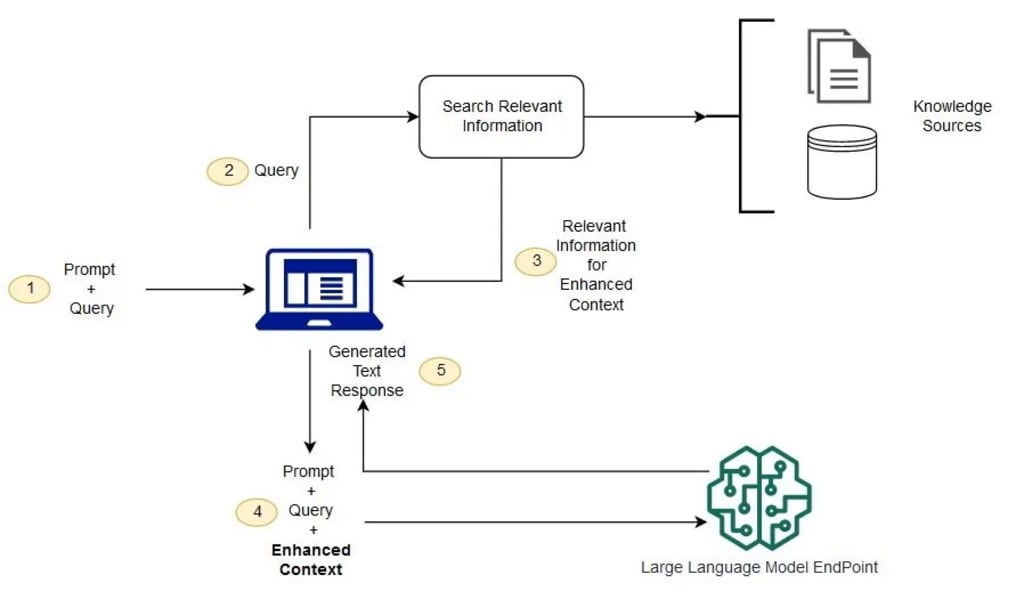
In the rapidly evolving landscape of artificial intelligence, a new paradigm is emerging that promises to revolutionize the way machines interact with and generate information. This paradigm is known as Agentic Retrieval-Augmented Generation (RAG). Combining the power of retrieval-based methods with the generative capabilities of advanced AI, RAG represents a significant leap forward in the field of AI-driven solutions.
By integrating robust information retrieval techniques with state-of-the-art generative models, RAG systems can access and synthesize vast amounts of data, providing more accurate, contextually relevant, and comprehensive responses. This integration not only enhances the quality and reliability of information generated by AI but also ensures that the solutions are grounded in real-world data.
Moreover, the agentic aspect of RAG refers to the ability of these systems to autonomously seek out and aggregate information from diverse sources, continuously learning and adapting to new data. This dynamic capability allows RAG to be more responsive and intelligent in handling complex queries and tasks, ultimately pushing the boundaries of what AI can achieve.
As we move forward, the implementation and development of RAG hold the potential to transform industries, drive innovation, and create new opportunities across various domains, from customer service and content creation to research and development.
Agentic Retrieval-Augmented Generation (RAG) is an advanced AI framework that blends two core capabilities:
Retrieval: The ability to fetch relevant information from vast datasets or knowledge bases.
Generation: The ability to create coherent, contextually appropriate responses or content.
By integrating these two functions, RAG systems can provide highly accurate and contextually enriched responses, making them far more effective than traditional models that rely solely on either retrieval or generation. This dual capability ensures that the generated content is not only relevant and up-to-date but also articulated in a natural and fluent manner. As a result, Agentic RAG is particularly useful in applications requiring real-time information synthesis, such as customer support, research assistance, and personalized content creation. Its ability to dynamically pull in current information and seamlessly weave it into its responses sets it apart from conventional AI systems.
How Does RAG Work?
RAG operates through a two-step process:
Retrieval Phase: In this phase, the system identifies and retrieves pertinent information from a pre-defined corpus or external knowledge bases. This could include text, documents, databases, or even the internet. Advanced retrieval mechanisms, such as dense passage retrieval (DPR), are often employed to ensure that the most relevant pieces of information are selected based on the query. This phase is crucial for narrowing down the vast amount of data to a manageable set of highly relevant snippets.
Generation Phase: Once the relevant information is gathered, the generative component of the model uses this information to produce detailed, accurate, and contextually relevant responses or content. This involves leveraging transformer-based models, such as BERT or GPT, to understand the context and intricacies of the retrieved data and to generate coherent and contextually appropriate responses. The generative model integrates the retrieved information with its own language understanding capabilities to enhance the quality and accuracy of the output.
This combination allows RAG models to handle complex queries with greater precision and depth, as they are not limited by the data present solely within the training set. By dynamically incorporating external information, RAG models can provide more up-to-date and context-aware responses, making them highly effective for a wide range of applications, from customer support to research assistance.
Applications of RAG
Healthcare
In healthcare, RAG can assist doctors by retrieving the latest medical research and combining it with patient data to generate comprehensive treatment plans. This ensures that healthcare professionals have access to the most current and relevant information, enhancing patient care. Furthermore, RAG can be utilized in medical diagnostics by integrating patient history with current symptoms and relevant research, thereby supporting more accurate diagnoses and personalized treatment strategies.
Customer Support
RAG can transform customer support by providing accurate and context-aware responses. Instead of relying on pre-written scripts, customer support agents can use RAG to fetch relevant information in real-time, ensuring that customer inquiries are resolved more efficiently and effectively. This not only improves customer satisfaction but also empowers support teams to handle complex queries with greater confidence and speed.
Education
In the field of education, RAG can be used to create personalized learning experiences. By retrieving relevant educational content and generating customized study materials, RAG can cater to the unique learning needs of each student, thereby improving educational outcomes. Additionally, educators can leverage RAG to stay updated with the latest pedagogical research and integrate new teaching methods and resources into their curricula.
Legal
For legal professionals, RAG can streamline the process of legal research by retrieving case laws, statutes, and legal precedents. It can then generate comprehensive legal arguments or documents, saving time and enhancing the quality of legal work. Moreover, RAG can assist in contract review and due diligence by quickly identifying relevant clauses and legal issues, thus expediting legal processes and reducing the likelihood of oversight.
The Future of RAG
The potential of Agentic Retrieval-Augmented Generation (RAG) is immense. As AI continues to advance, RAG models will become more sophisticated, capable of understanding and generating increasingly complex information. This will open up new possibilities across various industries, driving innovation and improving efficiency.
In healthcare, future RAG systems could integrate seamlessly with electronic health records and medical devices, providing real-time, data-driven insights and predictive analytics that preemptively identify health risks. This could revolutionize preventive medicine and chronic disease management, leading to better patient outcomes and reduced healthcare costs.
In customer support, RAG advancements could lead to fully automated systems that understand customer emotions and context, providing highly personalized and empathetic responses. This could drastically reduce response times and improve customer satisfaction, while allowing human agents to focus on more complex and high-value tasks.
In education, the next generation of RAG models could offer real-time tutoring and adaptive learning experiences that evolve with each student’s progress. These systems could analyze learning patterns and provide instant feedback and supplementary materials, fostering a more engaging and effective learning environment.
For legal professionals, the future of RAG could include advanced tools for predictive legal analytics, helping lawyers anticipate case outcomes and strategize accordingly. Enhanced document generation and review capabilities could also streamline legal workflows, reducing the time and cost associated with legal services.
Beyond these applications, the future of RAG holds promise for fields such as finance, where it could aid in risk assessment and fraud detection, and in scientific research, where it could accelerate discoveries by synthesizing vast amounts of data and generating new hypotheses. As RAG technology continues to evolve, it will undoubtedly transform how we interact with information, making complex tasks more manageable and enabling a new era of productivity and innovation.
Conclusion
Agentic Retrieval-Augmented Generation (RAG) represents a significant advancement in the field of artificial intelligence. By combining the strengths of retrieval and generation, RAG models offer unparalleled accuracy and context-awareness, making them invaluable tools in healthcare, customer support, education, and legal industries. These models not only enhance the efficiency and quality of various professional services but also open new avenues for personalized and intelligent interactions. As we continue to explore the potential of RAG, it is clear that this technology will play a crucial role in shaping the future of AI-driven solutions. The ongoing development and integration of RAG into diverse sectors promise to transform how we harness and apply information, ultimately leading to more innovative, efficient, and effective solutions in our increasingly complex world.
About the Creator
Sangramsing Kayte
I am an experienced person in the research area of ML and AI, exploring different adventure places is also my hobby. And I strongly believe in sharing and this motivated me to share my knowledge and also Traveling tips with you.
Enjoyed the story? Support the Creator.
Subscribe for free to receive all their stories in your feed.
Comments
There are no comments for this story
Be the first to respond and start the conversation.