
Understanding the Evolution of Digital Finance in the Modern Economy
How blockchain technology, fintech innovation, and global financial systems are reshaping the way money moves, is stored, and is managed in a digital-first world.

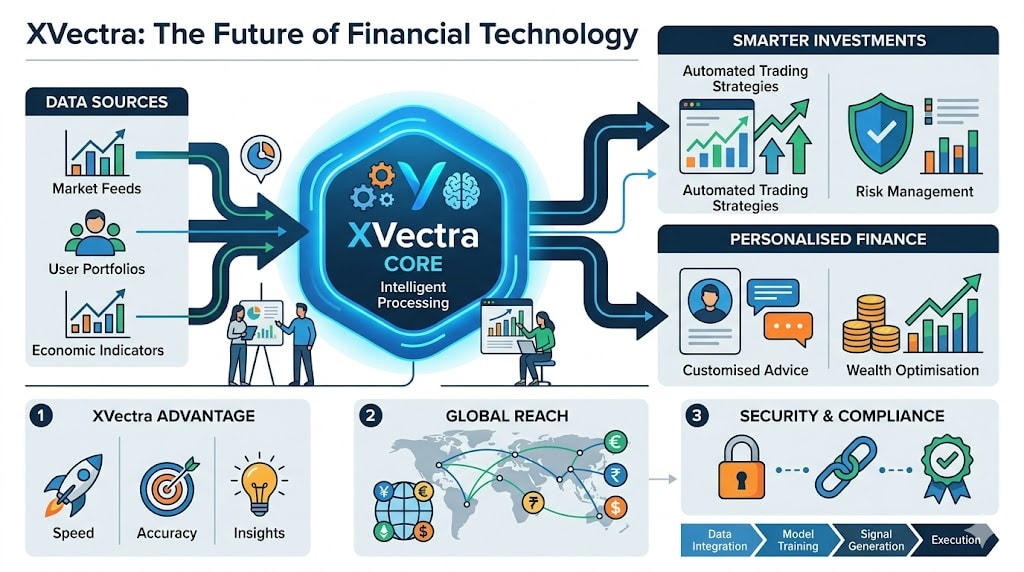
The global financial system has undergone significant transformation over the past two decades. What was once heavily dependent on physical institutions, paper-based documentation, and centralized control has gradually shifted toward a more digital, interconnected, and technology-driven ecosystem.
This change has not happened overnight. Instead, it has been the result of continuous innovation in financial technology, increasing internet penetration, and the growing demand for faster, more accessible financial services across borders.
Today, digital finance is no longer a niche concept. It is a central part of how individuals, businesses, and even governments manage financial activity.
The Shift from Traditional to Digital Systems
Traditional financial systems were built around centralized institutions such as banks, clearing houses, and regulatory bodies. These systems provided stability and trust but often came with limitations such as slow transaction times, high processing fees, and restricted access for people in underserved regions.
The rise of digital banking and online financial platforms began to address some of these challenges. Users could now transfer funds, manage accounts, and access financial services without visiting physical branches. This marked the beginning of a broader transformation toward convenience and accessibility.
As technology continued to advance, new systems emerged that went beyond simple digitization. These systems introduced automation, data-driven decision-making, and decentralized architectures that reduced reliance on single points of control.
The Role of Blockchain Technology
One of the most influential innovations in modern finance has been blockchain technology. At its core, blockchain is a distributed ledger system that records transactions across multiple nodes in a secure and transparent manner.
This structure offers several key advantages:
Increased transparency through verifiable transaction records
Reduced reliance on intermediaries
Improved security through cryptographic validation
Enhanced efficiency in cross-border transactions
While blockchain is often associated with digital currencies, its applications extend far beyond that. Industries such as supply chain management, healthcare, and identity verification have all explored blockchain-based solutions.
In financial services, blockchain has opened the door to decentralized systems that operate without traditional centralized control structures.
Fintech Innovation and Market Expansion
The broader financial technology sector, often referred to as fintech, has played a critical role in reshaping global finance. Fintech companies focus on leveraging technology to improve financial services, making them faster, cheaper, and more accessible.
Some of the most notable developments in fintech include:
Mobile payment platforms
Peer-to-peer lending systems
Digital investment tools
Automated financial advisory services
Cross-border payment networks
These innovations have not only improved user experience but also increased financial inclusion for populations that were previously excluded from traditional banking systems.
As competition increases, fintech companies continue to experiment with new business models, integrating artificial intelligence, machine learning, and blockchain into their platforms.
Globalization of Financial Systems
Another important trend in modern finance is globalization. Financial systems are no longer confined by geography. Money can move across continents in seconds, and digital platforms allow users from different countries to interact within the same financial ecosystem.
This level of connectivity has created both opportunities and challenges. On one hand, it enables faster economic growth and broader access to capital. On the other hand, it introduces regulatory complexity, cybersecurity risks, and the need for stronger international cooperation.
Governments and regulatory bodies around the world are actively working to adapt to this new environment by developing frameworks that balance innovation with consumer protection.
Challenges in the Digital Financial Era
Despite its rapid growth, digital finance still faces several challenges. Security remains a top concern, as cyberattacks and fraud attempts continue to evolve alongside technological advancements.
Regulatory uncertainty is another issue. Because digital financial systems often operate across multiple jurisdictions, ensuring compliance can be complex and time-consuming.
Additionally, market volatility and technological risks can impact user trust and system stability. As a result, continuous improvement in governance, infrastructure, and transparency is essential for long-term sustainability.
The Future of Financial Technology
Looking ahead, the financial industry is expected to become even more integrated with advanced technologies. Artificial intelligence is likely to play a larger role in risk assessment and financial decision-making. Blockchain may continue to expand into mainstream financial infrastructure. Automation will further reduce manual processes and improve efficiency.
At the same time, user expectations will continue to rise. People will demand faster services, lower costs, and greater transparency. Meeting these expectations will require ongoing innovation and adaptation from financial service providers.
The future of finance will likely be defined by a combination of decentralization, automation, and global accessibility.
Conclusion
The transformation of the financial system is one of the most significant technological shifts of the modern era. From traditional banking to digital ecosystems powered by blockchain and fintech innovation, the way value is created, transferred, and stored is fundamentally changing.
While challenges remain, the direction of progress is clear. Financial systems are becoming more open, more efficient, and more globally connected than ever before.
About the Creator
XVectra
Sharing thoughts on fintech, digital assets, and the evolving landscape of modern finance.
Enjoyed the story? Support the Creator.
Subscribe for free to receive all their stories in your feed.
Comments
There are no comments for this story
Be the first to respond and start the conversation.