
"Uncovering the Mystery: The Fascinating Rarity of Blue-Colored Animals"
Why Animals with Blue Colors are Super Rare?
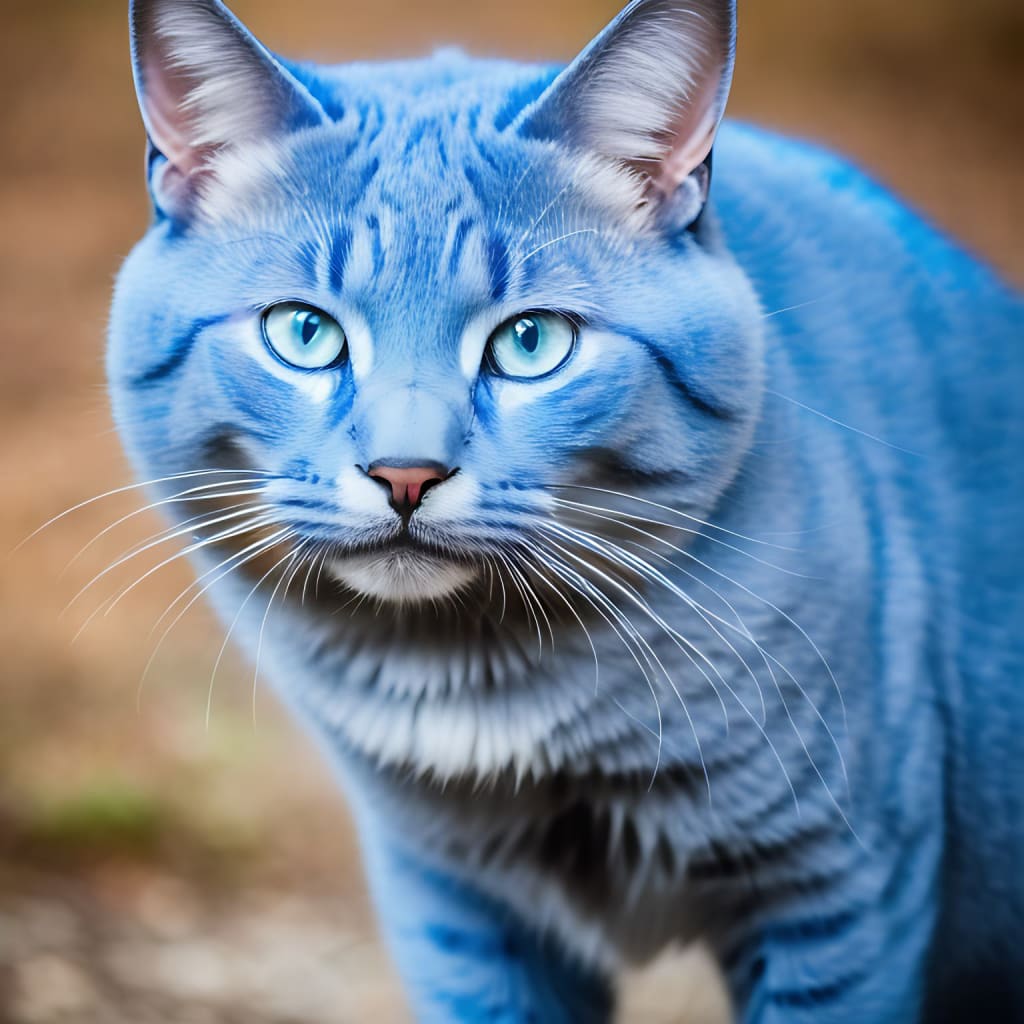
Animals are fascinating creatures, and despite their vast differences, they share many traits. Take a deer, a dolphin, a squirrel, and a dinosaur, for example. These animals all existed on the planet at different points in history, but what is even more surprising about their similarities is their coloration. This paragraph introduces the topic of animal coloration and sets the stage for the discussion that follows.
Abbott Thayer was a renowned portrait painter who had an interest in the colors of the natural world. He came up with some fascinating ideas about how animals can stay hidden from predators or prey. One of his most famous theories is called counter shading, which suggests that animals are painted by nature so that the parts that get the most light from the sky are the darkest and vice versa. This technique is not just for fashion-savvy animals; it is also used by ships to avoid detection. Thayer's innovative ideas about animal coloration are still relevant today, and this paragraph introduces the reader to his work.
Thayer did not stop at counter shading. He also proposed the idea of background blending, which is when an animal or object is painted to match the colors of its surroundings. This natural camouflage suit helps animals blend in with their environment, making it harder for predators to spot them. Thayer's creativity did not end there; he also suggested a theory on something called disruptive or dazzle camouflage. This technique involves painting an object with a crazy pattern to make it harder to judge its distance or speed. This paragraph highlights some of Thayer's most fascinating theories about animal coloration.
Counter shading is not just limited to aquatic animals like dolphins; it is also used by land animals like deer and rabbits. These animals have lighter bellies and darker backs, which helps them blend in with the dappled light of the forest floor. Birds also have counter shading on their feathers, which helps them blend in with the sky when seen from below and the ground when seen from above. This paragraph provides examples of how animals use counter shading to their advantage.
Some creatures have a way of warning others that they are not to be messed with, and this is called aposmatism. Bright colors or markings are used to let predators know that they are toxic or just downright unappetizing. For example, the broad white stripe on a skunk's back acts as a neon sign that says "don't get too close or else you'll regret it." Poison dart frogs have bright and graphic colors that let everyone know that they are not to be fooled with. This paragraph provides examples of animals that use bright colors to ward off predators.
White, yellow, red, and black are the most effective warning colors in the animal kingdom, just like how traffic signs caution drivers. These bright markings are nature's way of saying, "watch out buddy." If you ever come across a critter with some serious bling, remember that they are not trying to be fashionable; they are trying to stay alive. This paragraph discusses the most effective warning colors in the animal kingdom and emphasizes that animals use these colors to survive.
Scientists have been puzzled by the question of why some animals evolved to use bright colors while others did not. Researchers at the University of Arizona uncovered some interesting insights into this colorful mystery. It turns out that the function of an animal's vibrant coloring is strongly linked to the activity patterns of its evolutionary ancestors. Species that use their bright colors to attract mates are usually descended from ancestors that were active during the day, while those that use their colors to ward off predators usually had ancestors that were active at night. This paragraph provides some interesting information about how an animal's evolutionary ancestors.
About the Creator
Sam
She
Enjoyed the story? Support the Creator.
Subscribe for free to receive all their stories in your feed.
Comments
There are no comments for this story
Be the first to respond and start the conversation.