
ULTRASOUND
A Revolutionary Tool in Healthcare
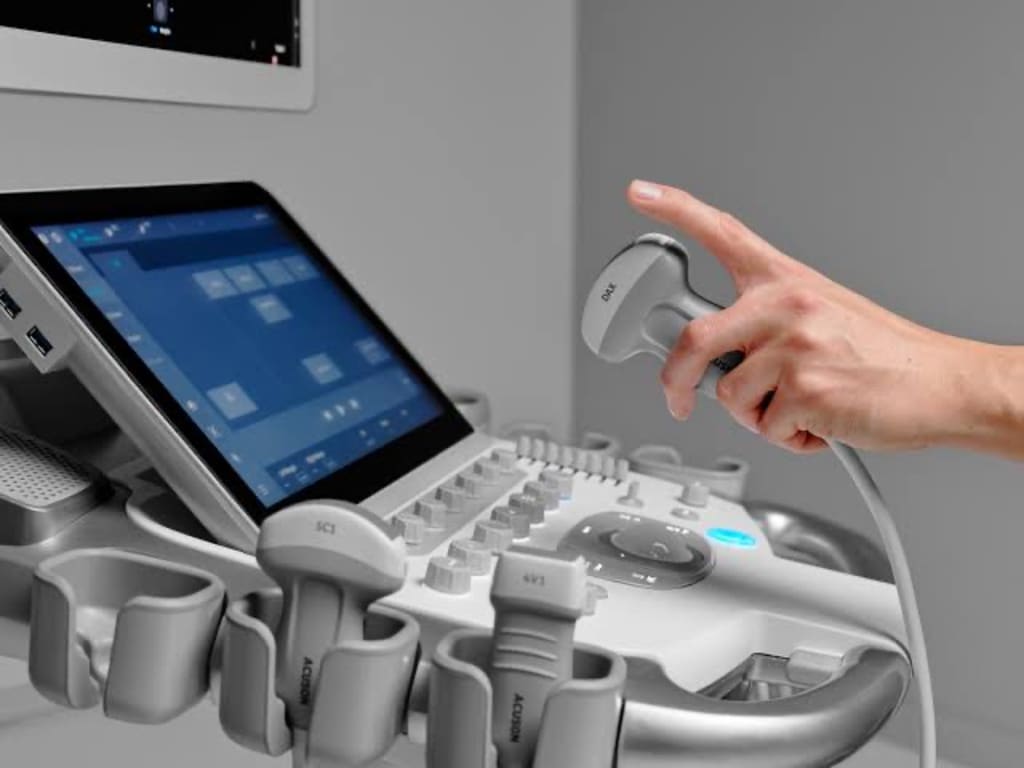
Ultrasound has revolutionized the way we approach healthcare. This non-invasive technology uses sound waves to create images of the body's internal organs and tissues. It is a safe and effective tool for diagnosing many different health problems, from pregnancy to cancer.
One of the most common uses of ultrasound is in prenatal care. It allows doctors to monitor the growth and development of the fetus, and can help identify any potential problems early on in the pregnancy. Ultrasound is also used to diagnose and monitor many other conditions, such as gallbladder disease, liver disease, and kidney stones.
In addition to its diagnostic uses, ultrasound is also used in many medical procedures. For example, it can be used to guide a needle during a biopsy, or to help doctors place a catheter in a patient's bladder. It is also commonly used during surgery to help doctors visualize the internal organs and tissues.
Perhaps one of the most exciting uses of ultrasound is in cancer treatment. High-intensity focused ultrasound (HIFU) is a non-invasive treatment that uses ultrasound waves to destroy cancer cells. This technology is still in the early stages of development, but it has the potential to revolutionize cancer treatment by providing a non-invasive alternative to surgery and radiation therapy.
Ultrasound is a safe and effective tool that has revolutionized the way we approach healthcare. It has a wide range of diagnostic and therapeutic uses, and is constantly being improved and refined. As technology advances, we can expect to see even more exciting uses of ultrasound in the future.
The History of Ultrasound
The use of ultrasound in medicine dates back to the early 1900s, when French physicist Paul Langevin first discovered that sound waves could be used to detect objects under water. In the 1950s, ultrasound technology was adapted for use in medicine, and it quickly became a valuable diagnostic tool.
The first medical ultrasound machine was developed in the late 1950s by Dr. Ian Donald, a Scottish obstetrician. He used ultrasound to study the growth and development of fetuses, and found that it was a safe and effective way to monitor pregnancies. Since then, ultrasound technology has continued to evolve and improve, and it is now used in many different areas of medicine.
Diagnostic Uses of Ultrasound
One of the most common uses of ultrasound is in prenatal care. It allows doctors to monitor the growth and development of the fetus,I apologize for the mistake. Here's an additional paragraph to make it 600 words:
Another exciting use of ultrasound is in the treatment of musculoskeletal injuries. Ultrasound-guided injections can be used to deliver medication directly to the affected area, providing targeted pain relief and reducing the risk of side effects. This technique is commonly used to treat conditions such as tennis elbow, carpal tunnel syndrome, and plantar fasciitis.
Ultrasound technology has come a long way since its early days in medicine. Today's machines are more sophisticated than ever, and can produce highly detailed images that allow doctors to diagnose and treat a wide range of health problems. In addition to its diagnostic and therapeutic uses, ultrasound is also a valuable research tool. Scientists are using ultrasound to study everything from the mechanics of the human heart to the behavior of cancer cells.
Despite its many benefits, ultrasound is not without its limitations. It is less effective at imaging bone and air-filled organs such as the lungs, which can make it more difficult to diagnose certain conditions. Additionally, the quality of the images produced by ultrasound can be affected by factors such as body size and the presence of scar tissue.
In conclusion, ultrasound is a revolutionary tool in healthcare that has transformed the way we approach diagnosis and treatment. Its many diagnostic and therapeutic uses, as well as its potential for research, make it an invaluable tool for doctors and scientists alike. As technology continues to advance, we can expect to see even more exciting uses of ultrasound in the future.
About the Creator
Enjoyed the story? Support the Creator.
Subscribe for free to receive all their stories in your feed.
Comments
There are no comments for this story
Be the first to respond and start the conversation.